Fashion is one of the most visually demanding categories in e-commerce. The product is worn on the body, experienced through texture and fit, and purchased for emotional and social reasons that are difficult to articulate. A fashion website must resolve the fundamental limitation that the customer cannot feel the fabric, try the cut, or see how it moves before buying.
At KrishaWeb, we have built eCommerce websites for fashion and lifestyle brands since 2008. The fashion websites that convert best in this category share one characteristic: they make the product feel real before the customer can touch it.
KrishaWeb has designed and built fashion websites since 2008. The pattern that holds across every high-performing example: design decisions made in service of the visitor’s actual goal, not the agency’s portfolio.
Table Of Contents
Table Of Contents
14 Best Fashion Website Designs: Inspiring Examples
1. Net-A-Porter
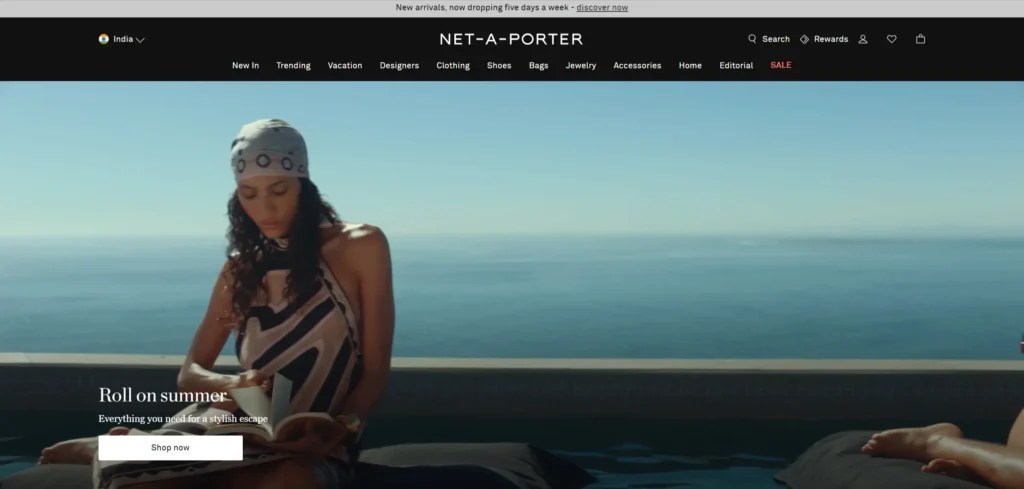
Net-A-Porter pioneered editorial fashion eCommerce, treating the online shopping experience as a combination of magazine and store. The Porter content sits alongside the product and positions every purchase within a broader style narrative. Product photography is consistently exceptional and is presented at scale. The curation is the product as much as the individual items.
Design lesson: Fashion platforms that combine editorial content with product create a browsing experience that generates discovery purchases: items the customer did not know they wanted until they saw them in context. Pure product grid browsing does not create this effect.
2. SSENSE
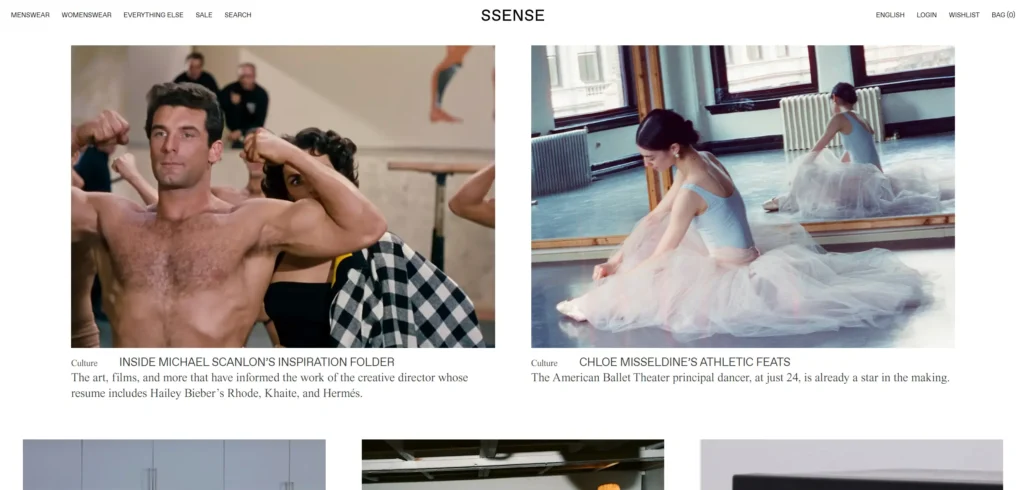
SSENSE is a luxury streetwear and high fashion retailer whose website communicates extreme editorial confidence. The photography is deliberately challenging: awkward poses, unusual compositions, locations that are more art-world than fashion-world. The audience SSENSE serves responds to this specifically because it communicates a taste level that fashion-conventional photography does not.
Design lesson: Fashion photography that demonstrates a specific taste level and editorial point of view attracts the audience that shares that taste level, and repels the audience that does not. For luxury fashion, precision of audience is more valuable than volume.
3. COS
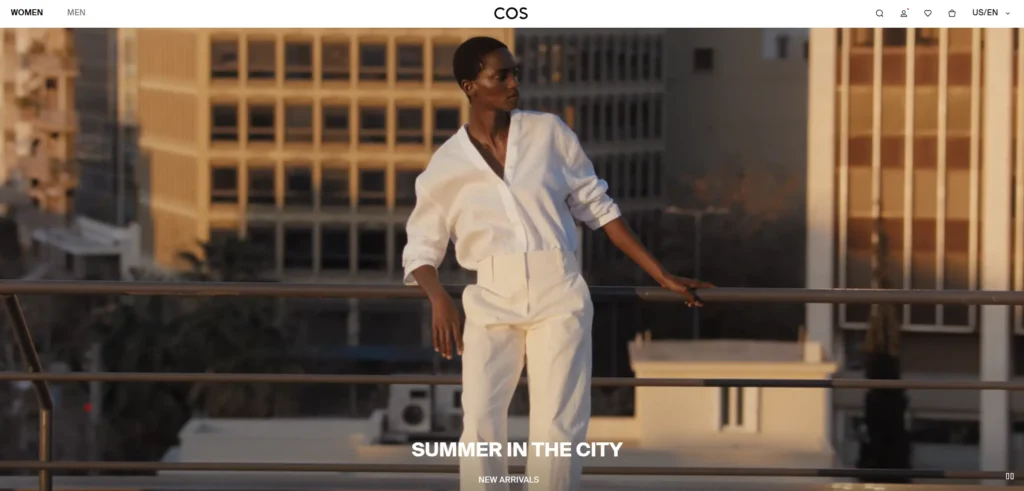
COS is a brand of architecture-influenced, minimal fashion, and the website communicates this positioning through its own minimal design. Products appear in space rather than on backgrounds. Typography is considered and restrained. The brand’s relationship to art and culture is present throughout without being ostentatious.
Design lesson: Fashion brands with a design or cultural positioning should ensure the website design itself communicates that positioning. A brand that sells minimal, architectural clothing should have a minimal, considered website.
4. Mr Porter
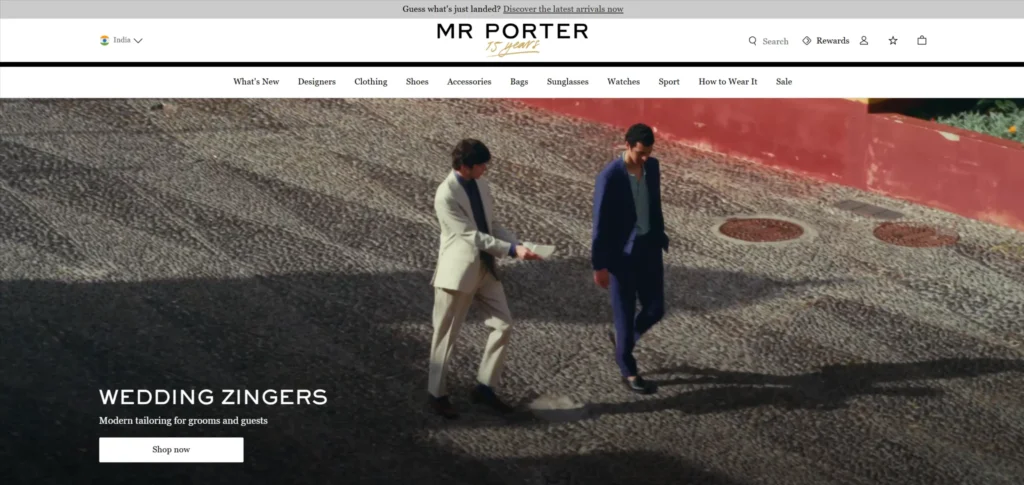
Mr Porter is the menswear complement to Net-A-Porter, and the website communicates masculine aspiration through editorial content, photography, and a product curation that spans heritage, contemporary, and luxury streetwear. The Journal content section drives organic search traffic and positions Mr Porter as a style authority rather than a retailer.
Design lesson: The Journal or editorial content section on a fashion retail website is one of the most effective organic search and brand authority tools available. Fashion editorial that ranks for style search terms attracts browsers who convert to buyers.
5. Everlane
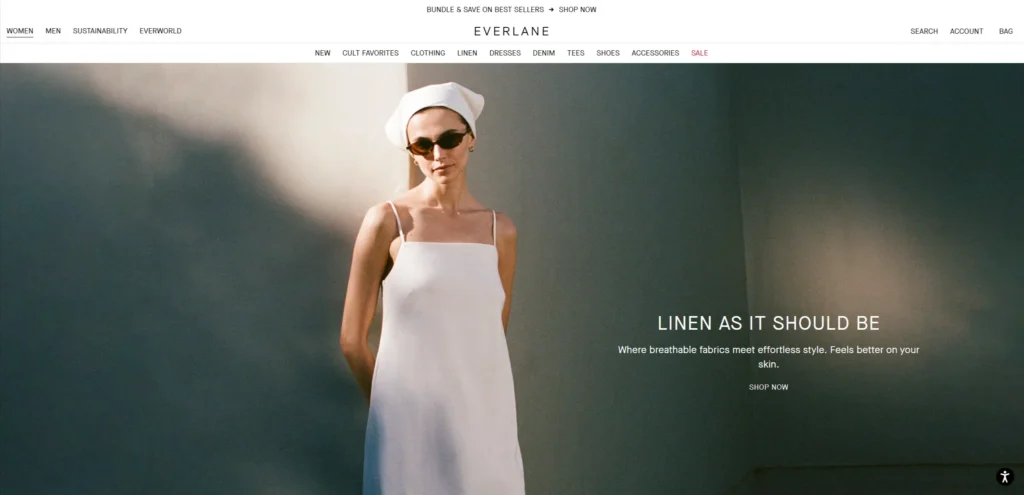
Everlane‘s radical price transparency model (showing the true cost of every item and their markup) is the foundation of the brand and the website communicates it on every product page. This transparency has been central to their customer acquisition strategy in a market where opaque pricing is the norm.
Design lesson: Fashion brands built around pricing or supply chain transparency should communicate this on every product page, not just on an About page. Everlane’s cost breakdown on every item is its most effective conversion tool for the customer segment that cares about this.
6. Glossier
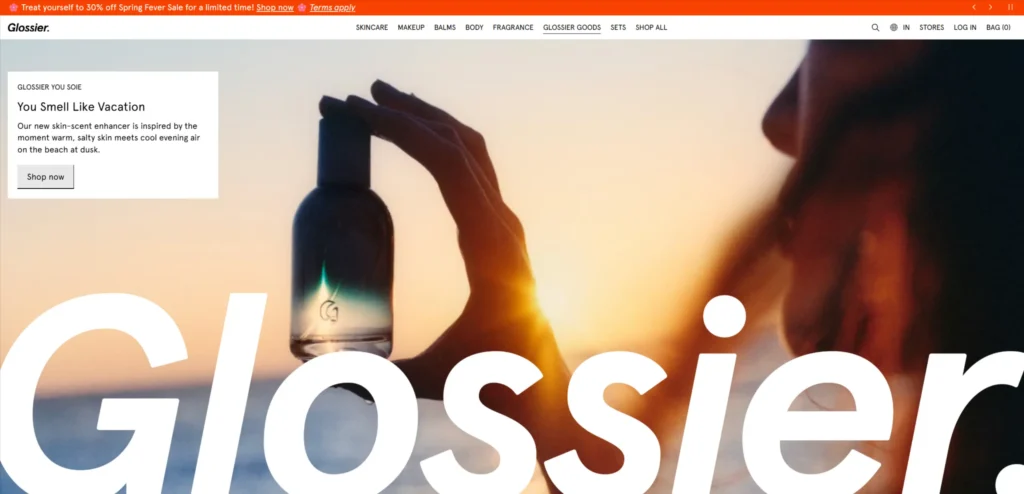
Glossier’s website communicates the brand’s community-centric, skin-first philosophy through photography of real skin, real women, and real complexions rather than airbrushed perfection. The product descriptions are written in a conversational tone that mirrors the brand’s social media voice. The community content, including real customer reviews and real skin, is integrated throughout.
Design lesson: Fashion and beauty brands whose positioning is built on authenticity and community should use real customer photography throughout the website rather than exclusively brand-produced content. The contrast between brand and customer photography communicates genuineness.
7. Warby Parker
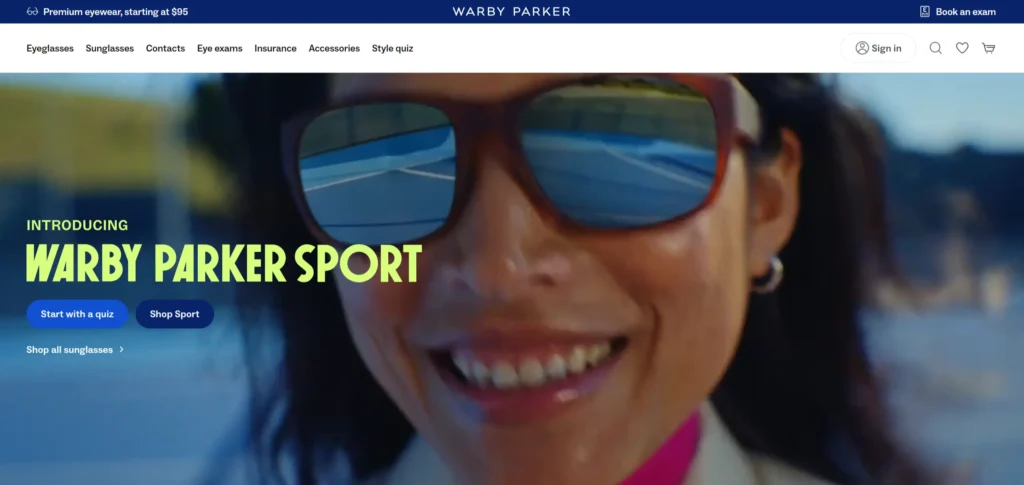
Warby Parker solved the primary purchase barrier for eyewear eCommerce (the classic objection: ‘I can’t see how these will look on me’) through a virtual try-on tool that uses the phone camera to superimpose frames on the customer’s face. This feature is the primary conversion tool on the website and directly addresses the hesitation that prevented eyewear from being a successful eCommerce category previously.
Design lesson: Identifying and directly addressing the primary purchase barrier for your product category (the reason customers hesitate to buy online what they would buy in a store) is the most impactful single feature decision on a fashion eCommerce website.
8. Reformation
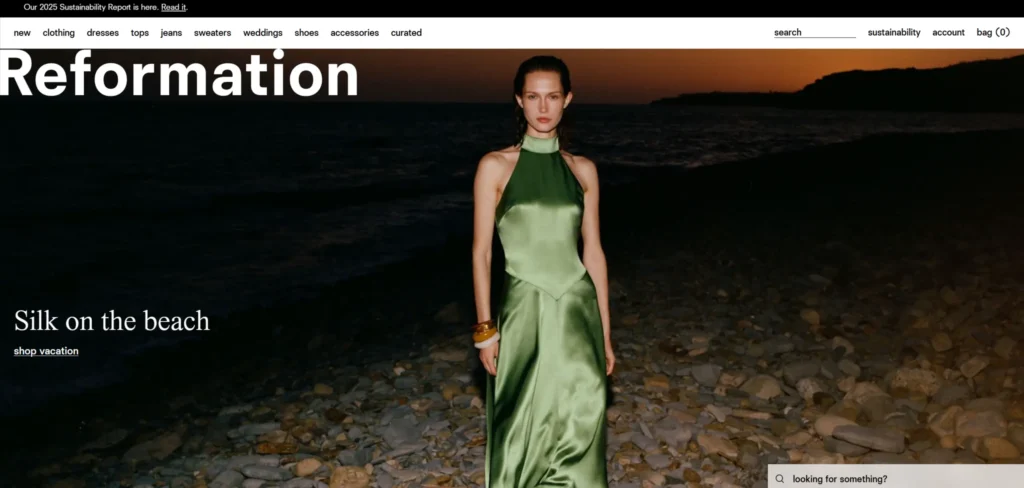
Reformation communicates sustainability with specificity and credibility on every product page: the lifecycle footprint of each garment is displayed alongside the price. The brand voice is distinctive and consistent throughout the site. Photography shows the clothing being worn by women in real locations. The fit information is detailed and genuinely useful.
Design lesson: Sustainability claims on fashion websites must be specific and verifiable to be credible to the customer segment that cares about them. Reformation’s garment-level footprint data is more persuasive than brand-level sustainability positioning.
9. A.P.C.
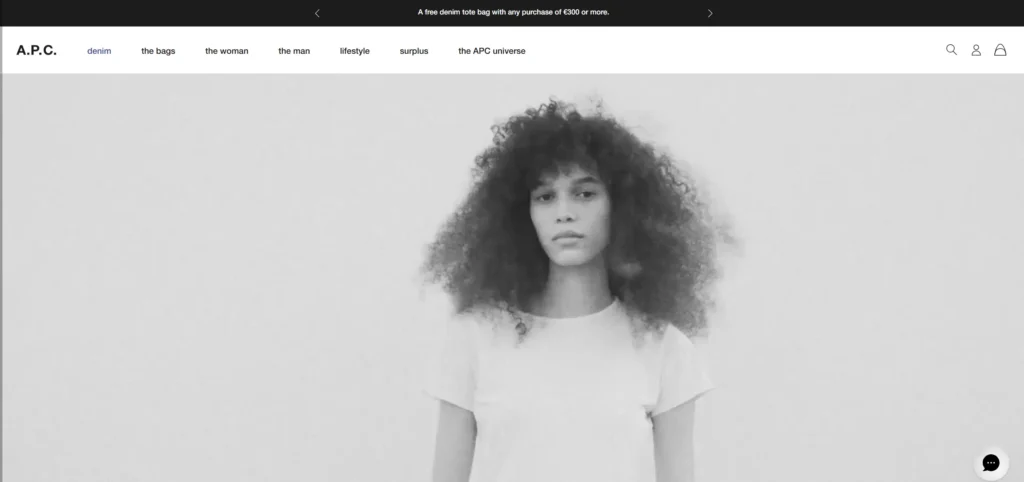
A.P.C. is a French brand whose website communicates Parisian restraint and quality through photography that is editorial without being inaccessible. Each piece is presented in multiple contexts: on a person, moving, and in detail. The heritage content is present without dominating. The brand’s collaboration history is well-documented.
Design lesson:Showing each product in multiple contexts, worn and moving alongside lifestyle imagery, gives customers more visual information about fit and silhouette than a static product image provides. More visual information reduces return rates.
10. Jacquemus
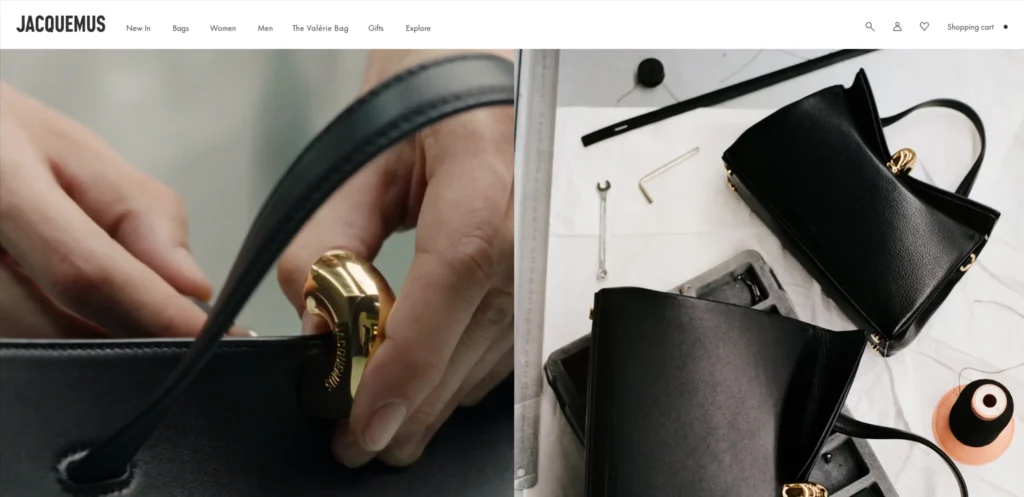
Jacquemus’s website is a destination in its own right, a brand world rather than a storefront. The photography is iconic and immediately recognizable. The product is almost secondary to the universe being communicated. For Jacquemus’s audience, being immersed in the brand world is part of the purchase motivation.
Design lesson: Fashion brands with a genuine creative vision can create a website that is a brand experience rather than a product catalog. The customers who enter this world buy more, return more, and advocate for the brand because the experience is worth sharing.
11. Aesop
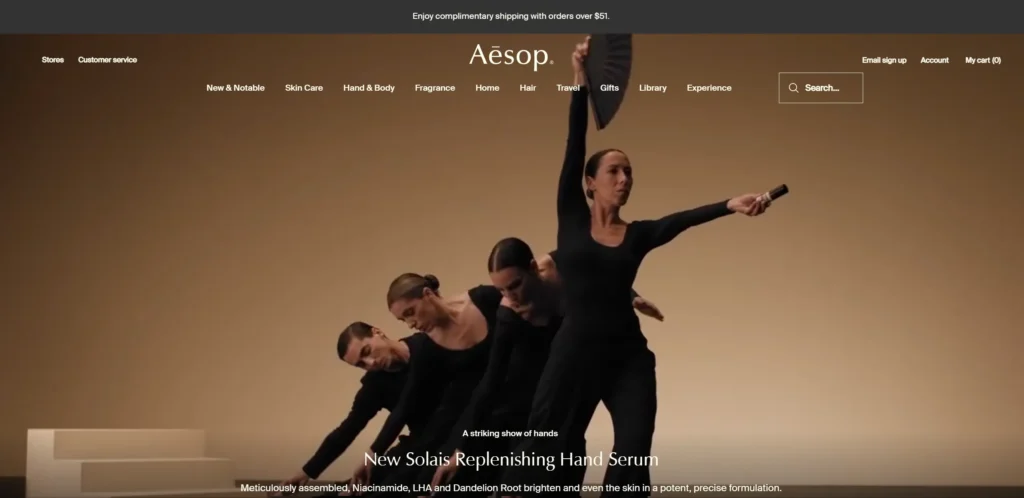
Aesop’s website communicates the brand’s literary and philosophical positioning through typography, product presentation, and copy that is genuinely substantive. The store locator is prominent because retail remains the primary channel for Aesop’s considered purchase customer. Product descriptions explain ingredient function and provenance with a depth that positions the brand as a company that takes product formulation seriously.
Design lesson: Fashion and beauty brands whose purchase requires considered evaluation (premium pricing, specific use case, ingredient-conscious customers) benefit from product descriptions that provide the depth of information that supports a confident purchase rather than brevity that creates uncertainty.
12. Pangaia
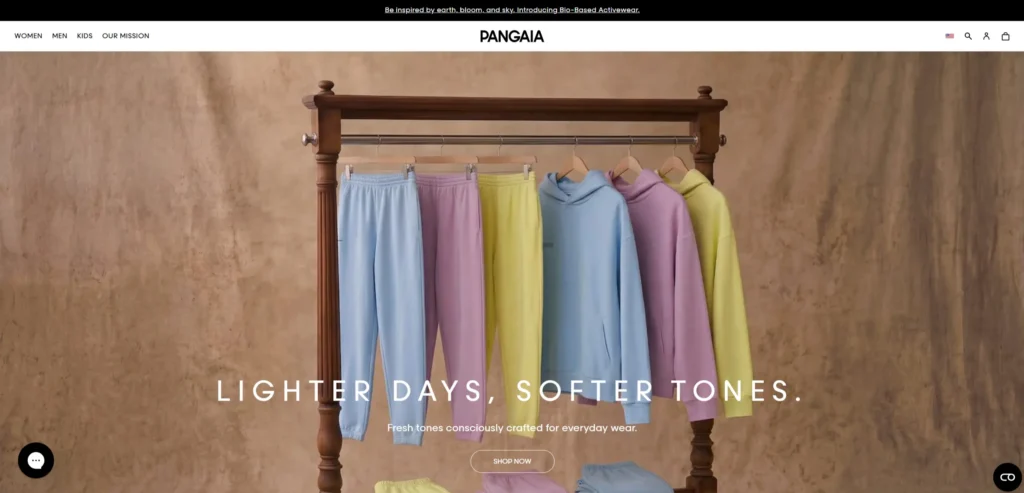
Pangaia is a materials science company masquerading as a fashion brand, and the website communicates this technical credibility alongside the brand’s visual appeal. Each material innovation is explained specifically. The sustainability reporting is detailed and independently verified. The brand attracts customers who make purchasing decisions based on both aesthetics and ethics.
Design lesson: Fashion brands whose product innovation is technical, covering new materials, sustainable processes, and innovative manufacturing, and they need to explain the technology in accessible detail on the website. The customers who make decisions based on this information will not buy from a brand that does not provide it.
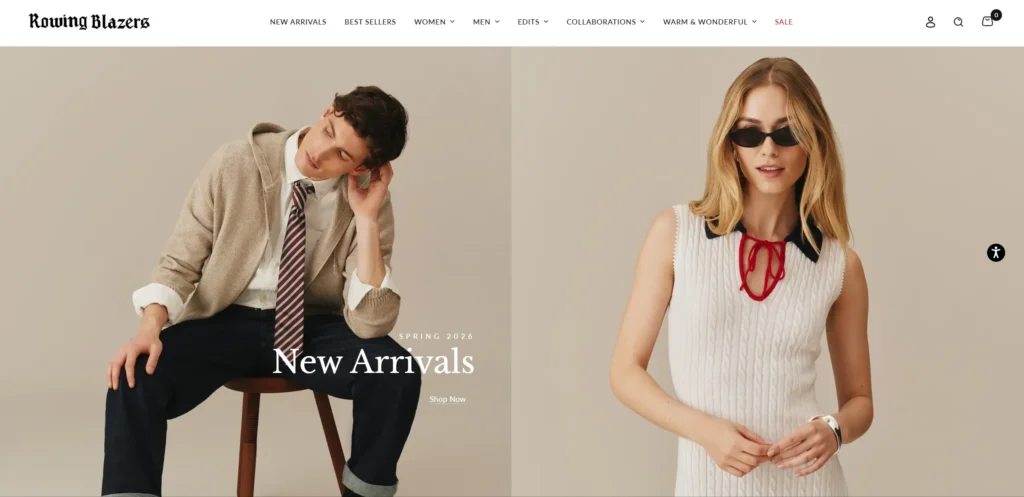
13. Rowing Blazers
Rowing Blazers communicates a specific subculture, preppy American sportswear with an irreverent edge, through photography and copy that is steeped in that world’s references without being inaccessible to outsiders. The collaboration content is well-documented. The brand’s genuine expertise in the ivy league and collegiate sportswear codes gives every page an authority that a generic fashion brand cannot replicate.
Design lesson: Fashion brands built around genuine subculture expertise communicate their authority most effectively through depth of knowledge communicated across the website, not just in an About page but in product copy, editorial, and campaign content.
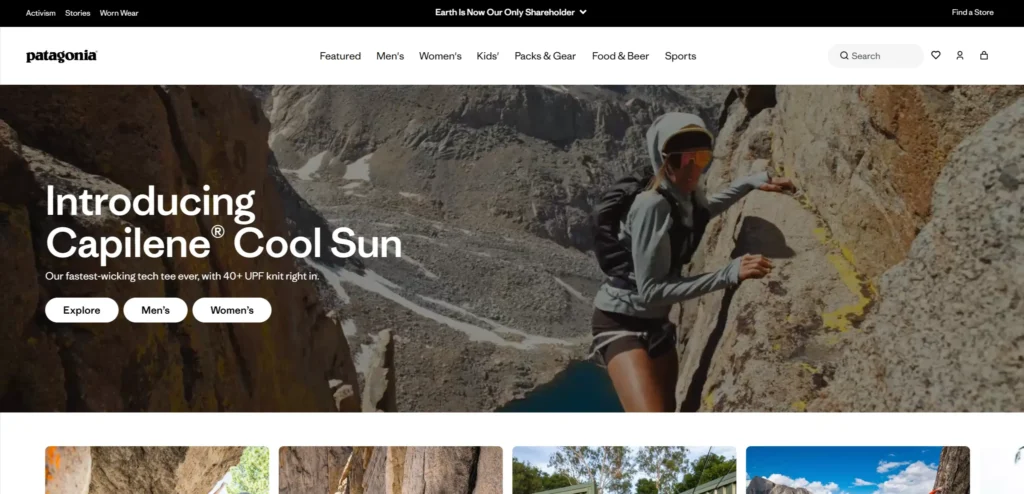
14. Patagonia
Patagonia’s website communicates activism and environmental responsibility as the brand’s core identity, with product as the means of funding that mission. The environmental campaigning content is as prominent as the product catalog. The Worn Wear section promotes buying used Patagonia rather than new. This radical transparency about prioritising the planet over sales is the brand’s most powerful trust-building mechanism.
Design lesson: Fashion brands whose identity is genuinely built around a mission beyond selling products should give that mission equal or greater prominence than the product on the website. Patagonia’s customers buy from them partly to support the mission. Making the mission prominent accelerates this.
What These Fashion Website Designs Have in Common
Looking across all 14 examples, these patterns appear consistently in the ones that work best commercially, not just aesthetically.
Product photography that shows the garment in motion and on a person, not only static on a mannequin or flat-lay
Editorial or content section that creates discovery and positions the brand as an authority
Sustainability and provenance information specific and verifiable, not generic
Clear size guidance with detailed measurement information to reduce return rates
Mobile-first layout with touch-optimised product browsing and one-click add to bag
5 Design Elements Every Fashion Website Needs
Whether you are building from scratch or redesigning an existing site, these five elements consistently separate high-performing examples from functional but forgettable ones.
1. Product photography showing garments in motion and on diverse body types, not only static on mannequins
Product photography showing garments in motion and on diverse body types, not only static on mannequins
2. A way to see the product worn in a real context
A way to see the product worn in a real context, through editorial photography, customer photos, or video, rather than product-only images
3. Size guidance that is specific enough to allow confident purchases without a physical fitting
Size guidance that is specific enough to allow confident purchases without a physical fitting
4. Editorial or discovery content that makes browsing feel like a style journey rather than a product grid
Editorial or discovery content that makes browsing feel like a style journey rather than a product grid
5. Sustainability and material information specific and verifiable, presented on the product page, not only in an About section
Sustainability and material information specific and verifiable, presented on the product page, not only in the About section
AI Implementation for Fashion Websites in 2026
Most fashion website design articles cover design examples. Almost none address AI implementation, which is where the commercial gap is opening in 2026. Fashion website designs that implement these features in the next 12 months will have a measurable advantage over those that do not.
1. AI-Powered Virtual Try-On
Virtual try-on technology for fashion shows how a garment will look on the customer’s own body type and has reached commercial quality for several product categories in 2026. Tools like Heuritech, Vue.ai, and Snap’s AR platform allow customers to see how a specific garment will fit their measurements, reducing purchase hesitation and measurably reducing return rates. Warby Parker’s implementation of virtual try-on for eyewear remains the most widely cited case study, but the technology is now applicable to apparel, footwear, and accessories.
2. AI-Powered Style Recommendation and Personal Styling
A fashion customer who describes their style, their wardrobe gaps, and their upcoming occasions should receive a curated outfit recommendation from a specific product catalogue, not a generic style guide. AI-powered personal styling tools like those deployed by ASOS, Stitch Fix, and Trunk Club create a customer experience that physical personal shopping delivers in-store but digital fashion retail has historically not been able to replicate.
3. AI-Driven Size Recommendation
Incorrect sizing is the primary driver of fashion eCommerce returns, which represent both a financial cost to the retailer and a customer experience failure that damages repurchase rates. AI size recommendation tools work by taking the customer’s measurements, body type, and fit preferences, and recommending the correct size for each brand and product, reducing return rates by 20 to 40% in published case studies. True Fit and Sizebay are the leading implementations for fashion eCommerce.
4. AI-Generated Fashion Content and Product Copy
Fashion product descriptions are one of the highest-volume content production requirements in eCommerce. AI tools trained on brand tone of voice and product data can generate first-draft product descriptions that maintain brand consistency at scale, significantly reducing the content production cost for large fashion catalogues. The output requires editorial review for tone and accuracy but removes the blank-page production burden for each new product.
KrishaWeb builds AI-integrated fashion websites on WordPress and other platforms. If your current site is not using these features, our team can assess what to implement first based on your specific conversion goals.
content that creates discovery, and a checkout process that is fast and mobile-optimized. The most common failure point is product photography that does not show how the garment actually fits or moves.
How important is product photography for fashion websites?
Fashion product photography is the primary conversion tool. The customer cannot feel the fabric, try the fit, or see how the color looks in different lighting. Photography that shows the garment being worn in multiple angles, in movement, and in real-life contexts addresses these limitations more effectively than studio product-on-mannequin images. The return rate difference between brands with good worn photography and those without is measurable and significant.
How should fashion websites handle sizing?
Sizing is the primary source of returns in fashion eCommerce and the primary hesitation preventing first purchases. A size guide that shows actual measurements alongside model height and which size the model is wearing gives customers the information they need to make a confident size decision. AI size recommendation tools that learn from customer body measurements and return rates are now accessible to independent fashion brands as well as large retailers.
What is the best eCommerce platform for the fashion industry?
The majority of fashion eCommerce brands decided to go with Shopify as their eCommerce platform in 2026 due to its ability to manage products effectively, the high quality of themes available on the platform, and the wide range of apps available for features such as virtual try-ons and size recommendations, as well as editorial content integration. For luxury fashion brands that have highly custom experiences, custom frontends built on a headless commerce architecture allow them to have complete control over visual design without sacrificing any functionality in the back end of their eCommerce system.
What ways can AI enhance a fashion site?
There are several examples of how to integrate AI into a fashion website. These four examples have the potential to help fashion sites by providing measurable commerce improvements by 2026. Virtual Try-on (or “VTO”), Personalized Styling, AI-based Size Recommendations to Reduce Returns, AI-Generated Product Copy at Scale.
Conclusion
The 14 fashion website designs on this list span different scales, budgets, and markets. What they share is not production budget or agency pedigree. It is a commitment to treating the website as a genuine commercial and brand tool rather than a digital brochure.
The fashion websites on this list prove that great design is a commercial decision, not just an aesthetic one. If your current site is not converting visitors into customers, it is time for a focused rethink.KrishaWeb’s web design team has been building conversion-focused fashion and eCommerce websites since 2008. Talk to us about what the right approach looks like for your brand.
If your current fashion website designs are not doing these things, talk to KrishaWeb’s web design team about what a focused redesign would look like for your specific goals.
Ready to improve your website? KrishaWeb has been designing and developing conversion-focused websites since 2008. Tell us your goals, and we will tell you the right approach.
Disclaimer:This article is intended for informational and inspirational purposes only. The website examples featured are owned by their respective organizations. KrishaWeb has no affiliation with any of the websites referenced unless otherwise stated. All observations, statistics, and design notes reflect research current as of April 2026 and may change over time.
Nisarg Pandya
Project Manager
Experienced Project Manager and Scrum Master at KrishaWeb, delivers expertise in Scrum methodologies, Laravel, React.js, UX design, and project management, ensuring efficient project delivery and agile implementation.




 KrishaLabs
 KrishaStudio
 KrishaStore