



 KrishaLabs
 KrishaStudio
 KrishaStore
When a Website Needs to Become a Business System
You are probably here because of one of these:
A web development project is rarely just about adding pages. It usually starts with a real business problem: replacing manual work, connecting systems that do not talk to each other, giving customers a self-service portal, or turning an early product into software that can support real growth.
- Your current platform cannot support new workflows.
- Manual processes are slowing your team down.
- The application has become difficult and risky to maintain.
- Integrations keep breaking.
- The product needs to scale beyond its original architecture.
- Your internal team needs an experienced development partner.
If any of those sound familiar, the rest of this page is about how we fix them, and how we do it without creating a new problem for your team.
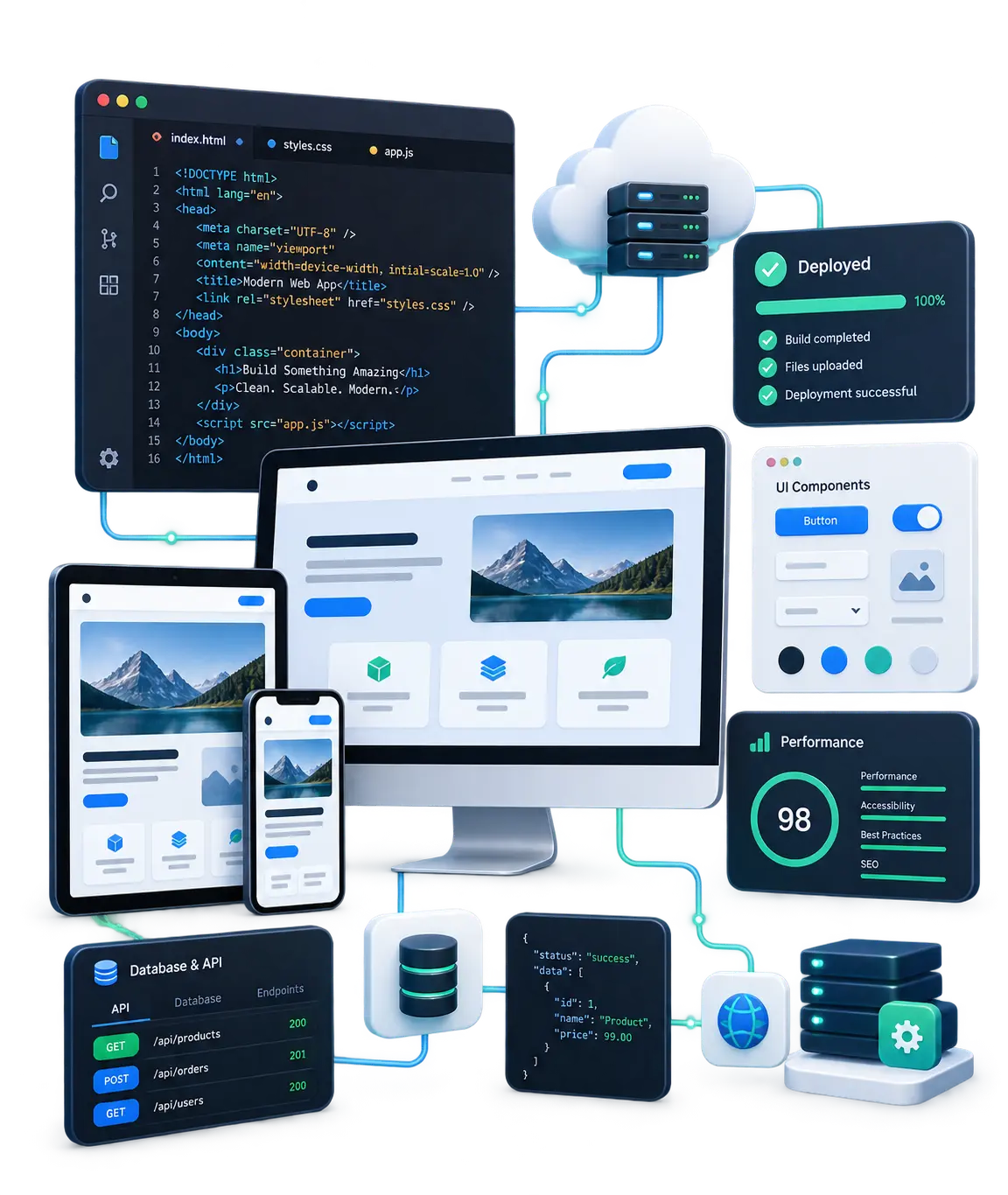
Our Web Development Services
At KrishaWeb, we focus on delivering high-quality web solutions that improve user experience, security, and performance. Here’s how we can support your business:
-
For businesses whose workflows do not fit a standard CMS or off-the-shelf platform. We build custom business logic, role-based access control, audit trails, dashboards and portals, workflow automation, third-party integrations, and custom data models, software shaped around how your business actually works.
-
The front end, backend, APIs, database, and deployment infrastructure built as one connected system: React and Next.js, Node.js, Laravel, and Python, REST and GraphQL APIs, PostgreSQL and MySQL, authentication and authorization, and CI/CD and cloud deployment.
-
Build or improve software products that serve multiple customers and need to keep growing: multi-tenancy, subscription billing, usage metering, onboarding flows, feature flags, admin dashboards, customer portals, and analytics, planned from the architecture stage, not bolted on later.
-
Connect the systems your business already depends on: CRM and ERP integrations, payment gateways, data synchronization, REST and GraphQL APIs, versioning, webhooks, developer documentation, and monitoring and error handling.
-
Improve an existing codebase without forcing a risky full rewrite. We start with a technical assessment and architecture review, prioritize risk-first, and modernize incrementally: database modernization, API extraction, better test coverage, and performance and security remediation.
-
AI as one capability within solid web development, not a vague claim that everything is “AI-powered.” We build AI assistants, retrieval-augmented generation (RAG), semantic search, workflow automation, recommendation systems, and AI-powered content or support tools, with model and API integrations, human-approval workflows, AI code security review, and monitoring and cost controls.
-
For businesses launching a brand-new website, or replacing one that no longer represents them. We design and build fast, secure, search-ready websites on the right platform for your needs, WordPress, Webflow, or a custom build, with clean content management your team can run, performance and SEO built in from the start, and room to grow into a web application later if you need it.
-
For founders building their first product or their next one. We help you get to market fast without building something you will have to throw away in six months. We scope the smallest version that proves your idea, build it with real architecture and security (not just a prototype), and structure it so it can scale if it works and raise if you need it to. Fast enough to launch, solid enough to build on.
Choose the Right Web Development Approach
Not sure which of the above you need? Find your situation below and start there.
Your situation | Recommended approach |
| You need a brand-new website (or to replace an old one) | New website development |
| You are a startup building your first product | Startup and MVP development |
| You need custom workflows or a client portal | Custom web application |
| You are launching a multi-user software product | SaaS development |
| You need frontend, backend, and integrations | Full-stack web development |
| Your systems do not communicate with each other | API development and integration |
| Your existing application is hard to maintain | Legacy modernization |
| You want to add AI to an existing product | AI-enabled web development |
| You need ongoing technical capacity | Dedicated team or retainer |
| You are an agency with delivery overflow | White-label web development |
Why Businesses Choose KrishaWeb for Web Development
We build web applications that the next developer on your team can understand, extend and maintain because the true cost of a development project is measured over years, not at launch.
Your Team Owns the Code
Full IP assignment and source-code access, no proprietary lock-in, complete documentation and handover, and disclosure of third-party and open-source components. What we build is yours, and it stays operable by any qualified developer.
Architecture Before Implementation
Before we write features, we agree on the foundation: requirements review, data model, API contracts, authentication approach, deployment topology, and integration risks, with architecture sign-off. It is the step that prevents expensive rework later.
Built for the Next Developer
Architecture documentation, readable code, test coverage, deployment runbooks, developer onboarding, walkthrough sessions, and clear conventions, so your team, or your next hire, can pick it up and keep moving.
Honest Technology Recommendations
We do not fit every project to one preferred stack. We choose based on your team’s skills, maintenance needs, performance, scalability, budget, compliance, time to market, and lock-in risk, and we explain the trade-offs so you can decide with us.
Security Is Part of the Build
We follow OWASP-aligned development practices against the risks that matter: broken access control, injection, security misconfiguration, cryptographic and authentication failures, supply-chain risk, and logging gaps. In practice that means input validation, parameterized queries, access-control design, secure sessions, dependency scanning, careful secret handling, logging and alerting, and security testing before release.
Custom Web Development Company. What Sets a Quality Build Apart.
The difference between a web development company and a quality web development company is not visible in a proposal. It shows up six months after launch when you are extending the product, debugging under load or handing it to a new developer.
Every project starts with an architecture design phase where we map out the data model, API structure, authentication approach, deployment topology and third-party integration points, all reviewed and agreed before development begins. This is not overhead. It is the difference between a codebase that is extendable and one that requires a rewrite when requirements change.
Test coverage percentages are a poor proxy for test quality. We write feature tests that describe what the application should do from the user’s perspective, unit tests for complex business logic and integration tests for external dependencies so the test suite is genuinely useful when something breaks, not a collection of coverage-chasing assertions that pass on green and fail to catch real regressions.
Security that gets reviewed after a build is finished finds problems that are expensive to fix. We apply OWASP Top 10 mitigations at the design phase, including parameterised queries, proper session management, output encoding, dependency vulnerability scanning and access control that enforces the principle of least privilege, so the application ships secure rather than shipping and then being secured.
A handover is only complete when your team can maintain and extend the application without calling us. We include architecture documentation, a developer onboarding guide, documented deployment procedures and a walkthrough session with your engineering team so the knowledge transfer is real, not a repository drop and a good luck.
Our Technical Stack. What We Build With and Why.
We work with a defined set of technologies we know well, rather than a long list of everything we have touched. Here is what we use and why we choose it.
Modern Web Application Development
We build scalable and high-performance web applications using modern frontend and backend technologies tailored to business growth. From custom UI development and reusable component systems to API integrations and SEO-focused architecture, our development approach is built for speed, flexibility and long-term scalability. We focus on clean code structure, responsive experiences and optimized performance to ensure applications remain maintainable and conversion focused as they grow.
Frontend. React and Next.js.
React is our primary frontend choice for applications that need component reusability, predictable state management and a large ecosystem of tested libraries. Next.js adds server-side rendering, static generation and file-based routing for applications where SEO and initial load performance are requirements. We use TypeScript across all frontend work because it catches errors at development time that would otherwise surface in production.
Backend. Node.js and Laravel.
Node.js for real-time applications, high-concurrency APIs and teams where JavaScript consistency across frontend and backend reduces context switching. Laravel for applications that benefit from a full-featured framework, including authentication, queuing, ORM and a structured conventions system that keeps larger teams aligned.
Databases. PostgreSQL and MySQL.
PostgreSQL for applications with complex queries, JSON data needs or advanced indexing requirements. MySQL for applications where simplicity, wide hosting support and a well-understood operational model are the priority. We design schemas with query performance in mind from the start, not as an optimisation task after slow queries appear in production.
Cloud and Deployment. AWS and Vercel.
AWS for applications requiring fine-grained infrastructure control, multi-region deployment or specific compliance requirements. Vercel for Next.js applications where deployment simplicity and edge performance are the priority. All deployments include CI/CD pipelines, environment separation and infrastructure documented so your team can manage it without us.
Testing. PHPUnit, Vitest and Playwright.
Server-side feature and unit tests in PHPUnit or Jest. Frontend component tests in Vitest with React Testing Library. End-to-end tests in Playwright for critical user journeys including checkout flows, authentication and any workflow where a regression in production has a measurable business cost.
Security. OWASP and Dependency Scanning.
OWASP Top 10 mitigations applied at the architecture stage, not reviewed after the build is complete. Input validation, parameterised queries, output encoding, secure session management and access control designed with least-privilege principles from the data model up. Dependency vulnerability scanning on every build with automated alerts for high and critical CVEs before they reach production.
How We Build Your Web Application
Four phases from requirements to a codebase your team owns and can extend.
Discovery and Requirements
We talk through your business problem, user needs, integrations and performance requirements before agreeing on what we are actually going to build.
Architecture and Technical Design
Data model, API structure, infrastructure and security approach are all agreed and documented before any development starts. Changes here cost hours, not weeks.
Sprint-Based Development
Two-week sprints with working software at the end of each one. You see progress on staging, not in a status report.
QA, Launch and Handover
Every requirement is tested before go-live. Architecture documented, codebase walked through, deployment process handed to your team with 30 days of post-launch support.
Web Development for Your Industry
A SaaS application and a B2B client portal share a technology stack and almost nothing else in terms of what they need to do. We bring industry context to every project so the architecture decisions, the user workflows and the integration requirements reflect how your sector actually operates.

SaaS
SaaS products have engineering requirements that general web development does not plan for: multi-tenancy that keeps customer data cleanly separated, subscription billing that handles upgrades, downgrades and failed payments without manual intervention and feature flags that let you release to a subset of users before a full rollout. We build SaaS applications with these requirements handled at the architecture level, not added later when the product hits the scale where they become critical.

B2B
B2B enterprise applications need access control that reflects organisational hierarchy, audit trails that satisfy compliance requirements and integrations to the ERP and CRM systems that already run the business. We build B2B applications with role and permission systems designed from the data model up, SSO integration for enterprise identity providers and API integrations that handle the edge cases that only appear when real business data flows through them.

Healthcare
Healthcare web applications carry specific obligations around data handling, access logging and system integration that general development work does not address. We build healthcare applications with HIPAA-aware data architecture, role-based access that limits patient data exposure to the minimum necessary, audit trails that satisfy compliance review and HL7 and FHIR integration patterns for connecting to EHR systems.

Real Estate
Real estate web applications are data-heavy, carrying large property catalogues, complex search and filter requirements, map integrations and agent or branch portals with different permission levels. We build proptech applications with search architectures that handle high catalogue volumes without performance degradation, MLS and property feed integrations that keep listings current and agent portal access controls that reflect your organisational structure.

Education
Education web applications manage structured learning data including courses, cohorts, assessments, progress and certificates, with user workflows that differ significantly between learners, instructors and administrators. We build LMS backends with multi-tenant course architectures, assessment engines with configurable scoring logic and student progress tracking that feeds reporting dashboards for instructors and programme administrators.

Media and Publishing
Media and publishing web applications need to handle editorial volume, deliver content at scale and support the subscription and paywall logic that converts readers to paying customers. We build content delivery APIs that separate editorial management from frontend delivery, paywall and entitlement systems that handle free, metered and paid access tiers and syndication feeds that distribute content to partner platforms without manual effort.
Web Developers Who Know Your Industry
- SaaS
- B2B
- Healthcare
- Real Estate
- Education
- Media and Publishing
- Manufacturing
- Health and Beauty
CASE STUDIES
What Web Development Changes in Practice
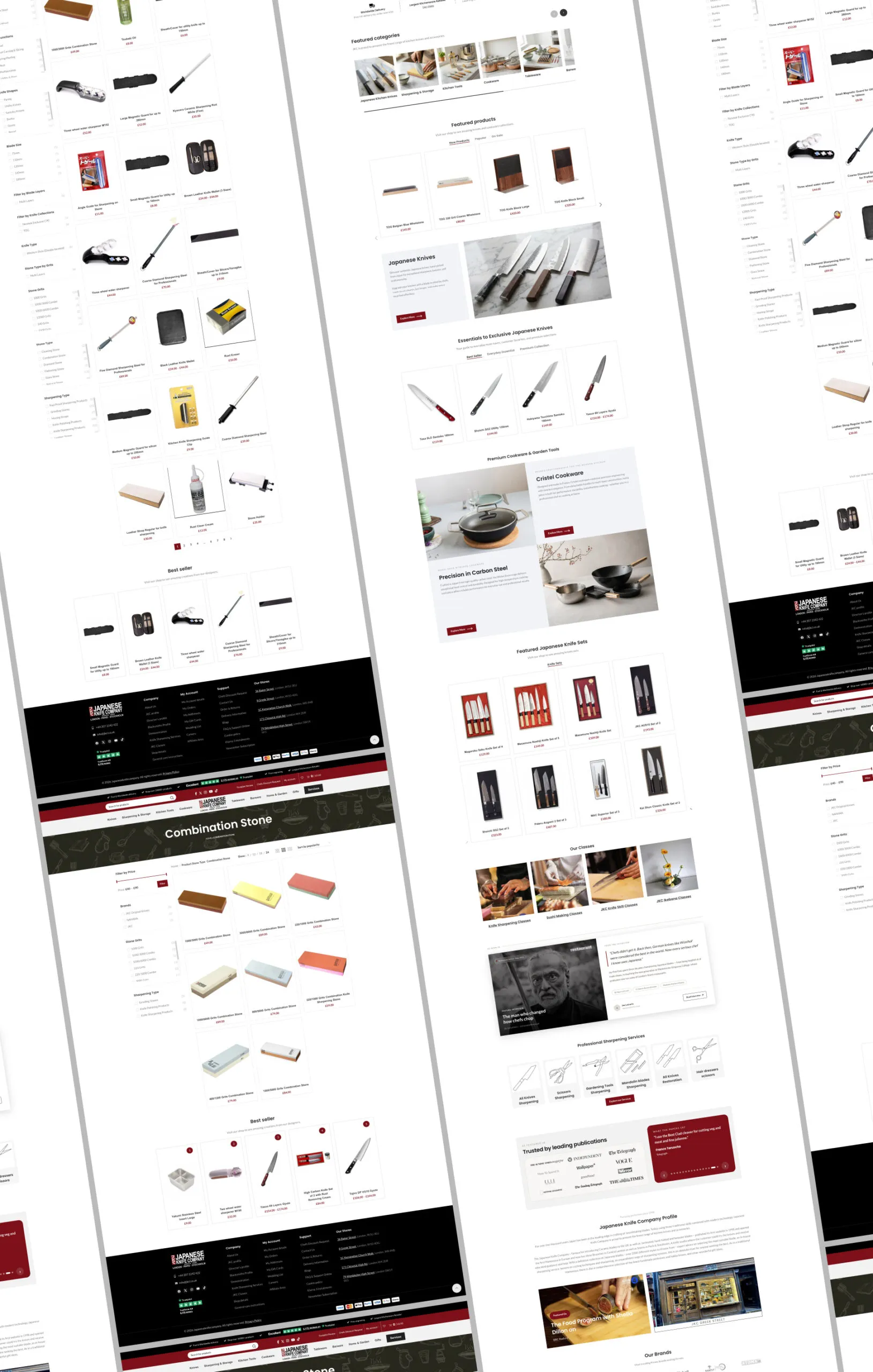
Japanese Knife Company (JKC)
How KrishaWeb Helped Japanese Knife Company Grow Net Sales by 29% Year-on-Year Through Systematic eCommerce Performance, Security, and Multilingual Optimisation
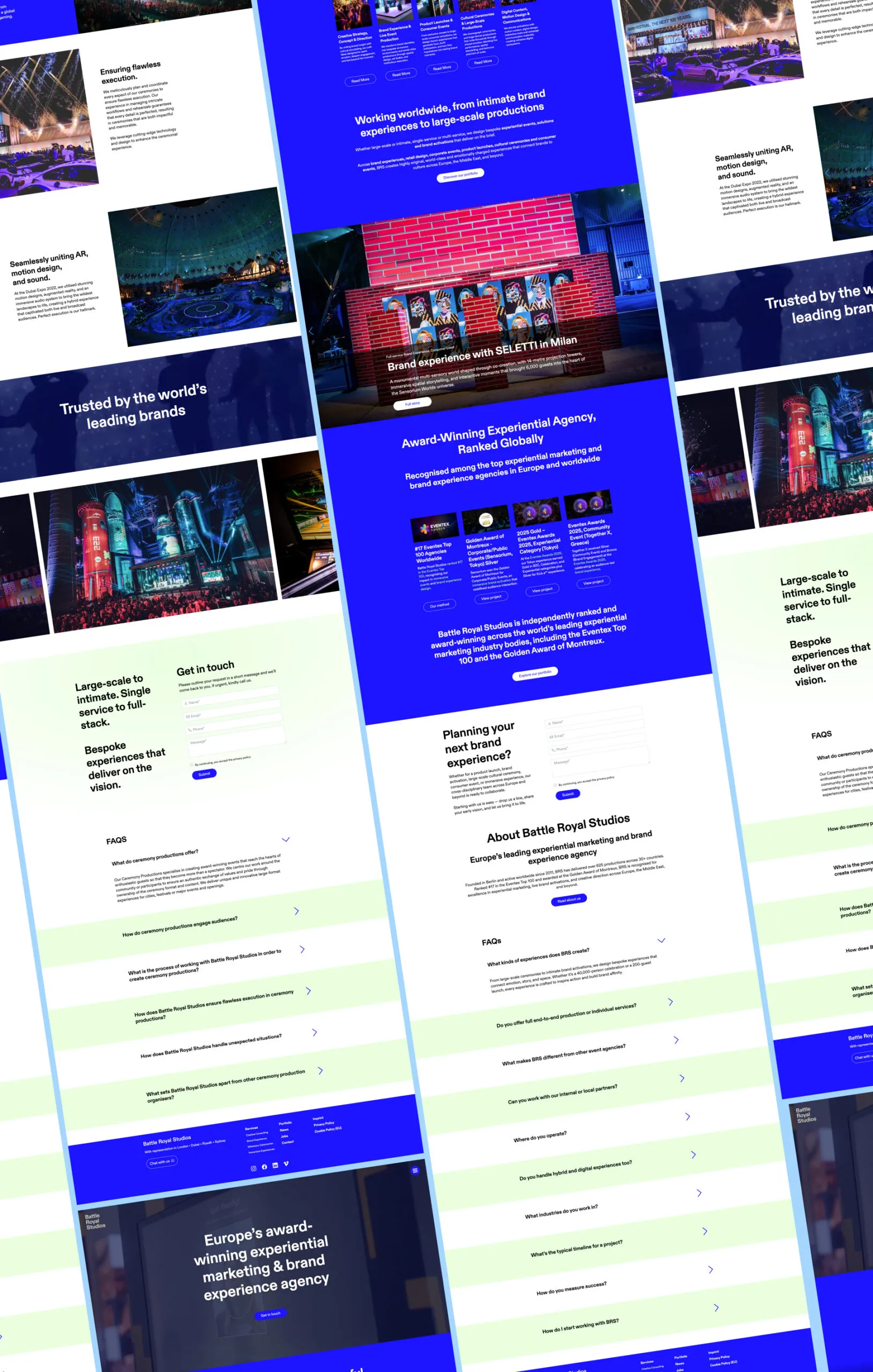
Battle Royal Studios
93 PageSpeed, Zero Developer Dependency: How KrishaWeb Delivered a Custom Gutenberg Website for an Award-Winning Global Events Agency in 6 Weeks
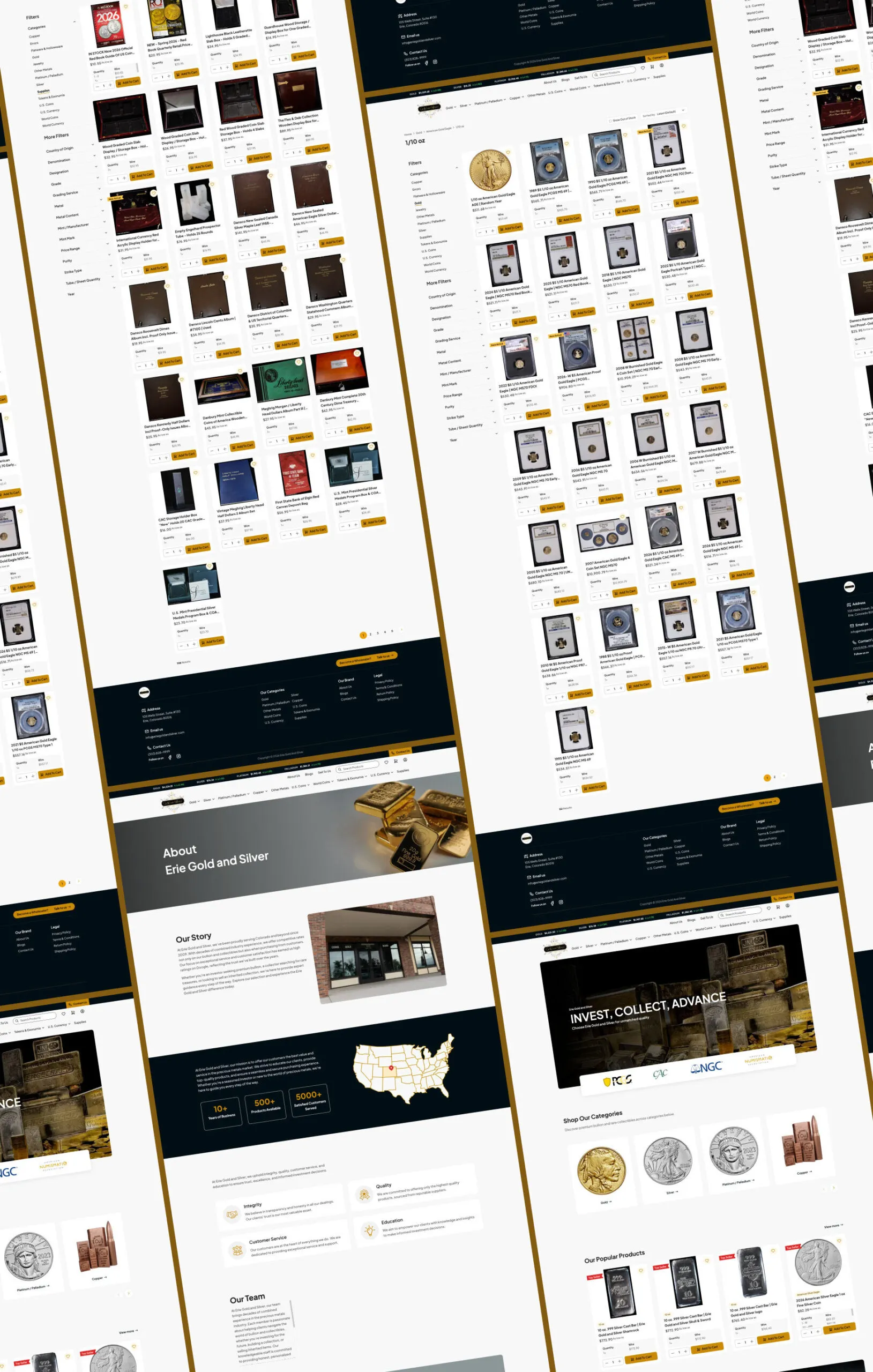
Erie Gold and Silver
Built for an Industry Where Prices Change by the Second: How KrishaWeb Engineered a Custom Precious Metals eCommerce Platform for Erie Gold and Silver
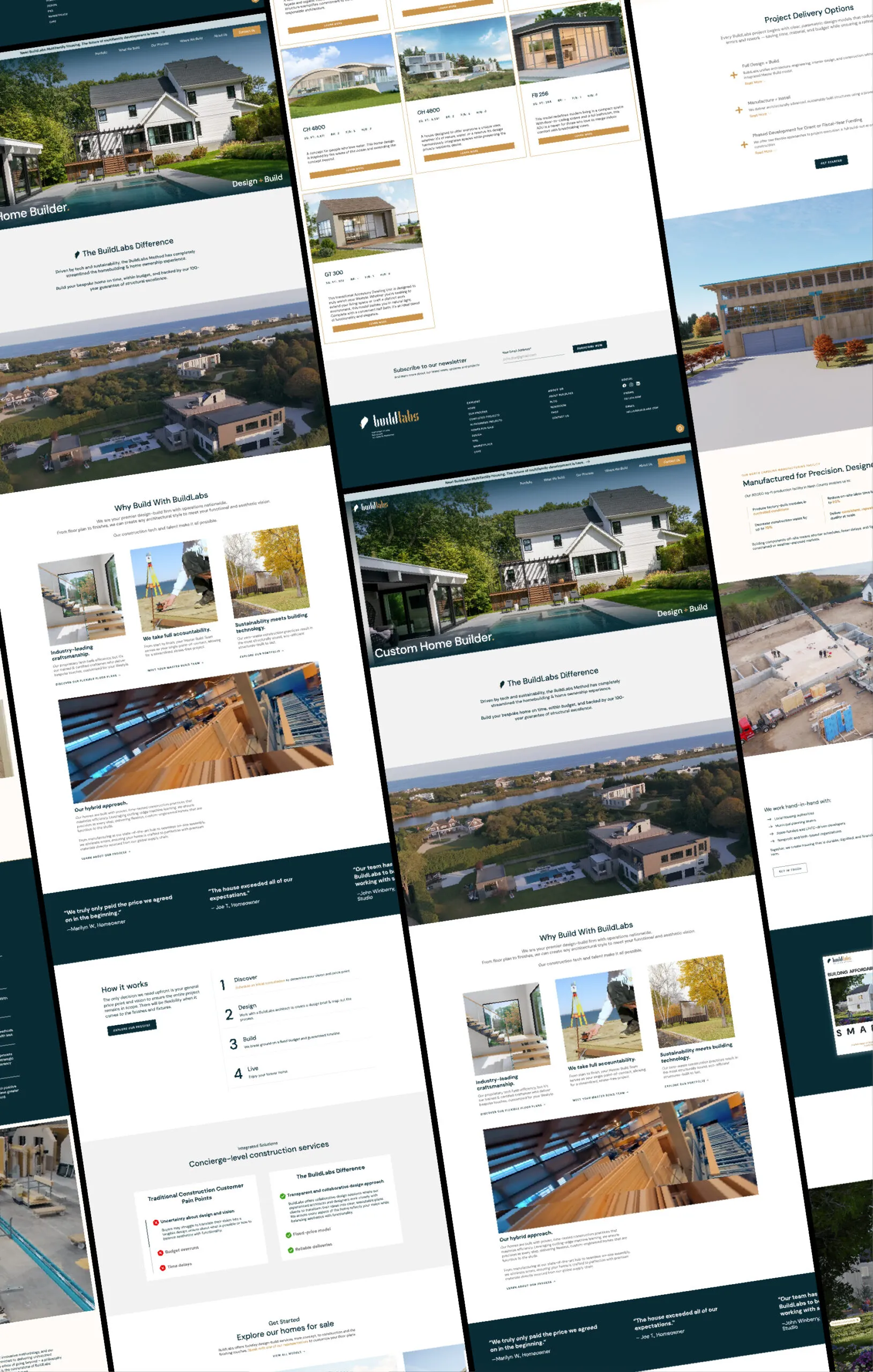
BuildLabs
From Slow and Disconnected to High-Converting: How KrishaWeb Transformed the BuildLabs Website into a Lead Generation Engine
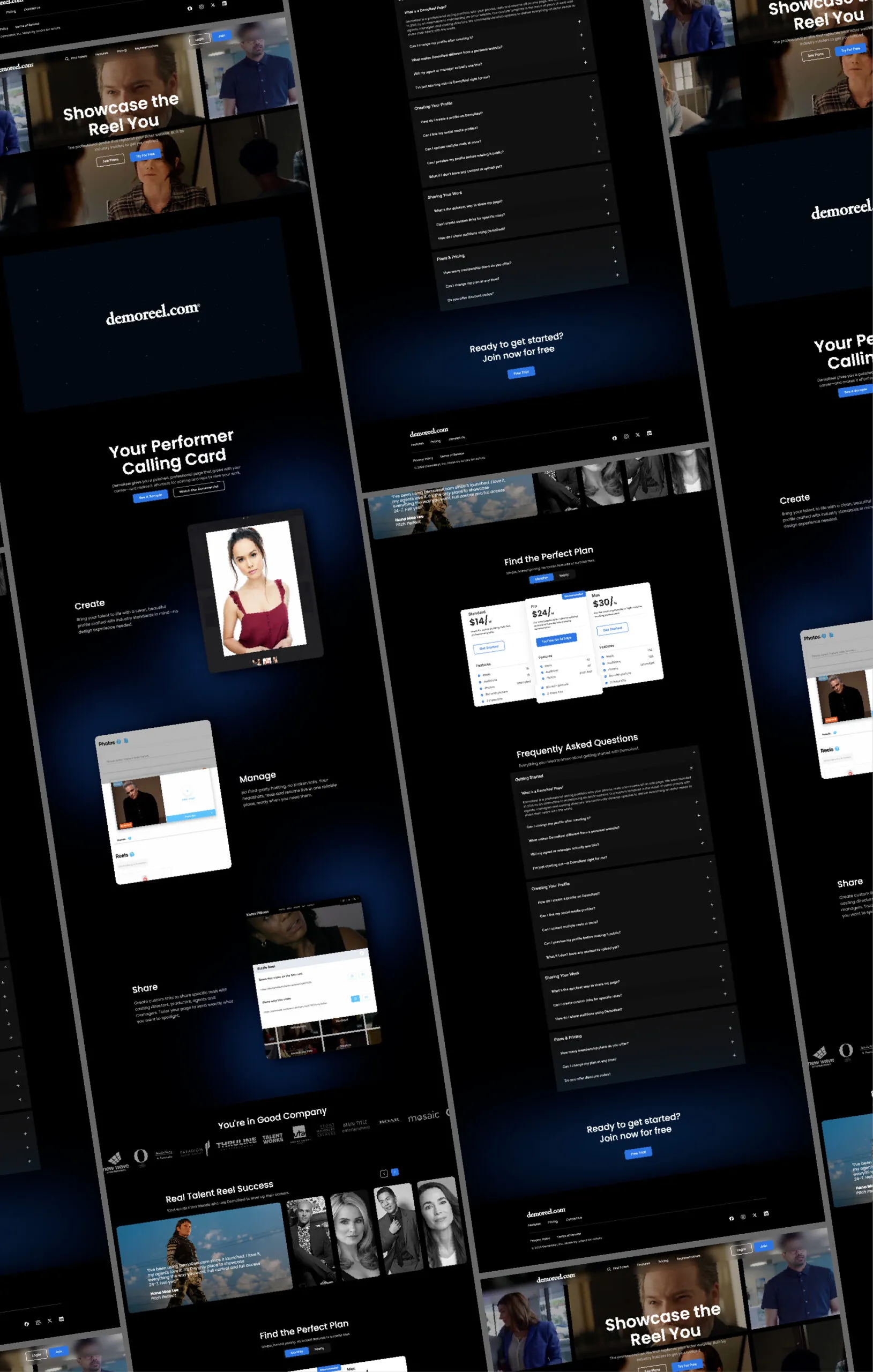
DemoReel
From Technical Debt to 64% More Subscribers: How KrishaWeb Rebuilt DemoReel into a Scalable, High-Performance SaaS Platform

The Road I’ve Traveled (TRIT)
Zero to Launch: How KrishaWeb Built a Patent-Pending Jewelry Configurator That Achieved a 68% Checkout Completion Rate and $0 to Revenue in 7 Months
Flexible Ways to Work With Our Development Team
Different projects call for different arrangements. Here are the ways teams work with us, from a one-off build to ongoing capacity.
Fixed-Scope Project
For defined requirements, clear deliverables, and a known launch date. Includes scope, milestones, acceptance criteria, and a change-request process.
Dedicated Development Team
For ongoing product development, multiple workstreams, or extending your internal team. Includes named roles, agreed availability, a project-management model, monthly planning, and a backup/replacement process.
Retainer or Ongoing Support
For maintenance, feature enhancements, bug fixes, performance monitoring, and technical-debt reduction.
White-Label Delivery for Agencies
NDA-backed, client-invisible development for agencies that need extra capacity, across React, Laravel, WordPress, Webflow, and custom builds.
Client Feedback
Hear from our clients what sets us apart to deliver REAL results & experiences!

KrishaWeb delivered a site that met all our expectations. Their friendly attitude and speedy work stood out, even while working remotely under tight deadlines. They accommodated our needs seamlessly, making the entire engagement a success.

The collaborative projects with Krishaweb Technologies have garnered several compliments and positive feedback. The team takes the initiative and manages projects well. Excellent work quality, timeliness, and reasonable price structures are key to their success.

KrishaWeb’s web development has positively impacted our business, saving us 4–5 hours of manual work every month. Their technical expertise and creativity result in exceptional outcomes. This trustworthy and hard-working team is a true asset to any project.

KrishaWeb has consistently delivered on their development tasks. The collaboration has always been characterized by their insanely quick turnaround time and incredible customer support. They listen to your challenges and needs and return with a viable solution, every time.



Not Sure How to Scope Your Web Application?
Book a 30-minute call. We will look at what you are building, tell you how we would approach it technically and give you an honest estimate.
What Makes KrishaWeb the Right Software Development Partner
Since 2008, agencies and businesses across the globe have trusted KrishaWeb for their most important web development projects. We take time to understand your site, your team, and your delivery standards before placing anyone. Your reputation is on the line with every project. So is ours.
- 17+Years of Experience
- 2400+Projects Delivered
- 1200+Happy Customers
- 132+Team Members
Frequently Asked Questions
What makes your custom web development service different from off-the-shelf solutions?
-
A web development company designs, builds, integrates, tests, deploys, and maintains websites, web applications, APIs, and digital platforms.
-
It depends on functionality, integrations, user roles, data migration, security, technology, timeline, and support. A reliable estimate requires a requirements and technical review, which we provide before any work begins.
-
A focused application typically takes 10 to 16 weeks, while a SaaS product with multi-tenancy, billing, onboarding, and integrations typically takes 16 to 28 weeks or longer, depending on scope.
-
Website development usually focuses on presenting information, content, and marketing pages. Web application development creates interactive systems with user accounts, workflows, data, permissions, integrations, and business logic.
-
It depends on your content needs, user workflows, team skills, performance requirements, integrations, and long-term maintenance plan. A good development partner explains the trade-offs rather than recommending one stack for every project.
-
Yes, after a technical review. The review identifies architecture, security, performance, documentation, dependency, and maintainability risks before ongoing development begins.
-
You do. The contract defines IP ownership and source-code handover clearly, ownership transfers to you, and we disclose any third-party or open-source components used.
-
Yes. Every project includes 30 days of post-launch monitoring and fixes, and ongoing retainer or ad-hoc support is available beyond that.
-
Yes, after reviewing your existing architecture, data sources, privacy requirements, integration points, model requirements, and monitoring needs.
-
Yes. We deliver NDA-backed, client-invisible development for agencies across React, Laravel, WordPress, Webflow, and custom builds, with clear IP ownership, staging, QA, and handover.
-
Both. We build brand-new websites on the right platform for your needs (WordPress, Webflow, or custom), with performance and SEO built in, as well as complex custom applications. We can also start you on a website and grow it into a web application later.
-
Yes. We help founders get to market fast without building something disposable. We scope the smallest version that proves your idea, build it with real architecture and security rather than just a prototype, and structure it to scale if it works. It is fast enough to launch and solid enough to build on.
Tell Us What You Are Building
Share your current application, requirements, or technical challenge. We will review the problem, recommend an appropriate technical approach, and explain the likely scope, timeline, and next steps.