



 KrishaLabs
 KrishaStudio
 KrishaStore
Result At Glance
DemoReel had a product actors needed and technical debt that was quietly killing it. A platform rebuilt on Angular, upgraded on Laravel, moved to AWS and connected to Stripe changed those outcomes significantly. Here are the headline numbers.
Metrics: Platform Launch Performance
Metrics benchmarked using Google Analytics, Stripe dashboard reporting, server-side performance logs and Google PageSpeed Insights. Subscription and conversion data measured against the 90-day pre-launch baseline period.
| Metric | Before | After | Change | Timeframe |
|---|---|---|---|---|
| Page Load Time (avg) | 5.2s | 2.1s | -60% | Post Phase 3 launch |
| Google PageSpeed Score | 44 / 100 | 81 / 100 | +84% | Post Phase 3 launch |
| Media Playback Drop-off | ~38% abandon | ~9% abandon | -76% | Post AWS S3 optimisation |
| Subscription Sign-up Rate | Baseline | +64% increase | +64% | 90 days post-Stripe |
| Trial-to-Paid Conversion | ~11% | ~27% | +145% | Post UX redesign and Stripe |
| Profile Creation Completion | ~52% | ~81% | +56% | Post Angular rebuild |
| Avg. Session Duration | 1m 44s | 3m 52s | +124% | Post UI/UX redesign |
| Bounce Rate | 61% | 39% | -36% | Post Phase 2 and 3 |
| Mobile Usability Score | Poor | 91 / 100 | +107% | Post responsive rebuild |
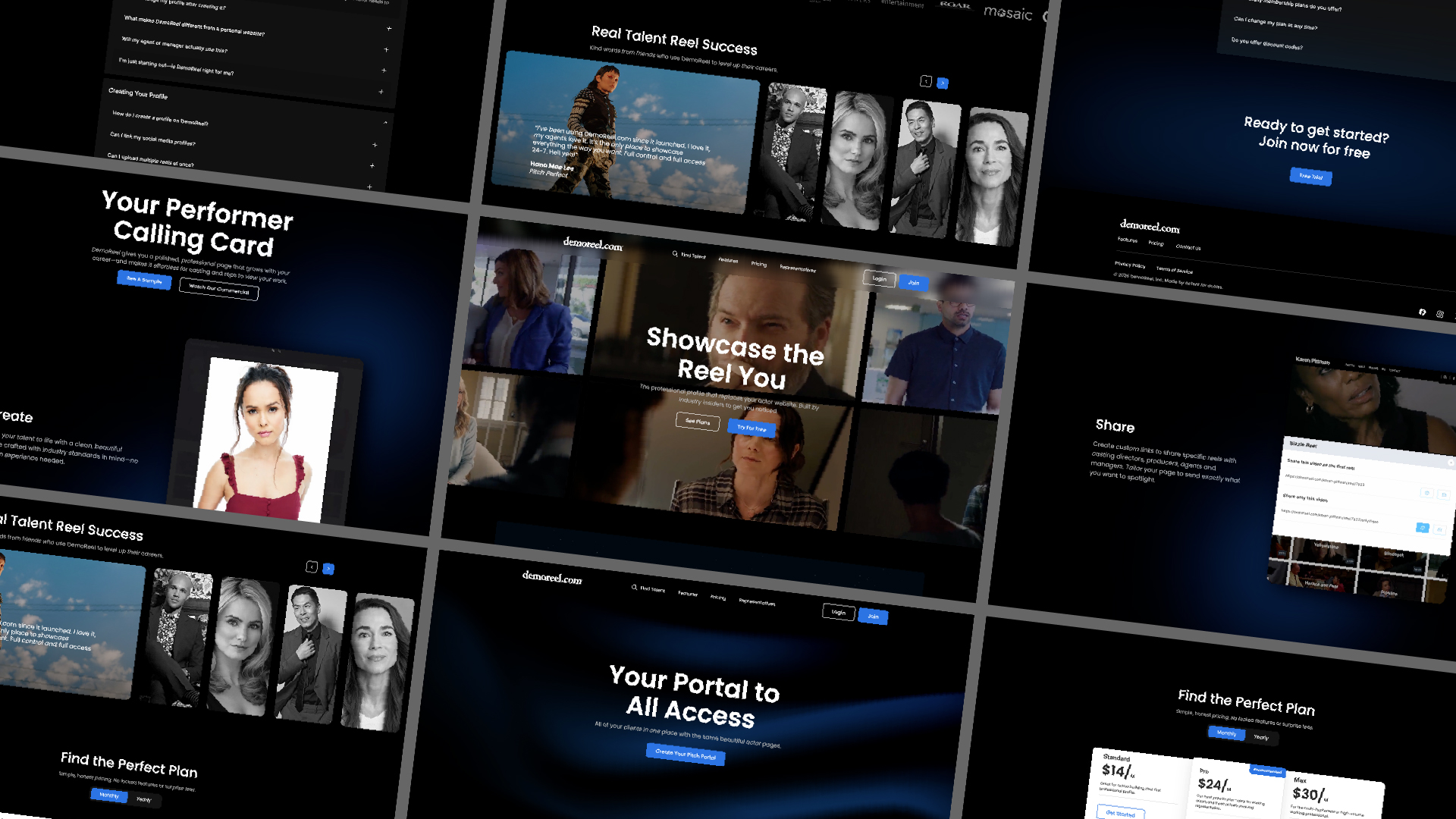
- DemoReel
- KrishaWeb
- UI/UX Redesign
- Front End Development with JS
- Backend Upgrade and Integration
- Quality Assurance and Testing
DemoReel Into a High-Performance SaaS Platform
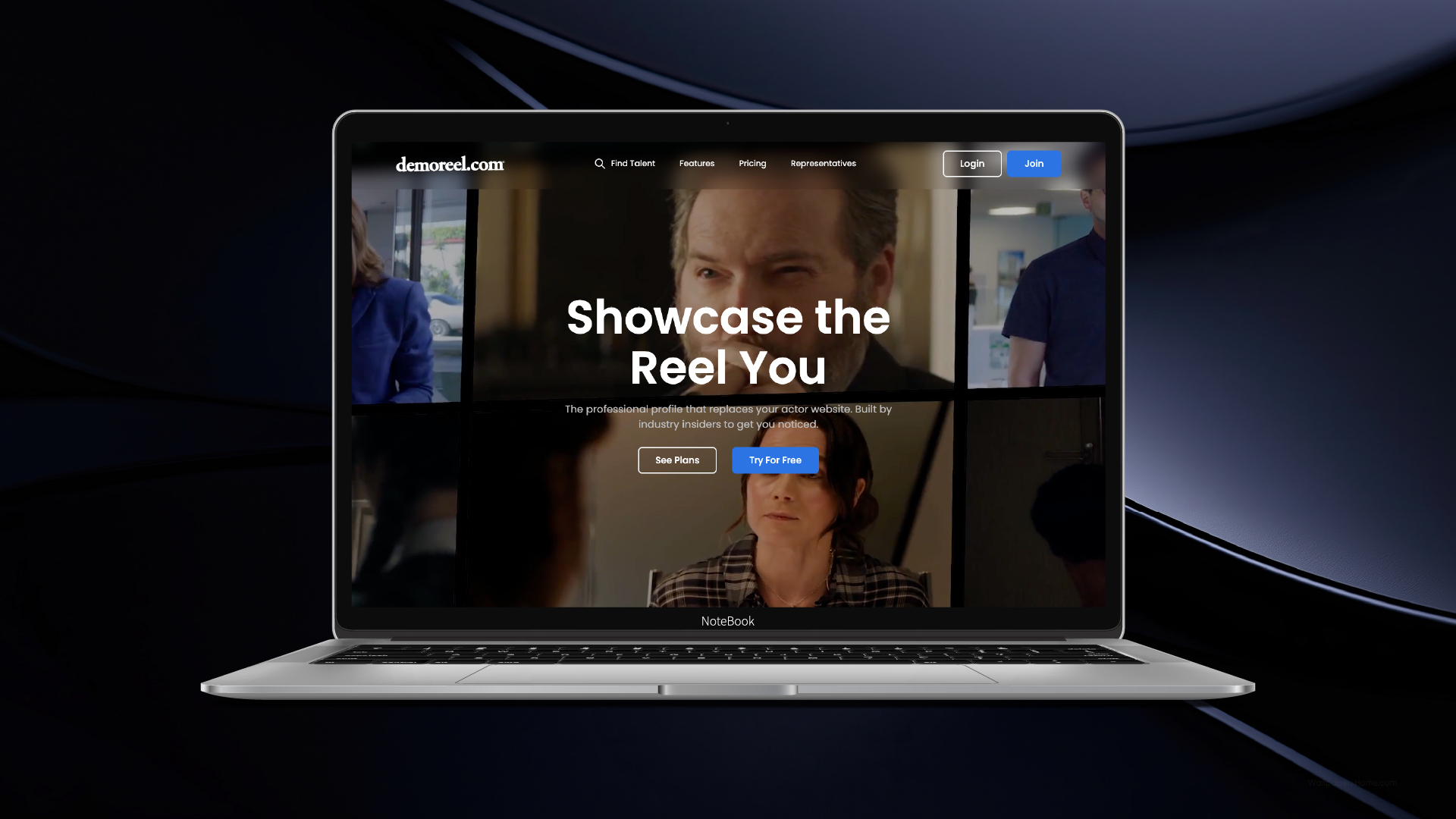
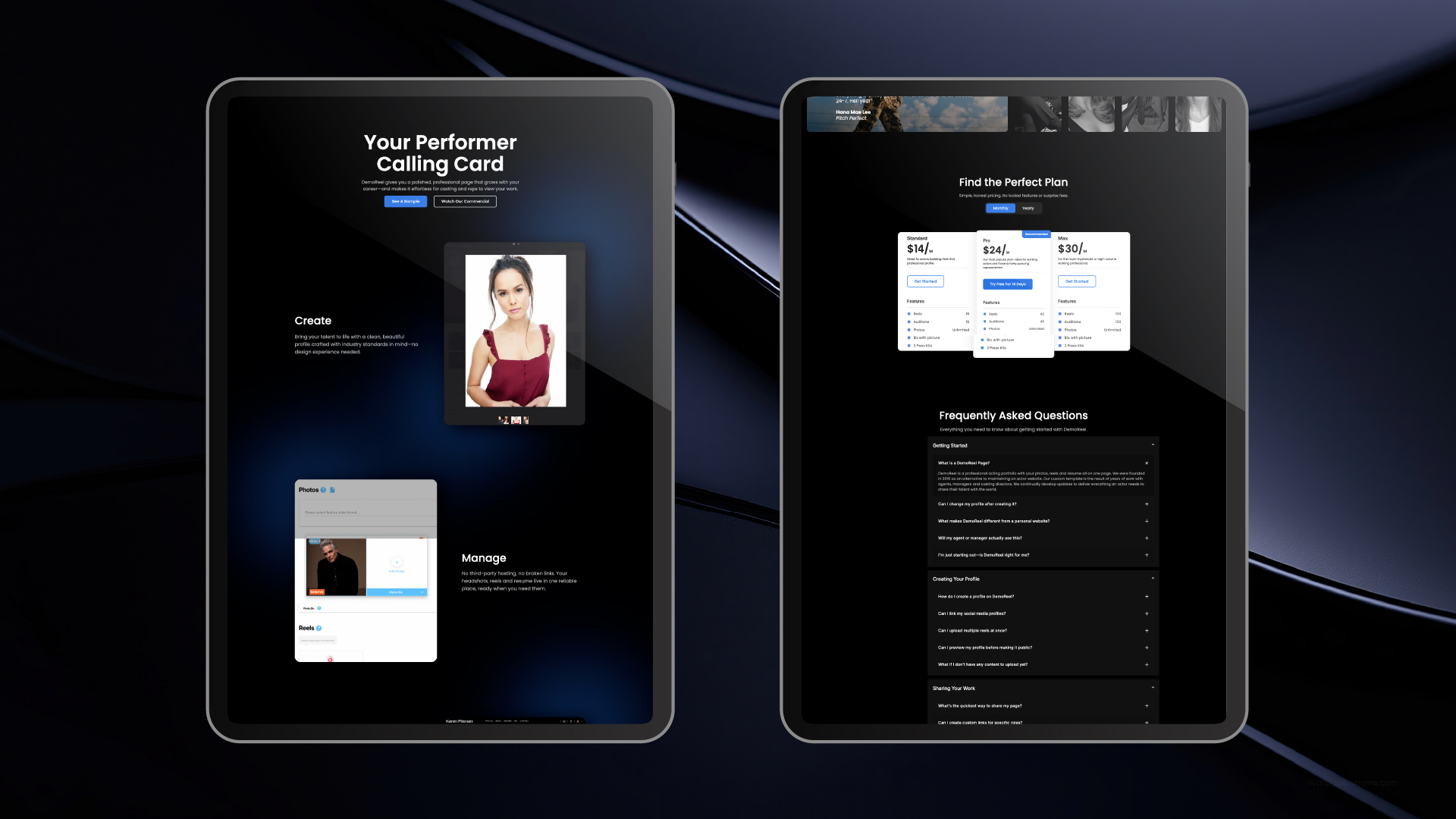
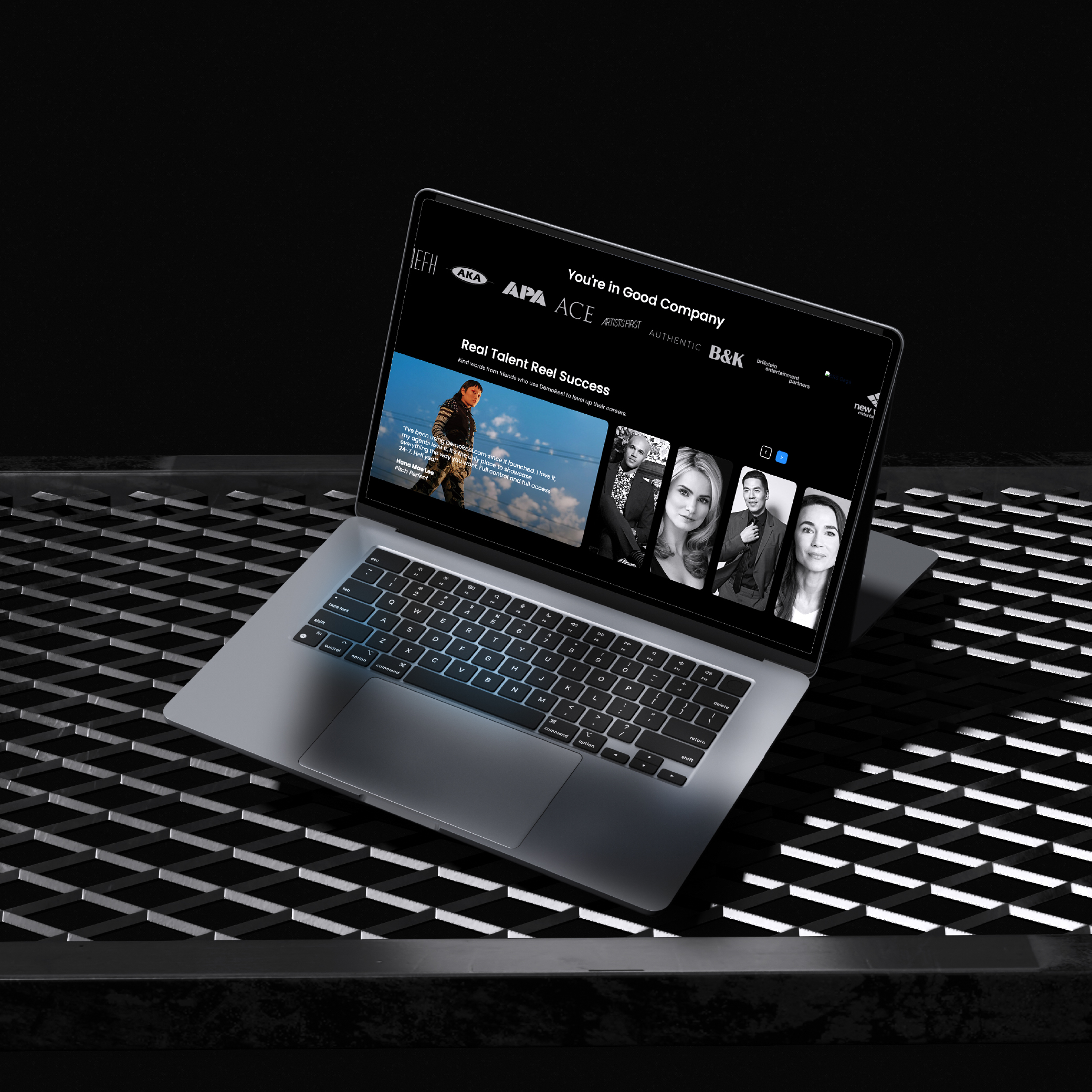
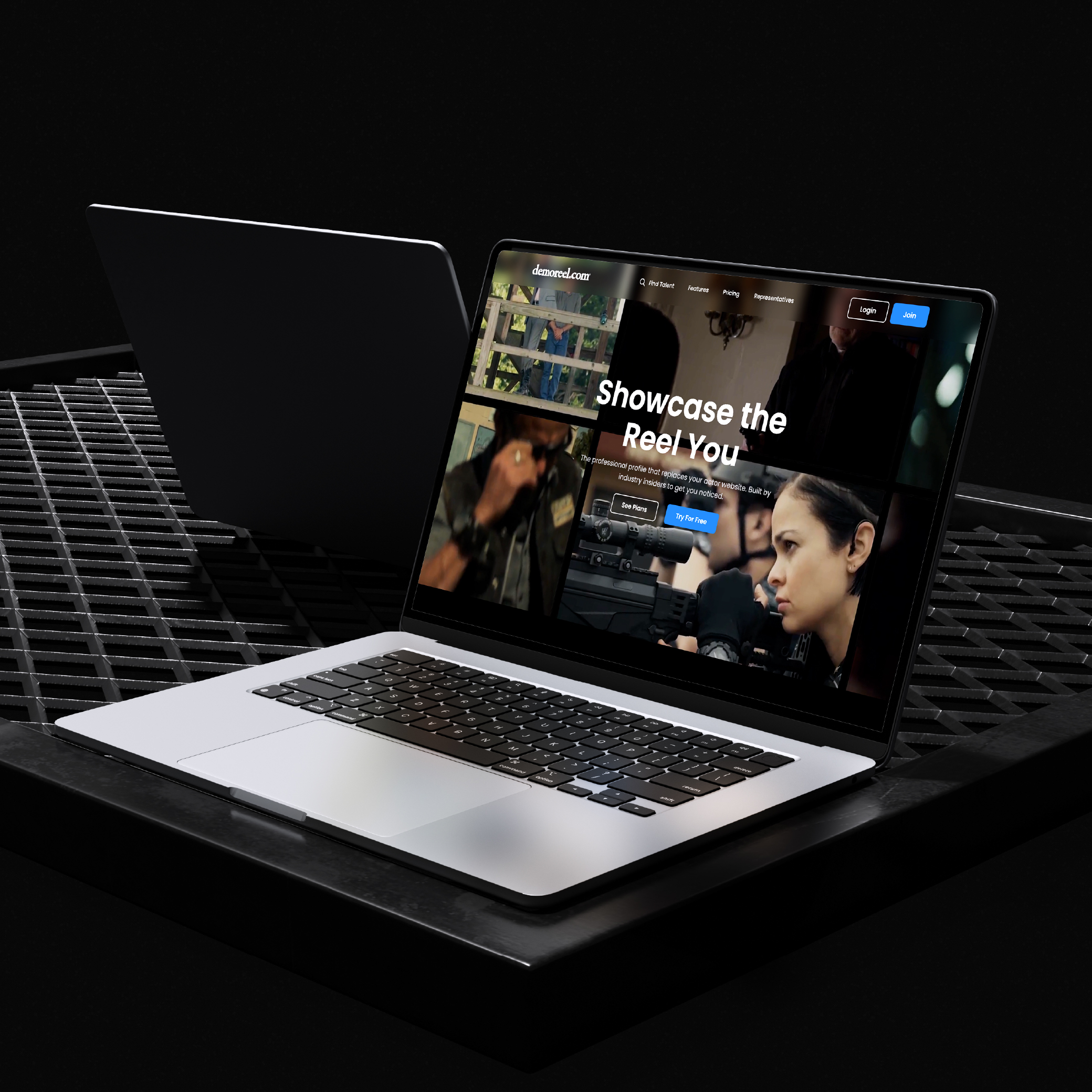
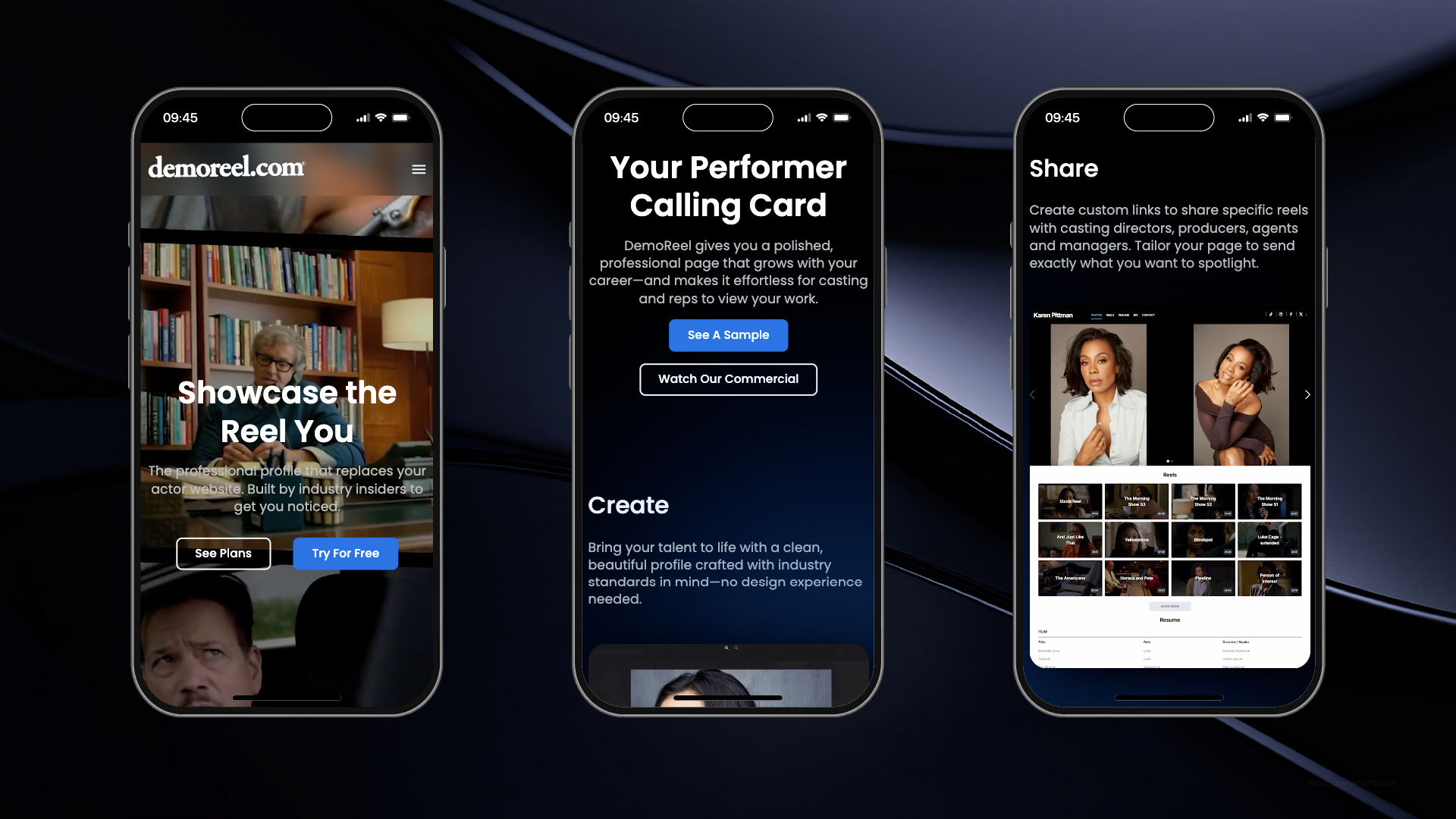
DemoReel is a SaaS portfolio platform built specifically for actors and creative professionals. It gives talent a single shareable profile where they can consolidate everything a casting director, agent or production company needs to evaluate them — demo reels, audition tapes, headshots, resumes and press kits.
The platform operates on a subscription model with tiered membership plans. For DemoReel to work as a business it needs to convince actors to sign up and pay while giving casting professionals an experience worth recommending. Both outcomes depend directly on platform performance. A reel that buffers, a profile that loads slowly or a signup flow that feels clunky does not just frustrate users — it directly reduces paid subscribers in a tight-knit industry where word of mouth travels fast.

The Challenge
DemoReel had a real product and a real problem. The platform was built on a Laravel backend that had not been meaningfully upgraded since launch, a frontend that was aging and inconsistent, and no infrastructure built for the media-heavy experience actors and casting professionals expected.

A Frontend That Had Outgrown Its Architecture
Pages were slow, components were inconsistent and the mobile experience was scoring in the fail range on Google’s Mobile Usability assessment. Profile creation completion sat at 52%, meaning nearly half of new users who started building a portfolio did not finish it.

Technical Debt Compounding on an Outdated Laravel Stack
The Laravel backend was running on an obsolete framework version with 23 dependencies either stale or vulnerable. Each sprint carried additional security risk and developers were spending time working around stack limitations rather than building new features.

Media Infrastructure Not Built for Scale
DemoReel’s reels and audition tapes came from infrastructure that created latency, buffering, and reliability issues. The 38% media abandonment rate—more than one in three users giving up on a reel before it loaded—was the most critical performance failure in the product.

No Proper Subscription Infrastructure
Without a properly integrated subscription payment system, DemoReel was unable to offer flexible membership tiers, manage renewals reliably, or present a professional checkout experience. Trial-to-paid conversion at 11% reflected both a UX problem and a trust problem in how payments were handled.
Objectives
Before the rebuild started we aligned on specific measurable goals. Each phase of the engagement was built around hitting these metrics.
- Lower average page load time to below 2.5 seconds and raise Google PageSpeed above 80
- Increase profile creation completion from 52% to above 75% through a redesigned onboarding workflow
- Reduce media playback abandonment from 38% to below 15% through AWS S3 infrastructure with optimised media delivery
- Increase trial-to-paid conversion from 11% to over 20% through redesigned UX and a properly configured Stripe checkout
- Rebuild the frontend in Angular as a scalable, maintainable Single Page Application
- Upgrade Laravel to a current long-term support release with all vulnerable dependencies patched
- Migrate media storage to AWS S3 with CDN and integrate Stripe for multiple subscription tiers with automated recurring billing
Our Strategy
Rebuilding a live SaaS platform used by paying subscribers requires a different kind of discipline than a greenfield build. Our approach was built around three principles: audit before architecting, sequence for early wins and treat performance and conversion as design problems rather than just technical ones.
Audit Before Architecting
We spent the first two to three weeks doing nothing but understanding the existing system—cataloging every outdated dependency, benchmarking performance across all key page types and mapping the user flows with the highest abandonment. That produced a specific prioritised roadmap rather than a generic list of improvements.
Choosing Angular for the Right Reasons
DemoReel is a feature-rich application with profile management, multiple content types, dynamic media galleries, subscription flows and shareable public profiles. Angular’s component architecture and TypeScript foundation made it the right choice for this level of UI complexity, with a clean separation between the user experience layer and the backend business logic.
Performance and Conversion as Product Design
We treated the 38% media abandonment rate and the 11% trial-to-paid conversion as design problems. Media abandonment was solved by AWS S3 and CDN configuration and by how media was loaded within Angular components. Conversion was solved by Stripe and by how the upgrade prompt was positioned and what the checkout flow felt like at each step.
Frontend and Backend Modernised in Parallel
We ran the Angular frontend build and the Laravel upgrade concurrently with the API layer serving as the integration point. Neither side was blocked waiting for the other and the API contract was defined and validated throughout — eliminating the integration mismatches that typically surface right before launch in sequential builds.
Infrastructure Designed for What DemoReel Is Becoming
We provisioned the AWS infrastructure for the platform DemoReel is building toward, not just its current user base. S3 for media storage with proper CDN configuration, auto-scaling cloud hosting and deployment pipelines for continuous releases — a foundation for growth rather than a fix for current performance problems.
From Technical Debt to 64% More Subscribers
- DemoReel had a product actors needed and infrastructure that was quietly killing its revenue. An Angular rebuild, a Laravel upgrade, AWS media infrastructure and Stripe changed every number that mattered.
- Trial-to-paid conversion improved from 11% to 27%, a 145% increase, driven by the redesigned upgrade prompt, a simpler Stripe checkout and a platform that now delivered enough value to make paying feel like the obvious next step. Within 90 days of Stripe going live, subscription sign-ups increased by 64%.
- Media playback abandonment dropped from 38% to 9%, a 76% reduction. For a platform whose value to casting directors depends entirely on reels loading fast and reliably, that was a product transformation, not a technical fix.
- Profile creation completion rose from 52% to 81% after the onboarding redesign reduced the friction causing nearly half of new users to abandon mid-setup. Average session duration increased from 1 minute 44 seconds to 3 minutes 52 seconds. Page load time dropped from 5.2 seconds to 2.1 seconds and the PageSpeed score improved from 44 to 81.
Phase 1: Research and Systems Analysis
- Performed a complete audit of existing infrastructure, architecture, code and dependency stack.
- Benchmarked performance across key page types using Google Lighthouse, GTmetrix and server-side logs.
- Identified 23 dependencies that were either stale or vulnerable, requiring upgrade or replacement.
- Mapped user drop-off points across profile creation, media upload and subscription upgrade flows with abandonment percentages, then created a prioritised rebuild roadmap with impact estimates.
Phase 2: UI/UX Redesign
- Redesigned the entire UX from two perspectives — actors building portfolios and casting professionals reviewing them.
- Reworked the profile creation flow to reduce friction by decreasing the number of steps and using progressive disclosure for advanced features.
- Created a media-first layout system with reels and galleries above the fold on all profile pages.
- Developed a responsive design system targeting 90+ Google Mobile Usability and redesigned the subscription upgrade flow and Stripe checkout to reduce abandonment.
Phase 3: Angular Frontend Development
- Built a new Angular Single Page Application frontend eliminating latency from full page reloads after every profile or portfolio action.
- Developed a component library covering all platform screens including media management, audition tape uploads, resumes, press kits and photo galleries.
- Built support for multiple profile variations so actors can create customised portfolio versions for different casting platforms.
- Optimised media page performance for fast initial load and minimal delays between requests during video playback.
Phase 4: Laravel Backend Upgrade and Platform Integration
- Upgraded Laravel from the legacy version to the current long-term support release and upgraded all 23 vulnerable dependencies identified in Phase 1.
- Refactored backend API endpoints for clean integration with the Angular frontend using proper versioning. Optimised database interactions — average profile load time reduced by 44%.
- Migrated all media files to AWS S3 with CDN to significantly reduce media loading latency.
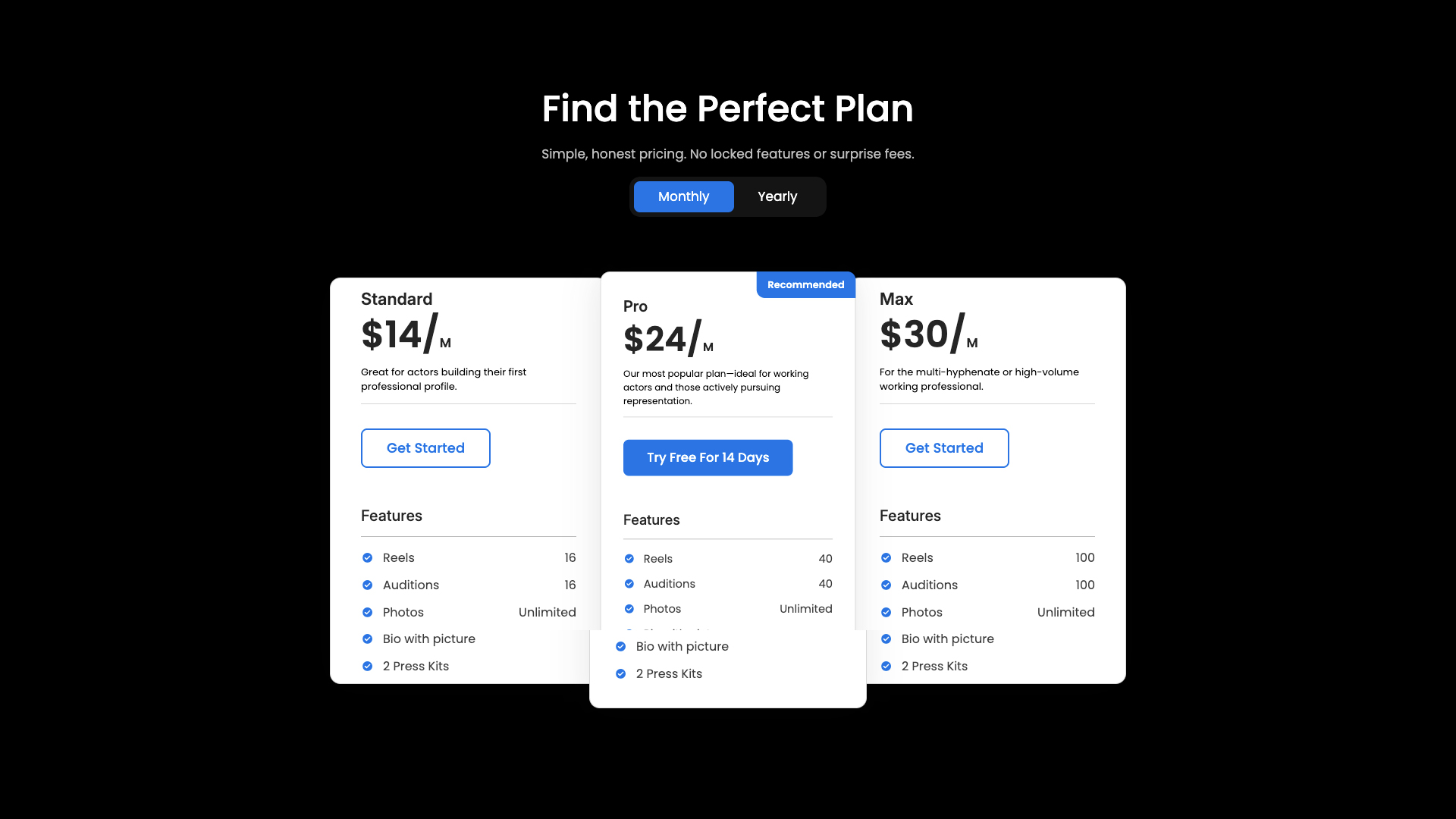
- Integrated Stripe for automated billing across 3 subscription tiers with failed payment handling and upgrade and downgrade support.
Phase 5: QA, Testing and Deployment
- Functionally tested all platform flows — profile creation, media upload, reel playback, subscription purchase and account management.
- Cross-browser and cross-device testing on Chrome, Firefox, Safari, Edge, iOS and Android.
- Validated media playback under multiple simulated bandwidth conditions to confirm AWS S3 CDN performance gains.
- Performed security testing following the Laravel upgrade against OWASP Top 10 and ran a dependency vulnerability scan. Load tested at 3 times expected peak volume to validate AWS auto-scaling. Deployed to a live AWS environment with 72-hour post-launch monitoring.
Phase 6: Ongoing Partnership
- Continued engineering partnership with DemoReel’s team for ongoing feature development and platform improvements.
- Monthly performance evaluation of all key metrics against post-launch baseline.
- Proactive monitoring of media delivery performance and subscription conversion rates with new features added based on user feedback.
The Tech Behind DemoReel's Rebuild
At the core of the rebuilt DemoReel platform sits an Angular Single Page Application connected to an upgraded Laravel backend through a versioned REST API defined and validated throughout the build. The Angular SPA eliminated full-page reload latency affecting every profile action and media interaction on the old site. The Laravel upgrade to the current long-term support release resolved 23 vulnerable dependencies and refactored the API endpoints for clean frontend integration. Database optimisation alone reduced average profile load time by 44%.
On the infrastructure side, AWS S3 with CDN delivery replaced the legacy media serving that was causing the 38% playback abandonment rate, cutting media load latency by over 70%. Stripe replaced legacy payment handling with a subscription architecture covering three membership tiers, automated recurring billing and upgrade and downgrade support. The AWS setup was provisioned with auto-scaling and CI/CD pipelines designed for where DemoReel is going, not just where it was at launch.
- Frontend Framework: Angular — full SPA rebuild
- Backend Framework: Laravel — upgraded to current LTS version
- Cloud Infrastructure: AWS — hosting, deployment, scalability
- Media Storage and Delivery: AWS S3 — scalable media storage and CDN delivery
- Subscription Payments: Stripe — multiple membership tiers, recurring billing
- UI/UX Design: Custom responsive design system — media-first, actor-optimised
- Database: Optimised relational DB — existing structure upgraded and tuned
- QA and Testing: Functional, cross-browser, media playback, security and load testing
- DevOps: AWS deployment pipelines, CI/CD setup, infrastructure management
Valuable Feedback From Our Client
“We came to KrishaWeb with a live platform that was losing subscribers to problems we could see in the numbers but could not fully diagnose ourselves. They audited the entire system before touching a single line of code, identified exactly what was causing the conversion and media performance issues and built a solution that addressed every one of them. The rebuild launched clean, the metrics moved in the right direction from the first week and the platform now works the way it should have from the start. KrishaWeb did not just fix the technical problems. They understood what those problems were costing the business.”
– DemoReel
Project Timeline
Research and System Analysis
Full architecture audit, dependency identification, security and performance evaluation, upgrade roadmap with prioritised fixes

UI/UX Redesign
User journey analysis, profile and portfolio layout redesign, wireframes, responsive visual design system

Angular Frontend Development
New Angular SPA, responsive component library, reel and gallery features, multi-profile support, media page optimisation

Backend Upgrade and Integration
Laravel upgrade, Angular API integration, database optimisation, AWS S3 media storage, Stripe subscription payment integration

Quality Assurance and Testing
Functional, cross-browser, media playback, security and performance testing with full bug-fix cycle

Deployment and Launch
AWS production deployment, performance validation, live launch, post-launch monitoring

Engineering Partnership
Feature development, performance monitoring, platform improvements, new integrations, proactive optimisation

Key Takeaways
Media performance is not a back-end concern — it is the product.
For DemoReel a reel that buffers is a casting director who moves on. The 76% reduction in playback abandonment came from treating media delivery as the most critical user experience on the platform. AWS S3 with CDN solved the infrastructure problem. Angular component optimisation solved the perceived performance problem. Both were required.
Trial-to-paid conversion is a product problem, not a payment problem.
Adding Stripe was necessary but not sufficient. The 145% conversion improvement required redesigning the moment of the upgrade prompt, the value delivered during the trial and the checkout experience itself. At 11% conversion the platform was leaving the majority of its trial users behind. At 27% it is capturing the qualified intent that was already there.
Profile completion is an onboarding design problem.
A 52% completion rate does not mean 48% of users were not interested. It means the setup experience had too much friction at the wrong moments. Progressive disclosure, reduced required fields at sign-up and a cleaner Angular-driven interface together closed that gap. Simpler onboarding is one of the highest-ROI improvements a SaaS product can make.
Frontend and backend modernisation must be planned together.
An Angular SPA sitting on top of a fragile unpatched Laravel backend would have improved the UI and left the security and performance problems untouched. The parallel upgrade approach meant both layers were production-ready at the same time, connected through a clean API contract validated throughout the build rather than discovered to be misaligned at launch.
Infrastructure built for scale prevents the rebuild you do not want to do in two years.
DemoReel's AWS setup was designed to grow with the platform. Platforms that grow into infrastructure constraints face an expensive, disruptive second rebuild. Getting the architecture right at the first major rebuild sets the platform up to scale without starting over again.
Book a Free Strategy Call
Tell us what you are building. We will tell you exactly how we would approach it.