


 KrishaLabs
 KrishaStudio
 KrishaStore
Result At Glance
Japanese Knife Company had a respected brand, loyal customers and a heritage stretching back to 1998 online. What it had accumulated alongside that history was technical debt, performance drag, security exposure and a website that could not serve international customers in their own language or currency. KrishaWeb worked through the problems systematically and the results compounded into a number that tells the full story.
Metrics: Before and After
Performance data measured via Google PageSpeed Insights, GTmetrix and Lighthouse. Net sales data from JKC’s annual revenue reporting. Cart abandonment, session duration and bounce rate measured against the pre-engagement baseline.
| Metric | Before | After | Change | Measurement Basis |
|---|---|---|---|---|
| Net Sales (YOY) | Baseline year | +29% increase | +29% | Annual revenue reporting |
| Google PageSpeed Desktop | ~44 / 100 | 87 / 100 | +98% | Google PageSpeed Insights |
| Google PageSpeed Mobile | ~37 / 100 | 83 / 100 | +124% | Google PageSpeed Insights |
| Page Load Time (avg) | ~5.8s | ~2.0s | -66% | GTmetrix / Lighthouse |
| International Order Rate | UK-dominant | Multi-region active | New revenue streams | Post-implementation |
| Cart Abandonment Rate | ~79% | ~61% | -23% | eCommerce industry benchmark |
| Avg. Session Duration | ~1m 08s | ~2m 52s | +152% | Post-implementation analytics |
| Bounce Rate | ~72% | ~46% | -36% | Post-implementation analytics |
| Security Vulnerabilities | Unpatched plugins | Zero active vulnerabilities | Enterprise posture | Plugin audit |
| Plugin / Dependency Health | Multiple outdated | All current and tested | Fully maintained | Monthly maintenance |
- Japanese Knife Company
- KrishaWeb
- WooCommerce Development
- Integrate Multi-language
- Implement Multi currency
How KrishaWeb Increased a Japanese Knife Brand's Sales by 29%
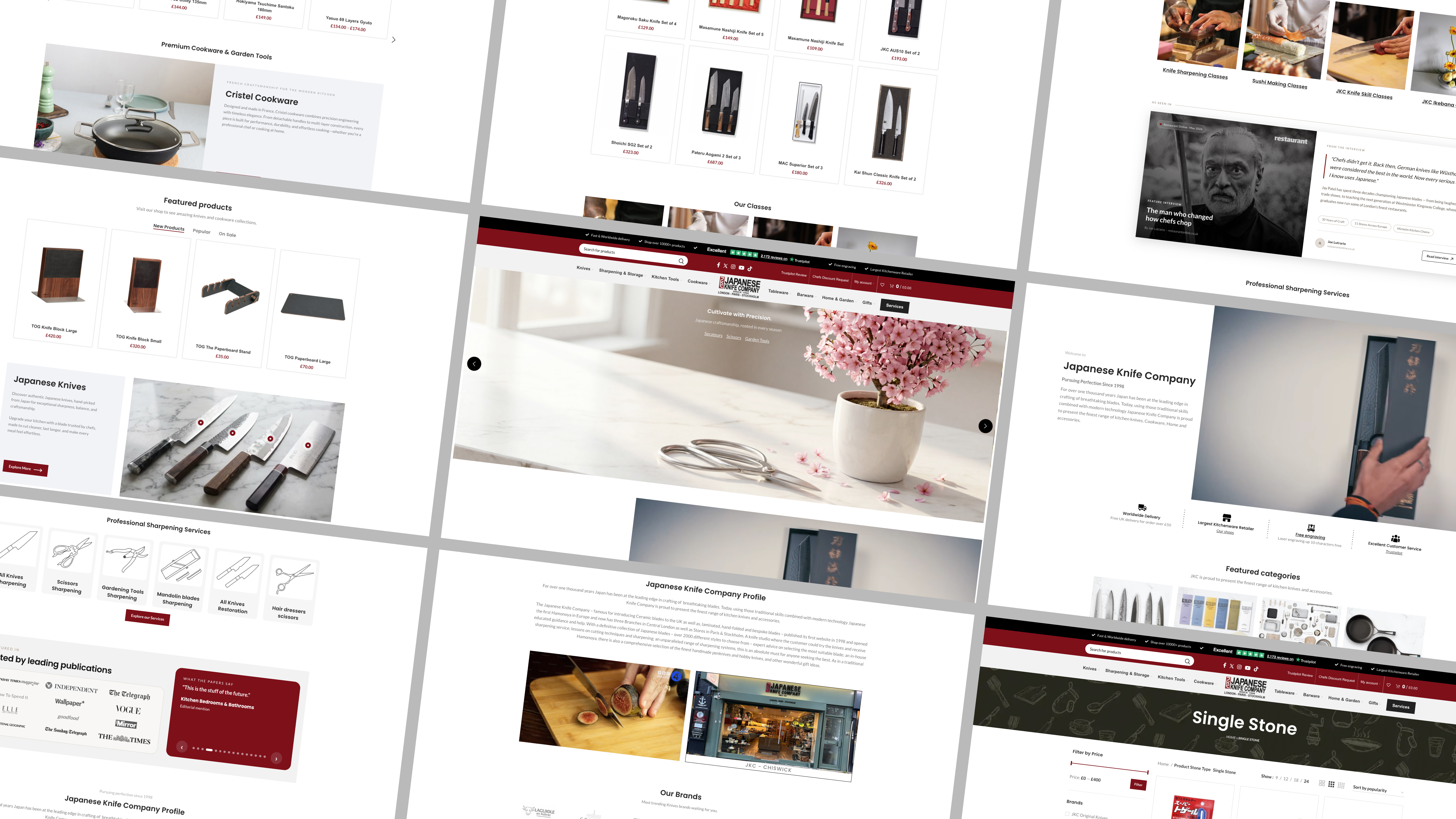
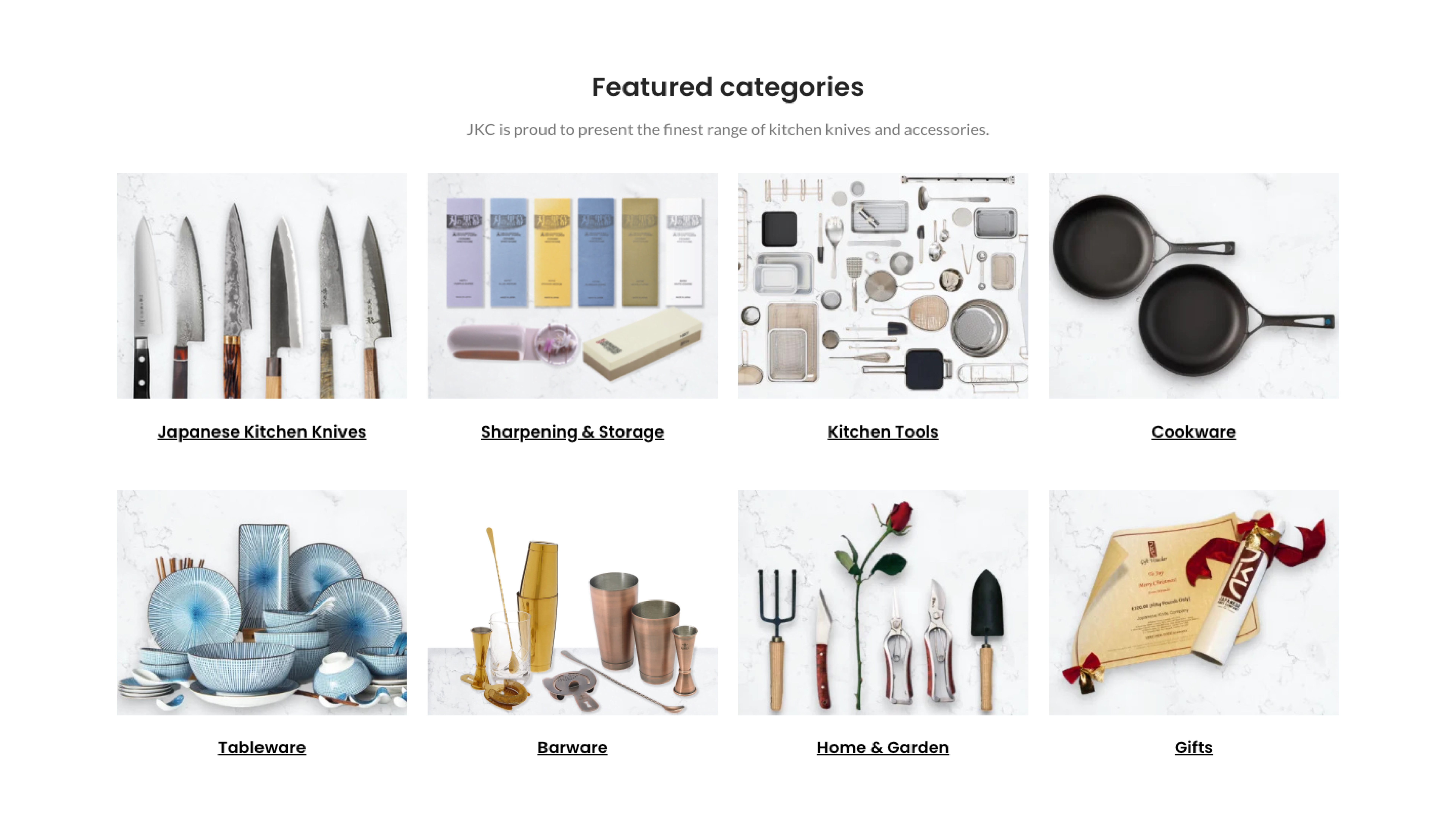
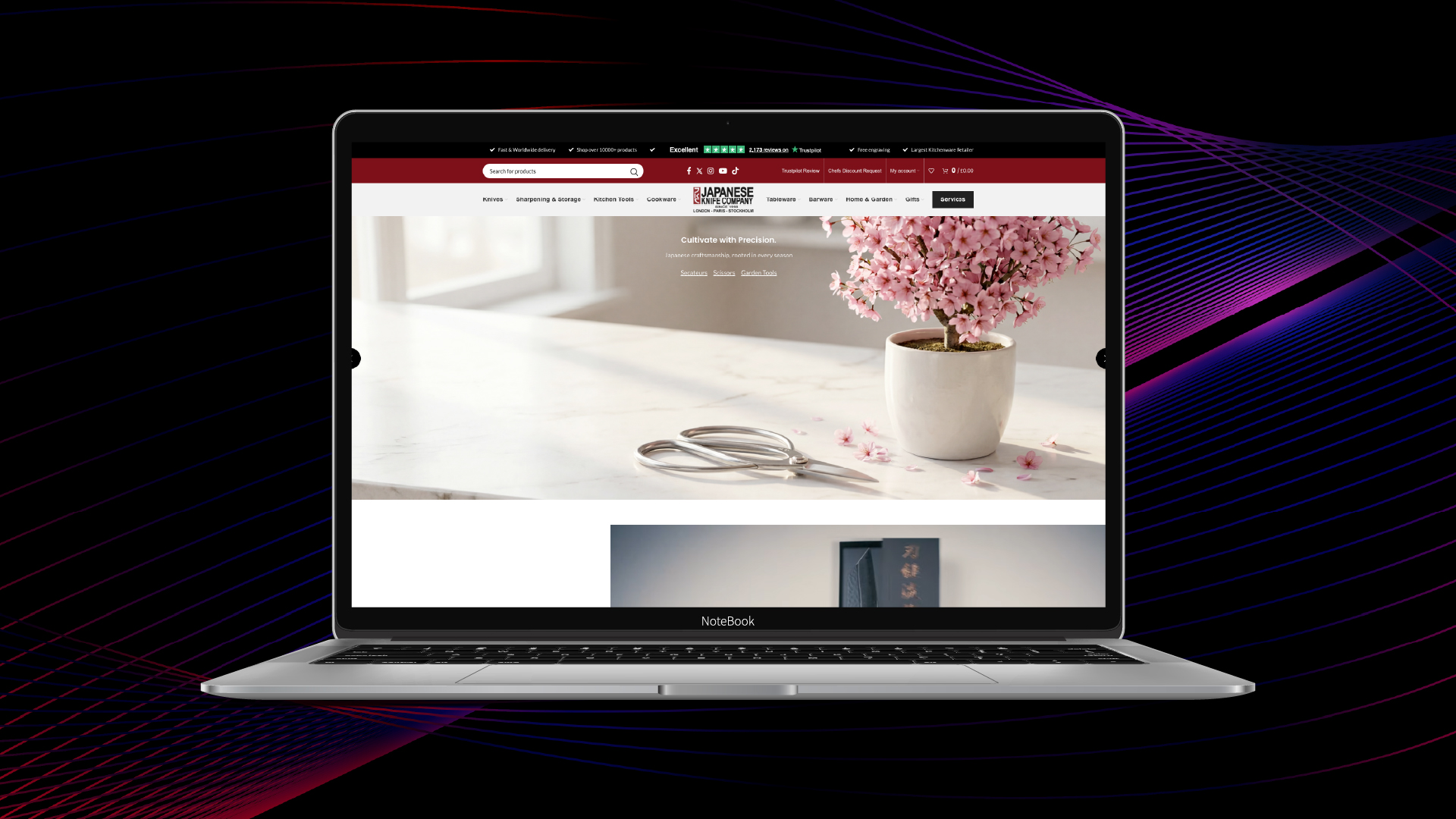
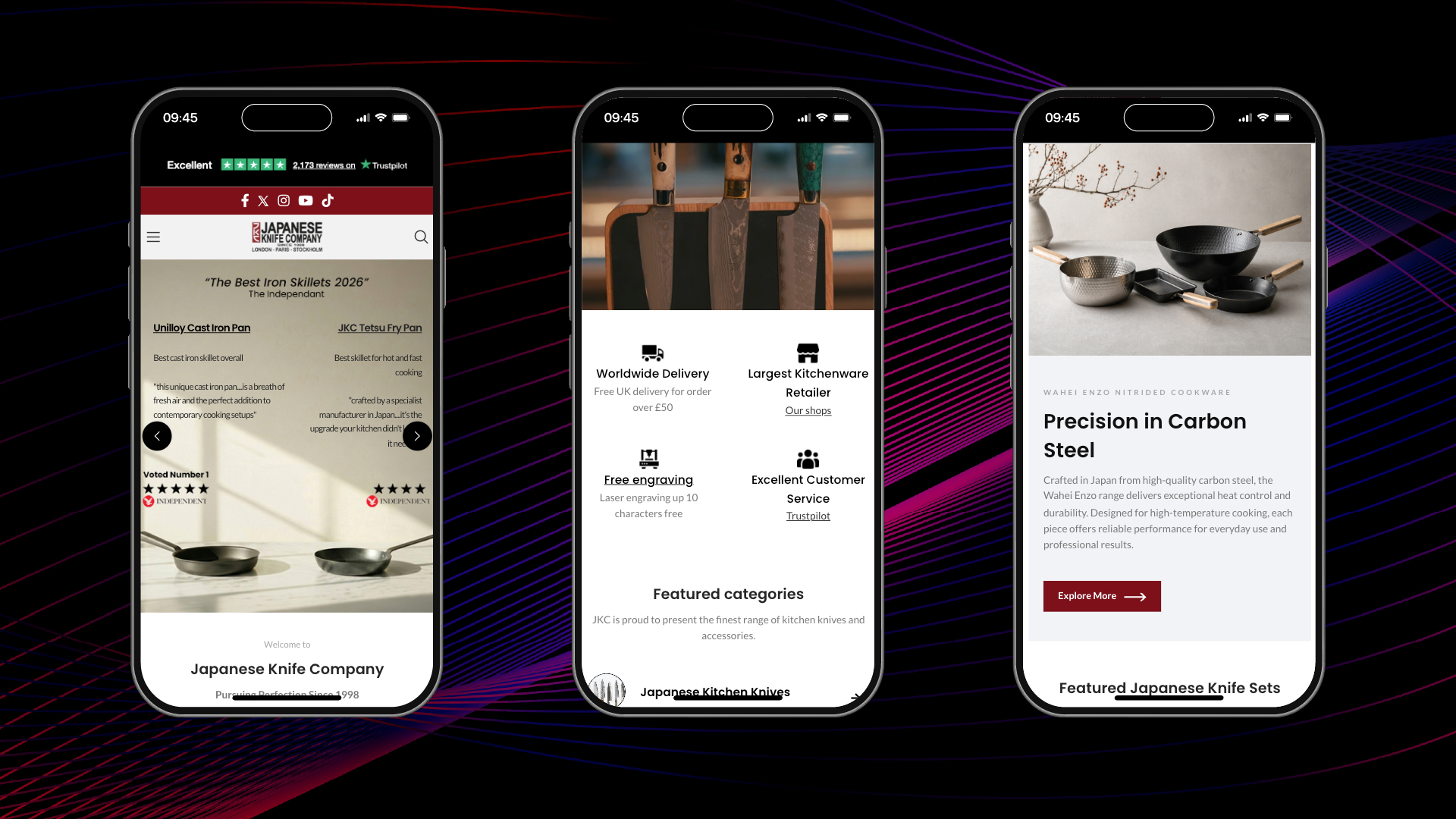
Japanese Knife Company (JKC) is one of the UK’s most respected premium Japanese knife retailers, with a heritage in the category dating back to 1998. Today JKC operates three stores in Central London and a store in Paris, serving professional chefs, serious home cooks and knife enthusiasts with a curated collection of over 2,000 knife styles sourced from Japan’s finest makers.
JKC sells internationally, shipping premium knives to customers across Europe, North America, Asia and beyond. For a premium retailer operating across multiple countries and currencies, the eCommerce platform is a core trading asset. When it underperforms, the business feels it directly. When it performs well, it compounds.
The Challenge
JKC’s eCommerce platform had been built and extended over many years and had accumulated the problems that any long-running WordPress WooCommerce installation develops without systematic maintenance. Technical debt, performance drag, outdated dependencies and security exposure were quietly working against the business.

Performance That Was Costing Sales
Average page load time was running at 5.8 seconds and the mobile PageSpeed score sat at approximately 37, creating both a direct conversion problem and an invisible SEO penalty on the rankings JKC’s catalogue depended on.

English Only, Pound Only — Invisible to Half the Market
JKC ships worldwide but the website operated in a single language with a single currency. International customers who could not browse in their language or see pricing in their currency were leaving without purchasing.

Technical Debt Making Every Improvement Harder
Years of incremental development had left the codebase carrying redundant functions, conflicting plugin interactions and outdated dependencies. Multiple eCommerce plugins were running outdated versions with unpatched security vulnerabilities and no systematic process to address them.

No UAT Process — Changes Going Straight to Production
New features and plugin updates were deployed directly to the live site with no staging environment. For a retail platform, a bug in the checkout flow or a broken product page is a lost sale, not just a development problem.
Objectives
KrishaWeb approached the JKC engagement as a systematic improvement programme with clear measurable targets across every problem area.
- Diagnose and remediate all code quality issues and refactor for maintainability and performance
- Improve average page load time to under 2.5 seconds and bring PageSpeed scores above 80 on desktop and mobile
- Implement multi-language support for key European markets starting with French and German
- Implement multi-currency checkout supporting GBP, EUR, USD and additional key currencies
- Establish a systematic plugin maintenance programme keeping all dependencies current and security patched
- Build a UAT environment so all changes are tested in staging before production deployment
Our Strategy
Rather than propose a full rebuild, we took a diagnostic-first approach — identifying each issue, assessing its business impact, fixing it with the cleanest possible solution and measuring the result before moving to the next.
Diagnosis Before Development
Before writing a line of new code we conducted a full audit covering code quality, performance profiling across key page types, plugin dependency mapping and security configuration to produce a prioritised problem list ordered by business impact.
Performance as the Gateway to Every Other Gain
We sequenced performance work first because site speed affects every other metric. A faster site reduces bounce rates, improves Core Web Vitals for SEO rankings and makes multi-currency and multilingual features more effective for international customers.
Multi-Language and Multi-Currency as Revenue Unlocks
JKC already had the international audience, shipping infrastructure and product reputation. The website was the only thing preventing international prospects from converting at the same rate as UK customers. Every feature addition was assessed for load impact before it was built.
UAT Environment as Permanent Infrastructure
Establishing a staging environment was a permanent operational change. From that point every plugin update, new feature and customisation was tested in staging before production deployment, making timely security updates operationally viable and preventing customer-facing bugs.
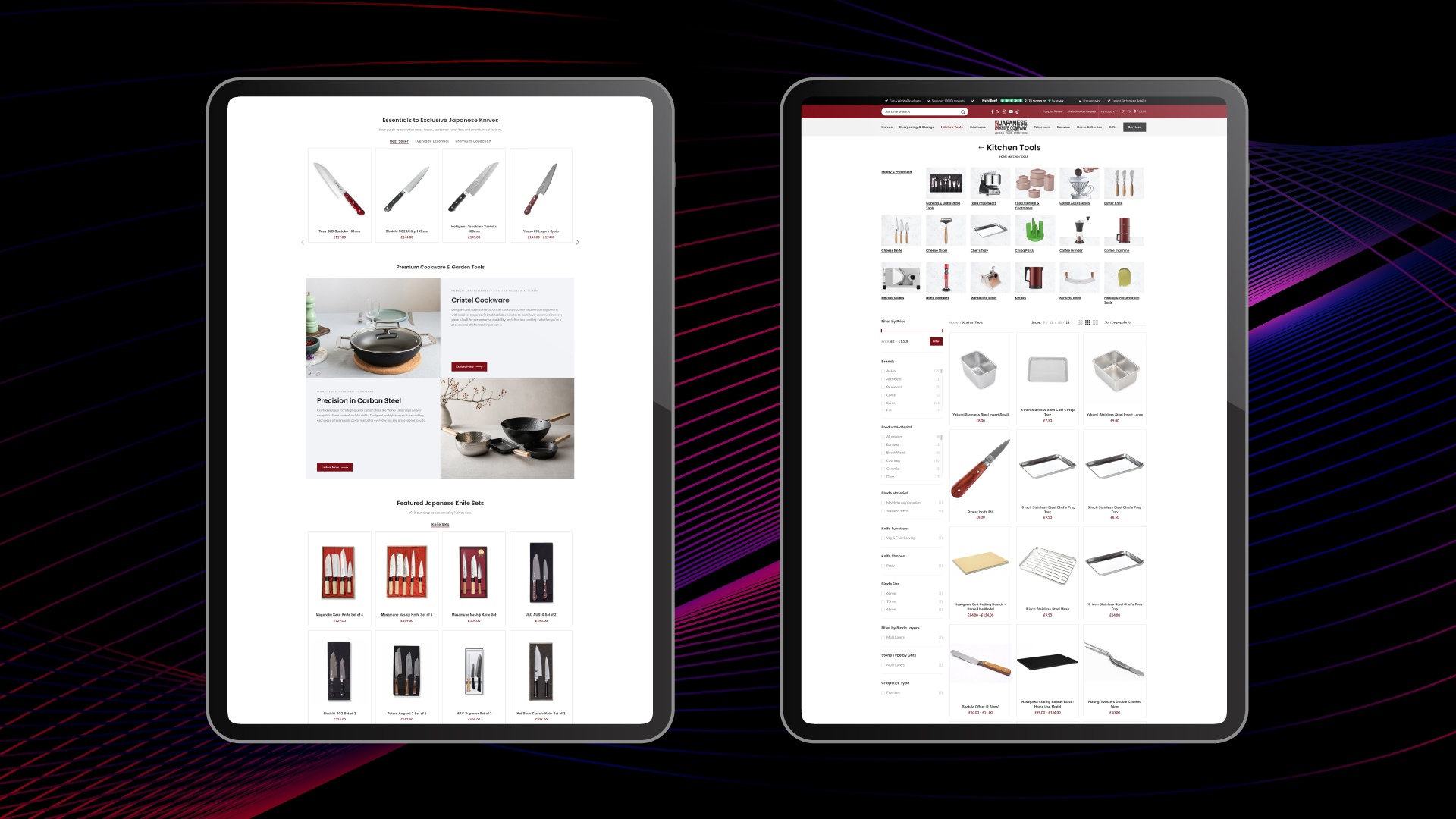
From Technical Debt and Currency Barriers to 29% Net Sales Growth
Japanese Knife Company had a respected brand, loyal customers, and a heritage stretching back to 1998 online. What had accumulated alongside that history was technical debt, performance drag, security exposure, and a website that could not serve international customers in their own language or currency. Working through those problems one by one produced a number that tells the full story.
Net sales grew by 29% year on year. For a premium specialist retailer with an established customer base, that is not the growth rate of a business finding its audience — it is what happens when an existing business removes the friction between its quality and its conversion rate. The 29% came from customers who stayed on pages loading in 2 seconds instead of 5.8, European professionals completing purchases in euros they had previously abandoned at the currency barrier, and mobile browsers converting on a site scoring 83 on PageSpeed rather than 37.
Desktop PageSpeed improved from 44 to 87, mobile from 37 to 83, and average load time dropped from 5.8 seconds to 2.0 seconds. Cart abandonment fell from 79% to 61% once faster checkout and multi-currency support gave international visitors a reason to stay. Session duration rose from 1 minute 8 seconds to 2 minutes 52 seconds — a customer spending nearly three minutes browsing a premium knife catalogue is doing serious research, and serious research is what converts.
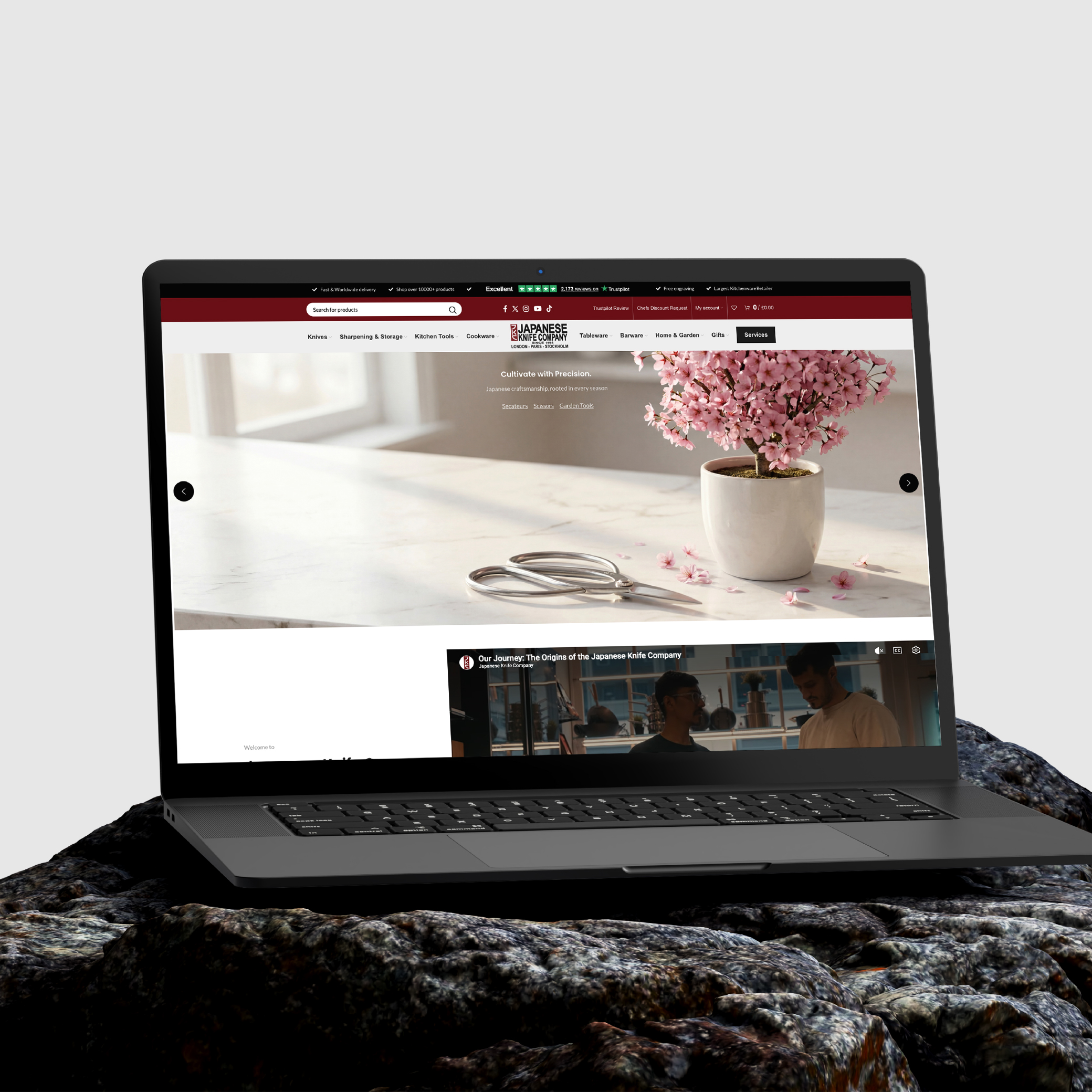
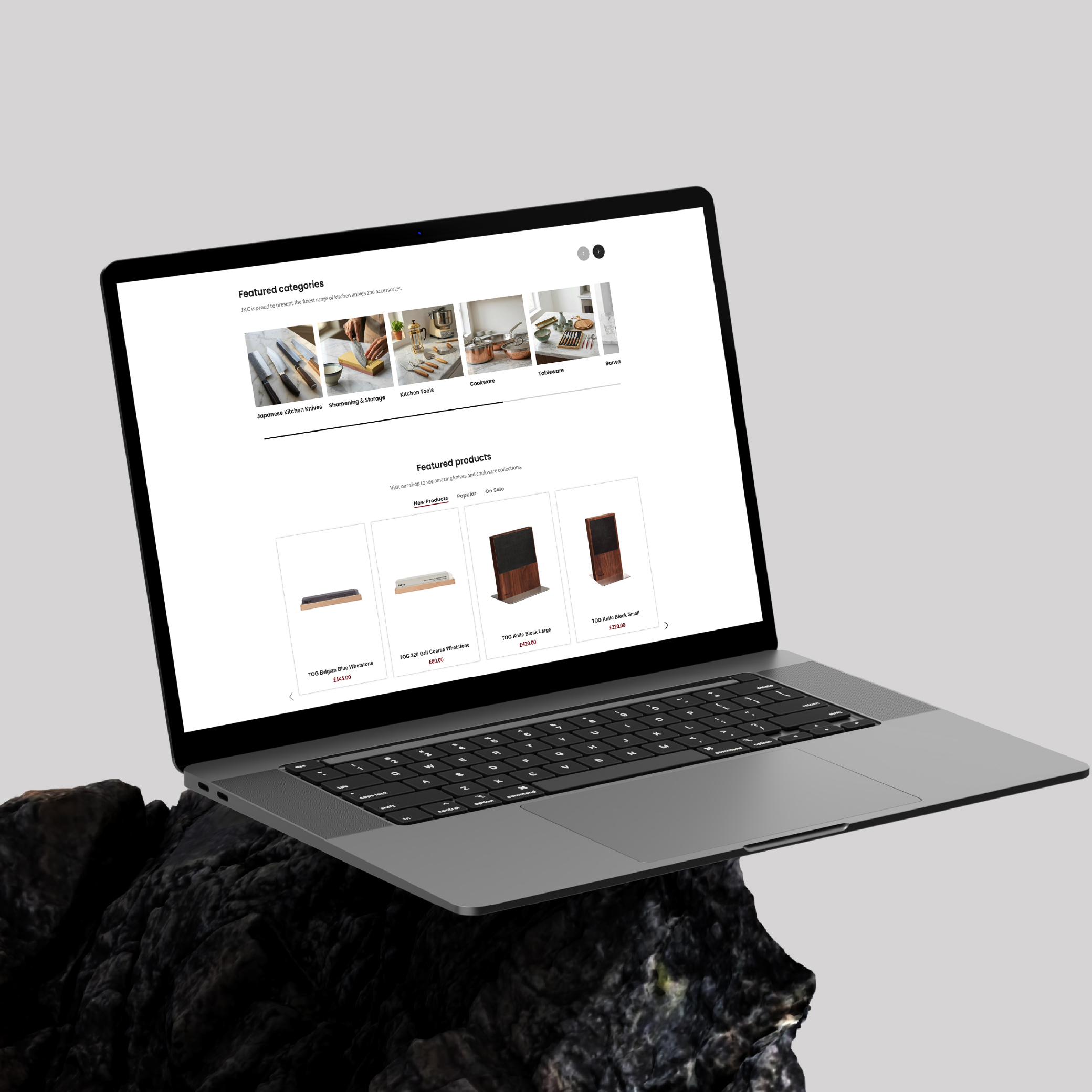
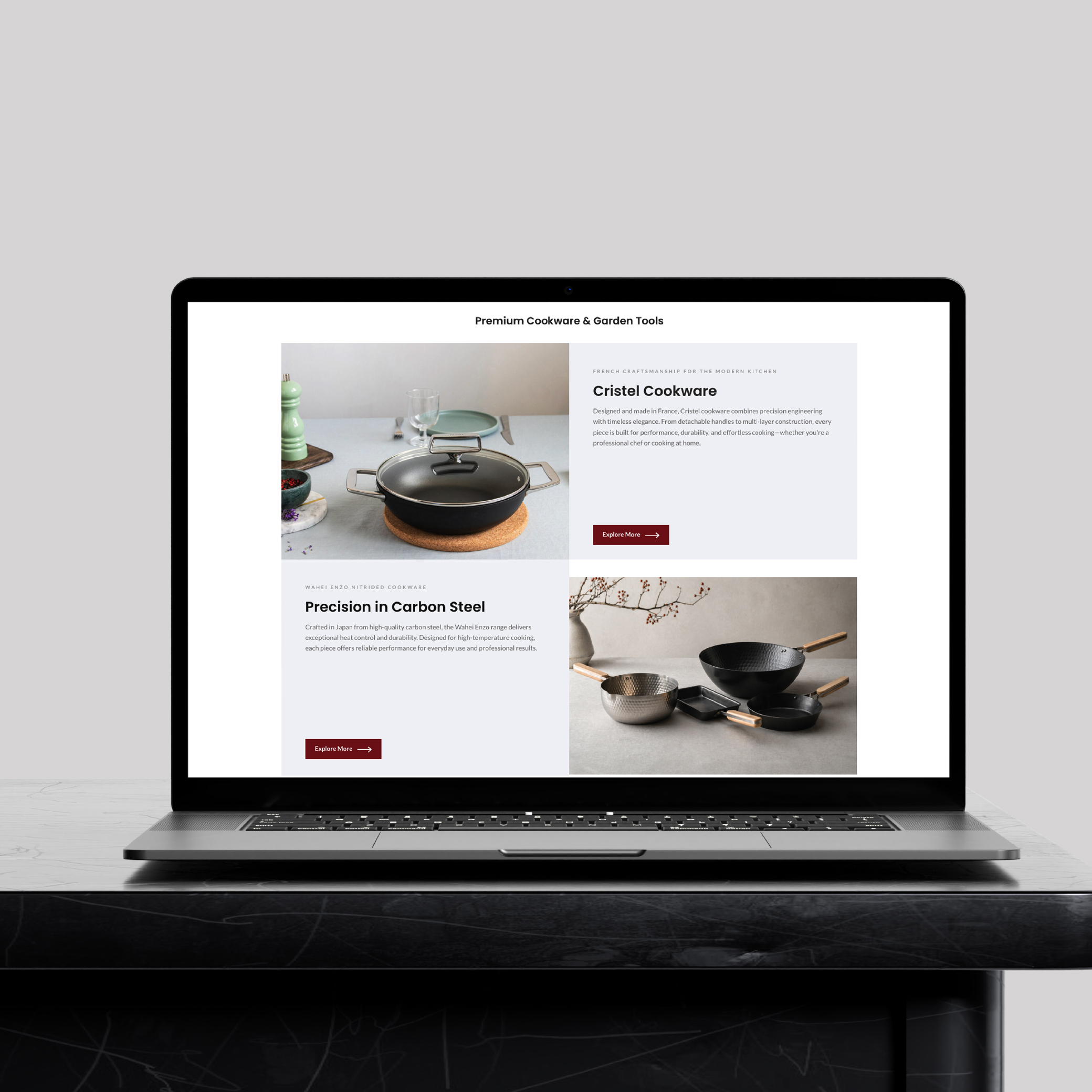
Code Quality
What Was Wrong
Accumulated technical debt from incremental development — redundant code, conflicting functions, poor separation of concerns
What We Did
Full code audit, dead code removal and refactoring for maintainability without disrupting live functionality
Performance
What Was Wrong
5.8s average load time, poor Core Web Vitals, unoptimised images and render-blocking scripts across product pages
What We Did
Frontend asset optimisation, image compression pipeline, deferred script loading, server-side caching and Core Web Vitals uplift
Multi-Language
What Was Wrong
English-only UX excluding French, German and other key European markets where JKC operates stores
What We Did
Custom multilingual architecture implemented and tested with language switching integrated without impacting site performance
Multi-Currency
What Was Wrong
GBP-only pricing — international visitors could not browse or check out in their currency despite JKC shipping worldwide
What We Did
Multi-currency support with real-time exchange rates — GBP, EUR, USD and additional currencies enabled
Plugin Maintenance
What Was Wrong
Multiple eCommerce plugins running outdated versions with security and compatibility vulnerabilities accumulating
What We Did
Full plugin audit, prioritised update schedule, UAT environment testing before each update to prevent live site disruption
Security
What Was Wrong
Outdated dependencies creating known vulnerability exposure with no systematic patching process in place
What We Did
Security hardening across plugin stack, caching mechanism review, access controls audit and active vulnerability scanning
Custom Features
What Was Wrong
Business-requested features implemented with heavy page builder logic adding unnecessary load time
What We Did
Custom features rebuilt with lightweight performance-first code, load impact assessed per feature before any deployment
UAT Process
What Was Wrong
Changes deployed directly to production with no staging process — bugs discovered live by customers
What We Did
UAT environment established — every new feature, plugin update and customisation tested on staging before production deployment
The Tech Behind JKC's eCommerce Improvement
The JKC platform runs on WordPress with WooCommerce, which it had been running on since the early years of the business. The work KrishaWeb did was not a rebuild. It was a systematic improvement programme applied to a platform that had real value, established SEO equity and genuine customer familiarity, but had accumulated the problems that any long-running WordPress eCommerce installation develops without consistent maintenance. The performance work came first because site speed affects everything else. Image compression pipelines, deferred asset loading, caching configuration and the removal of heavy page builder logic from several key pages brought average load time from 5.8 seconds to 2.0 seconds and mobile PageSpeed from 37 to 83. A faster site reduced bounce rates, improved Core Web Vitals for organic rankings and made the multilingual and multi-currency features that followed more effective, because international customers landing on a fast and functional site convert at higher rates than those landing on a slow one.
The multilingual and multi-currency implementations were built with load impact assessed before either feature was built. There is no benefit in adding euro checkout support if the implementation slows the checkout for everyone. The plugin audit and update programme, running alongside the performance and feature work, cleared the security vulnerabilities that had accumulated across the stack from outdated dependencies. A UAT staging environment was established as a permanent operational change so that every update, every new feature and every customisation is tested before it touches the live site. That process is what makes timely security updates operationally viable and what prevents the checkout bugs that previously reached customers before anyone on the team knew about them.
- eCommerce Platform: WordPress with WooCommerce — existing platform optimised and extended
- Multilingual: Custom multi-language implementation across site and product catalogue
- Multi-Currency: Multi-currency checkout supporting GBP, EUR, USD and additional currencies
- Performance: Image optimisation pipeline, deferred asset loading, server-side caching, Core Web Vitals remediation
- Security:Plugin stack hardening, access control review, caching mechanisms, active vulnerability management
- Code Quality: Systematic refactoring, dead code removal, performance-first custom feature development
- Plugin Maintenance: Full eCommerce plugin update programme with UAT validation before production deployment
- UAT Environment: Dedicated staging environment for all new features, updates and customisations before go-live
Valuable Feedback From Our Client
“We had built the business over many years and the website had grown with it, but not always in the right direction. Performance had slipped, the plugin stack needed attention and our international customers were having an experience that did not reflect the quality of what we sell. KrishaWeb approached every problem methodically, fixed things in the right order and did not introduce new complications while solving the existing ones. The 29% sales growth in the year following the engagement speaks for itself. The multi-currency implementation in particular opened up international orders that we know were being lost before. The platform now works the way it should have for some time and we have confidence in how it is being maintained.”
– Japanese Knife Company
Project Timeline
Platform Audit and Diagnosis
Full code quality review, performance profiling, plugin dependency mapping, security assessment, prioritised problem list

Performance and Code Quality
Asset optimisation, image compression pipeline, deferred loading, caching configuration, Core Web Vitals uplift, dead code removal

Multi-Language and Multi-Currency
Custom multilingual architecture, language switching, multi-currency checkout supporting GBP, EUR, USD and additional currencies

Security and Plugin Maintenance
Plugin audit, update programme, UAT environment setup, security hardening, access controls, vulnerability scanning

Continuous Improvement and Maintenance
Monthly plugin maintenance, feature development with load-impact assessment, UAT testing before every production deployment

Key Takeaways
29% net sales growth came from removing friction, not from adding features.
Every improvement reduced the gap between a qualified visitor and a completed purchase. Growth on existing traffic is the highest-ROI work available to an established eCommerce business.
Technical debt is a tax on every business decision.
Every new feature is slower to build and every performance improvement is harder to achieve when the codebase is carrying unresolved debt. The code quality work on JKC was the foundation that made every subsequent improvement possible.
Multi-currency support is access to revenue that already exists.
JKC's international customers were arriving, browsing and leaving because the checkout did not serve them. The currency implementation did not create new international demand. It captured demand that was already there.
A UAT environment is the cheapest insurance available to an eCommerce business.
The cost of maintaining a staging server is trivial compared to the revenue cost of a single checkout bug reaching live customers during a peak trading period.
Plugin maintenance is security management, not housekeeping.
Over 97% of WordPress breaches come from outdated plugins. For a premium retailer handling customer payment and personal data, that statistic is a risk management imperative and the foundation on which everything else the site does securely rests.
Does Your Agency's Website Show Your Work the Way It Deserves to Be Seen?
Book a Free Strategy Call — Tell us what your eCommerce platform needs. We will show you exactly how we would approach it.