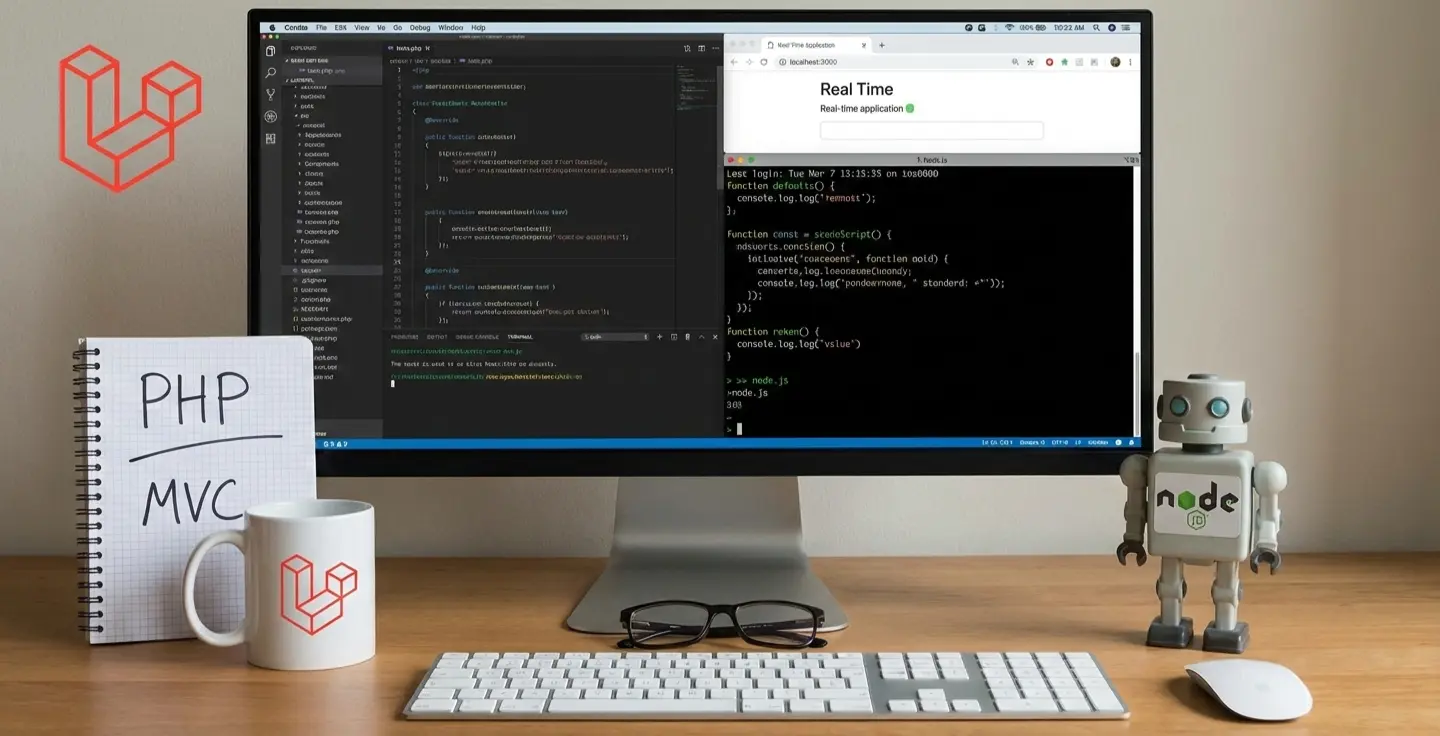
Laravel 13 landed in March 2026 with one headline change: the AI SDK went from experimental to production-stable. That makes Laravel the first major PHP framework with a first-party, provider-agnostic AI layer built directly into the ecosystem. Node.js is still the stronger choice for real-time, event-driven, and JavaScript-native teams. In 2026, the decision is more straightforward than it has been in years. Laravel when you need structure, built-in tooling, and AI integration. Node.js when real-time concurrency or a JavaScript-first team is the constraint.
I have been building with Laravel since version 4 here at KrishaWeb. In that time, I have shipped client projects on both Laravel and Node.js, and the question of which to use comes up in almost every backend project scoping conversation. The answer has always depended on the problem. In 2026, with Laravel 13 bringing AI-native workflows into the framework itself, the picture has changed enough to justify revisiting this comparison from scratch.
This guide covers the current state of both technologies, the performance reality, the AI integration story for each, and a decision framework that gives you a clear answer for your specific situation.
Table Of Contents
Table Of Contents
What Changed in 2026: The Updates That Matter
Laravel 13 (Released March 17, 2026)
Laravel 13 was announced at Laracon EU 2026 by Taylor Otwell. The headline change is the graduation of the Laravel AI SDK from experimental to production-stable. This positions Laravel as the first major PHP framework with a first-party, provider-agnostic AI layer built directly into the ecosystem.
Laravel AI SDK, now production-stable: call OpenAI, Anthropic, or Gemini using the same Laravel patterns your team already knows. No more assembling separate API clients or building your own abstraction layer on top of them.
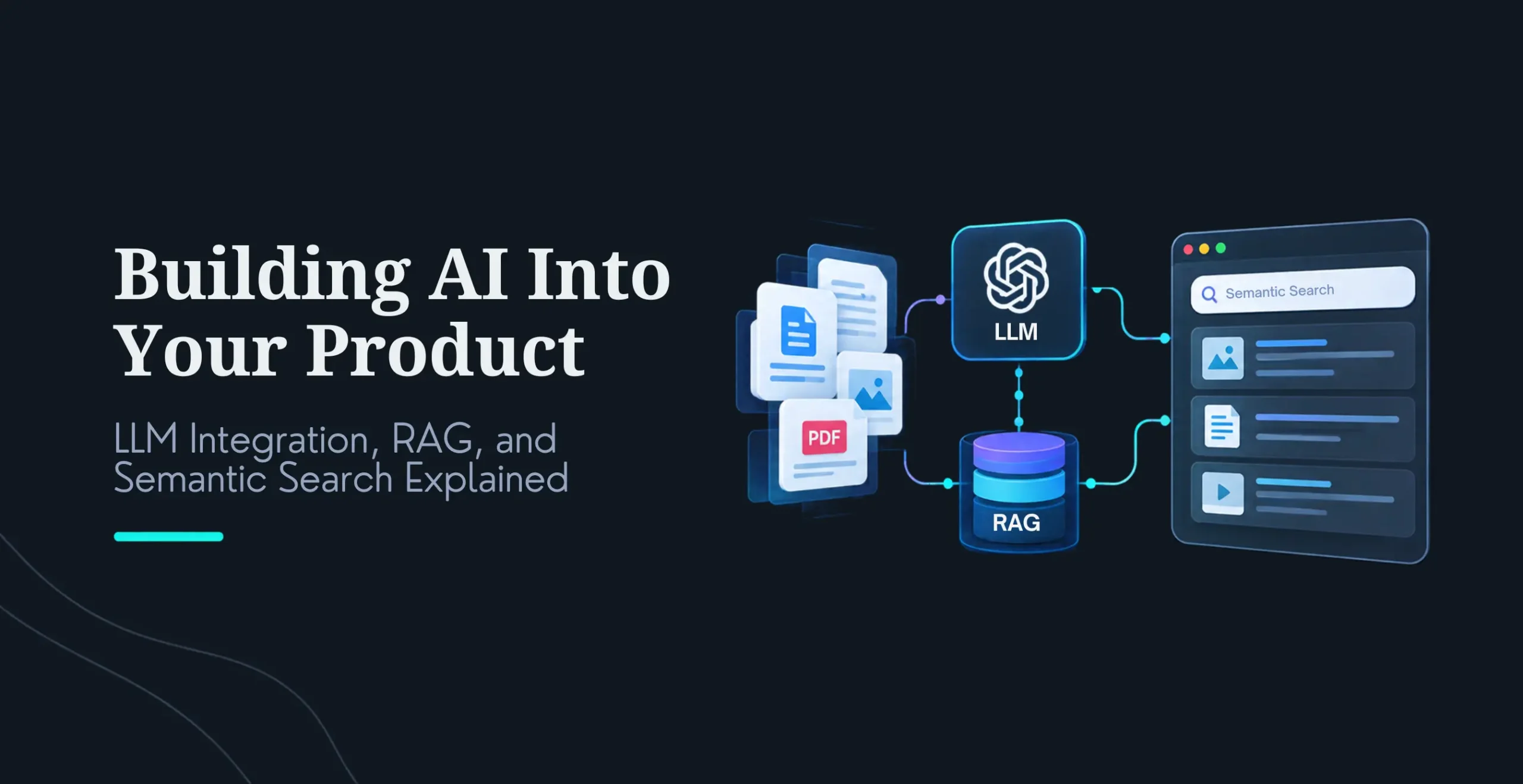
Prism is the AI package that ships with Laravel 13. Point it at OpenAI, Anthropic, or Gemini, and it handles the rest: structured output, tool calls, RAG pipelines, and streaming responses. The provider interface is consistent, so if you decide to switch from one LLM to another mid-project, you update a config value and move on.
Laravel 12 compatibility: zero breaking changes for the vast majority of Laravel 12 codebases. Most upgrades complete in under one hour.
Improved queue handling and caching: performance optimizations that make applications feel lighter under traffic.
Scalable architecture defaults: better out-of-the-box support for SaaS platforms, enterprise applications, and CRMs.
Node.js 22 is the current LTS. Node.js 23 is the latest release for developers who want the newest features before they hit long-term support. The fundamentals have not changed since Node.js became a serious backend option: non-blocking I/O, an event-driven architecture, and JavaScript on both sides of the stack. What has changed is the maturity around those fundamentals. TypeScript adoption is near-universal in serious teams, the testing tooling has grown up, and edge deployment has gone from experimental to mainstream.
Node.js 22 is the current LTS release. Startup performance is faster, garbage collection is cleaner, and the native fetch API is now stable. The built-in test runner continues to mature, reducing the need for Jest or Mocha on straightforward projects.
The npm ecosystem still has no real competition at over three million packages. That breadth is both a strength and a decision overhead.
TypeScript is no longer optional in serious Node.js teams. Most new projects in 2026 start with TypeScript from day one. The ecosystem tooling has caught up to the point where plain JavaScript on the backend reads as a legacy choice.
Edge deployment has matured. Cloudflare Workers, Vercel Edge, and AWS Lambda@Edge all run Node.js natively. If you are pushing compute to the edge for latency reasons, Node.js is the path of least resistance.
AI integration on Node.js still happens through third-party tools: the Vercel AI SDK, LangChain.js, or direct calls to provider APIs. Capable, but assembled by the team rather than provided by the framework.
Core Architecture: What Each Technology Actually Is
Laravel
Laravel is a full-featured PHP framework. It ships with routing, ORM (Eloquent), authentication, authorization, queues, scheduling, validation, templating, testing helpers, and now a first-party AI SDK. The framework makes architectural decisions for you and enforces them through convention. A Laravel developer picking up any Laravel codebase can navigate it immediately because the structure is standardized.
The version path matters here. PHP 8.3 and 8.4 are the current versions, and they have closed much of the performance gap with Node.js that existed in PHP 5 and early PHP 7. Laravel with Octane running on Swoole or RoadRunner reuses a single PHP process for multiple requests, dramatically reducing startup overhead and delivering response times in the sub-50ms range for typical web application workloads.
Node.js
Node.js is a JavaScript runtime, not a framework. Node.js takes JavaScript out of the browser. It runs on the V8 engine, the same one Chrome uses, but without the DOM, window object, or any browser APIs. What you get instead is access to the file system, network, and operating system. When developers say ‘Node.js backend’, they almost always mean Node.js with a framework like Express, Fastify, NestJS, or Hono on top. That distinction matters because Node.js without a framework is unopinionated to the point of giving you nothing: no routing, no ORM, no authentication system, no validation. You assemble the stack yourself.
This flexibility is a feature for teams that want precise control over their architecture. It is overhead for teams that want to move quickly and need the plumbing handled for them.
Performance: The Real Picture in 2026
The performance comparison between Laravel and Node.js is the most commonly misrepresented aspect of this debate. Here is what the actual data shows.
Scenario
Laravel 13 + Octane
Node.js (Express / Fastify)
Concurrent I/O requests
Good with Octane, long-running process model
Excellent, non-blocking I/O by design
CPU-intensive operations
Good, PHP 8.4 improvements, queue offloading
Good, worker threads for CPU work
Database query throughput
Excellent, Eloquent ORM, efficient query building
Good, depends on ORM choice (Prisma, Drizzle, Sequelize)
Real-time connections (WebSockets)
Good with Laravel Reverb (first-party WebSocket)
Excellent, native fit for WebSocket architecture
Cold start (serverless)
Slower, PHP runtime startup
Faster: V8 cold start is fast
Sustained request throughput
Sub-50ms with Octane on optimised hardware
Generally faster raw throughput in benchmarks
The important context: for most web applications, the bottleneck is not the framework. It is the database. A well-indexed query returning data in 5ms from either Laravel or Node.js produces a response time that is dominated by the database time, not the framework overhead. The performance difference between Laravel and Node.js only becomes material when you are handling thousands of simultaneous long-lived connections (Node.js wins) or when you need sub-50ms response on CPU-bound logic at scale (Laravel Octane closes most of the gap).
AI Integration in 2026: The Defining Difference
The 2025 version of this comparison did not have a section on AI integration. It did not need one. In 2026, it does. Backend architecture decisions now routinely include a question that was not on the table 18 months ago: how does this framework handle LLM integration, and how much of that work do we have to build ourselves? Laravel and Node.js have taken different paths on this, and the difference is practical enough to change a recommendation.
Laravel 13: First-party AI via Prism
Laravel 13 ships Prism, a first-party package for LLM integration. It covers API calls to OpenAI, Anthropic, Gemini, and other supported providers through one consistent interface. Structured output, tool use, RAG pipeline construction, and streaming responses are all handled by Prism using the same expressive patterns a Laravel developer would write for any other feature. Switching providers means changing a config value, not rewriting integration code.
What this means in practice: a Laravel team building an AI-powered feature does not need to evaluate third-party AI libraries, manage separate API clients for different providers, or build their own abstraction layer. The framework handles it. The code looks like Laravel code. AI features sit alongside the rest of the application logic using the same patterns developers already know.
From my experience building AI-powered features on Laravel at KrishaWeb, having Prism in core is the difference between a two-day integration and a two-week one. The structured output support specifically removes a large class of edge cases that every team building with LLMs encounters.
Node.js: Ecosystem-based AI integration
Node.js teams integrate AI through the Vercel AI SDK, LangChain.js, direct OpenAI or Anthropic client libraries, or custom implementation. The ecosystem is mature and capable. The Vercel AI SDK in particular has become a standard for Node.js AI applications and covers streaming, structured output, and multi-provider support.
The difference is that this is ecosystem tooling assembled by the developer, not framework-level infrastructure provided out of the box. A Node.js team building AI features makes more decisions about which libraries to use, how to integrate them with the application, and how to handle provider switching. For teams already deep in the JavaScript/TypeScript AI ecosystem, this is not a problem. For teams choosing a backend for AI features for the first time, Laravel’s first-party approach reduces the decision surface significantly.
Head-to-Head Feature Comparison
Feature
Laravel 13
Node.js (NestJS / Express)
Language
PHP 8.3 / 8.4
JavaScript / TypeScript
Architecture
Full-featured MVC framework
Unopinionated runtime (framework-dependent)
ORM
Eloquent (built-in)
Prisma, Drizzle, Sequelize (third-party)
Authentication
Laravel Sanctum, Passport, Breeze (built-in)
Passport.js, JWT libraries (third-party)
Real-time
Laravel Reverb (first-party WebSocket)
socket.io, ws (third-party, excellent)
AI integration
Prism, first-party, provider-agnostic AI SDK
Vercel AI SDK, LangChain.js (third-party)
Queue management
Laravel Horizon (built-in)
Bull, BullMQ (third-party)
Caching
Built-in (Redis, Memcached, file, database)
ioredis, node-cache (third-party)
Testing
PHPUnit, Pest (built-in)
Jest, Vitest, Mocha (third-party)
Admin panel
Filament (first-party ecosystem)
No equivalent, custom build required
Learning curve
Moderate convention over configuration helps
Steeper without NestJS and moderate with NestJS
Hiring pool
Large global PHP/Laravel pool
Large JavaScript/Node.js pool
When to Choose Laravel
Laravel is the stronger choice when these conditions apply.
You are building a structured web application with complex business logic
Multi-role authentication, complex permission systems, PDF generation, email notifications, scheduled tasks, payment integration, and multi-step workflows. Laravel handles all of this out of the box, with less configuration than Node.js requires for the equivalent. The framework makes these things idiomatic rather than custom.
Your team is PHP-native
If your team already knows PHP and Laravel, switching to Node.js for a new project adds a language context switch that costs time and introduces risk. The productivity advantage of using the right PHP developer in their primary language is real and measurable.
You need an admin panel or internal tooling quickly
Filament, the Laravel admin panel framework, lets you build fully featured internal tools in a fraction of the time it would take to build equivalent tooling in Node.js. For SaaS products that need an admin interface, CRM systems, or internal dashboards, Filament is a genuine time advantage.
You are building AI-powered features and want framework-level support
Laravel 13’s Prism SDK is now the fastest path to production AI features for a backend team. If you are building RAG pipelines, LLM-powered content features, AI chatbots, or structured AI output processing, Laravel 13 gives you a first-party solution that Node.js does not have an equivalent for at the framework level.
You need proven scalability with lower infrastructure cost
Laravel Octane with Swoole or RoadRunner delivers sub-50ms response times at a lower infrastructure cost than equivalent Node.js setups for most web application workloads. The gap is not dramatic for small scale, but it compounds at volume.
When to Choose Node.js
Real-time is a core requirement
Chat applications, live notifications, collaborative editing, live dashboards, multiplayer games, or any feature where the server needs to push data to many connected clients simultaneously. Node.js’s non-blocking I/O architecture is genuinely built for this. Laravel Reverb handles WebSockets, but Node.js handles high-concurrency real-time connections with less configuration and at lower resource cost.
Your team is JavaScript or TypeScript native
A team that lives in JavaScript, React frontend, TypeScript codebase, and npm ecosystem has less context switching with Node.js on the backend. Code review is easier when the whole stack is one language. Hiring is simpler. Senior developers can move across front-end and back-end more fluidly.
You are building microservices or serverless functions
Node.js cold starts are faster than PHP cold starts. For serverless functions deployed to AWS Lambda, Cloudflare Workers, or Vercel Edge, Node.js is the natural choice. Each service in a microservice architecture typically does one thing. Node.js starts fast and stays lean, which makes it a natural fit for services that spin up frequently and need to respond immediately.
You need edge deployment
Cloudflare Workers, Deno Deploy, and Vercel Edge all run JavaScript natively. Deploying computation closer to the user for latency-sensitive applications is more straightforward with Node.js than with PHP.
PHP team, existing Laravel codebase, fast delivery priority
Laravel 13
Real-time + AI combination (complex)
Node.js for real-time layer + Laravel for API layer
Frequently Asked Questions
Is Laravel still relevant in 2026?
Yes. Laravel 13 shipped in March 2026 and is maintained by Taylor Otwell and the same core team that has driven every major release. Disney+, Pfizer, and BBC run production workloads on it. The hiring pool is large because Laracasts has built one of the most thorough learning resources in web development — over 2,000 lessons and an active community of 150,000 developers. The framework gets a major release every year, each one adding capability without breaking existing applications. It is not going anywhere.
Is Node.js faster than Laravel?
In benchmarks measuring raw concurrent I/O throughput, Node.js comes out ahead. Its event loop handles many simultaneous connections without blocking, which matters for applications where thousands of clients are connected at the same time. For standard request-response web application workloads, the database is almost always the bottleneck, not the framework. A well-written Laravel application with Octane and a properly indexed database is fast enough that the difference does not register in real-world performance.
What is the Laravel AI SDK in 2026?
Laravel 13 ships Prism, a first-party package that connects Laravel applications to large language model providers, including OpenAI, Anthropic, and Gemini, using one consistent interface. You define structured output schemas, attach tools, build RAG pipelines, and handle streaming responses using familiar Laravel patterns. Because it is provider-agnostic, you can switch between LLM providers by changing a config value rather than rewriting integration code.
Which is better for a SaaS product: Laravel or Node.js?
For most SaaS products, Laravel is the faster path to a complete, maintainable backend. Built-in authentication, role and permission management, queue processing, scheduled tasks, email, and the Filament admin panel framework cover the standard SaaS infrastructure in a fraction of the time it takes to assemble equivalent tooling in Node.js. Node.js is worth considering for SaaS products where real-time is a core feature from day one, or where the team is JavaScript-first and the productivity gain of a shared language outweighs the assembly cost.
Can Laravel and Node.js be used together?
The two work well together, and several teams use them that way. The typical split: Laravel handles the API layer, business logic, authentication, data persistence, and AI-powered features. Node.js handles the real-time WebSocket layer. Each technology does what it is built for. The integration point is usually a shared message queue or a webhook. It is not a compromise architecture; it is the right tool for each side of the system. KrishaWeb has delivered projects using this pattern for clients with both real-time and AI requirements.
Work With KrishaWeb on Your Laravel or Node.js Project
KrishaWeb’s custom development team has been shipping Laravel applications since version 4 and Node.js backends for real-time and JavaScript native projects for years. We have a view on which technology fits your specific situation and can give you a direct recommendation within a 30-minute technical consultation.
Our Laravel Development Services cover everything from Laravel API development to SaaS platforms; AI-powered features using Laravel 13 Prism; Filament admin panels; and enterprise system integrations.
Book a free technical consultation and tell us your project type, your team composition, and whether AI integration is in scope. We will come back with a specific recommendation and a realistic scope estimate.
Nirav Panchal
Lead – Custom Development
Lead of the Custom Development team at KrishaWeb, holds AWS certification and excels as a Team Leader. Renowned for his expertise in Laravel and React development. With expertise in cloud solutions, he leads with innovation and technical excellence.




 KrishaLabs
 KrishaStudio
 KrishaStore