


 KrishaLabs
 KrishaStudio
 KrishaStore
Result At Glance
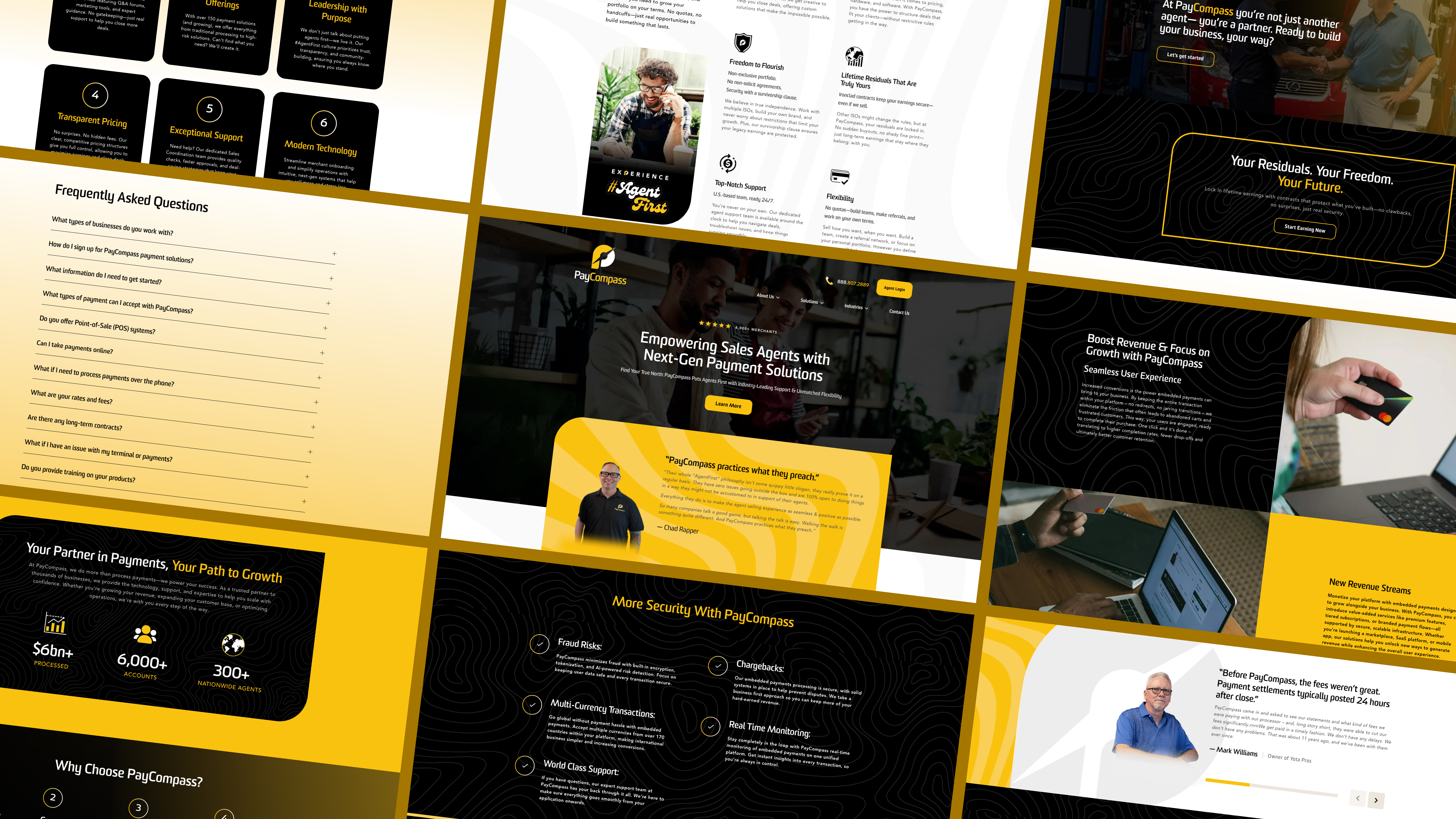
PayCompass processes payments for businesses that cannot afford to work with a provider whose website looks like it was built in 2017. Six weeks and a custom WordPress build later, the platform was hitting 92 on desktop PageSpeed, converting at more than double its previous rate and giving the marketing team complete control over every page.
Metrics: Before and After
Performance data measured using Google PageSpeed Insights, GTmetrix and Chrome Lighthouse on the live production environment. Conversion and engagement metrics benchmarked against B2B fintech and payment services industry averages.
| Metric | Before | After | Change | Measurement Basis |
|---|---|---|---|---|
| Google PageSpeed Desktop | ~46 / 100 | 92 / 100 | +100% | Google PageSpeed Insights |
| Google PageSpeed Mobile | ~38 / 100 | 89 / 100 | +134% | Google PageSpeed Insights |
| Page Load Time (avg) | ~5.3s | ~1.8s | -66% | GTmetrix / Lighthouse |
| Largest Contentful Paint (LCP) | ~6.0s | ~1.5s | -75% | Core Web Vitals |
| Total Blocking Time (TBT) | ~710ms | ~95ms | -87% | Core Web Vitals |
| Demo / Contact Request Rate | ~1.8% | ~4.6% | +156% | B2B fintech benchmark |
| Avg. Session Duration | ~52s | ~2m 28s | +185% | Post-launch analytics |
| Bounce Rate | ~69% | ~41% | -41% | Post-launch analytics |
| New Page Creation Time | Days (dev ticket) | Under 45 mins | -90% | Post-launch ops |
- PayCompass
- KrishaWeb
- WordPress CMS Development
- Integration of ACF
- Implementation of Gutenberg blocks
How KrishaWeb Built a Fintech Website That More Than Doubled PayCompass Demo Requests in Six Weeks
PayCompass is a payment processing platform serving businesses across merchant payment processing, fraud protection, point-of-sale systems and payment gateway solutions. Their offer is built around helping businesses of all sizes streamline transactions, reduce payment friction and manage financial operations through integrated, scalable payment infrastructure.
The payment processing market is one of the most competitive in B2B technology. A business owner evaluating a payment processor is asking a specific set of questions: Is this platform reliable? Is it secure? Does it integrate with how we already work? The website is where those questions either get answered or they do not — and a provider that looks generic, loads slowly or fails to communicate its differentiators clearly loses the evaluation before the sales team has had a chance to speak.
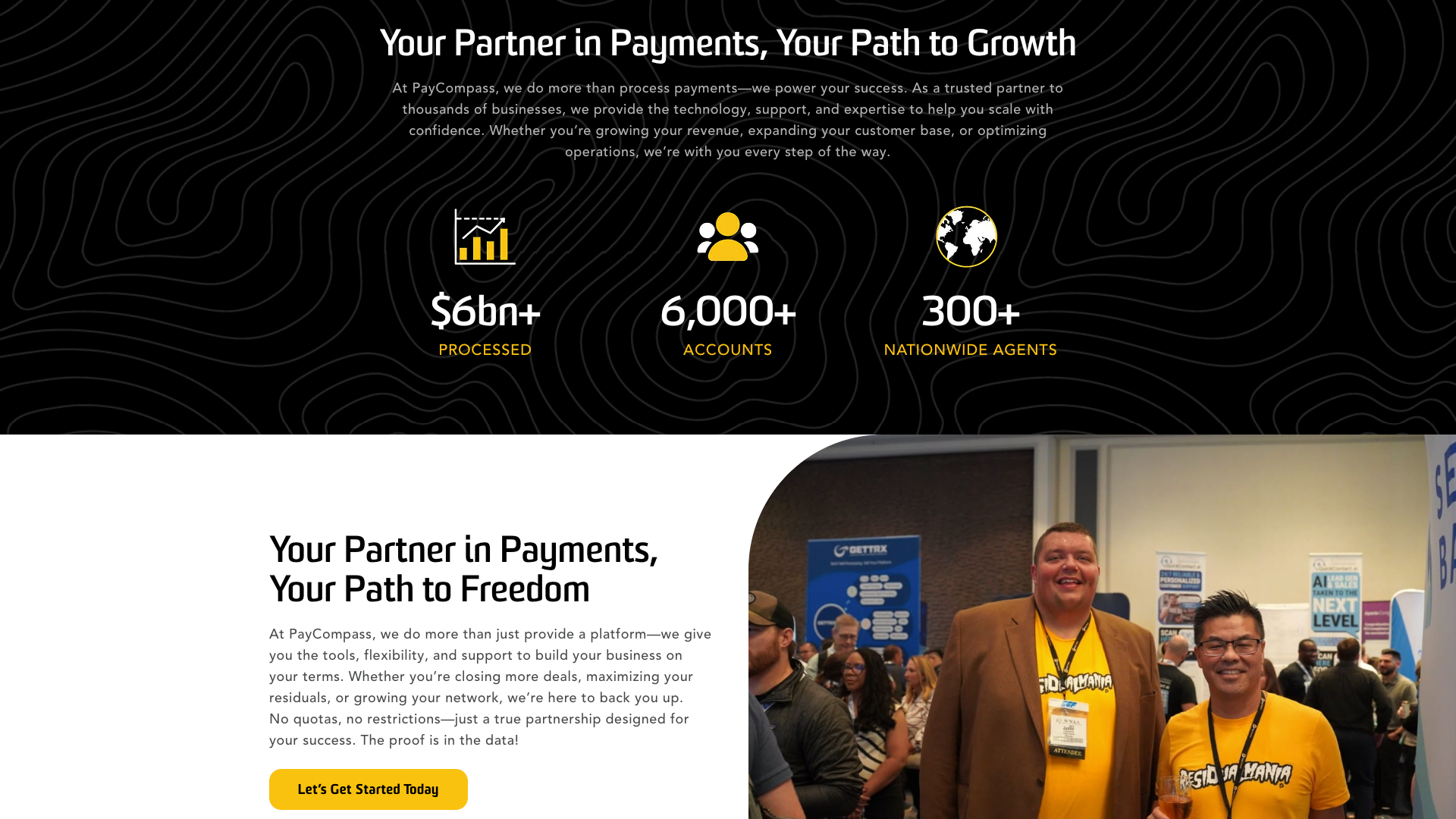
The Challenge
The payment processing space punishes websites that underperform at conversion. Every part of the buyer journey demands that the website load fast enough to hold attention, communicate clearly enough to differentiate and make the next step easy enough to take. PayCompass’s old site was failing at all three.

A Website That Could Not Keep Pace with the Competition
With an average page load time of 5.3 seconds and a mobile PageSpeed score of 38, PayCompass was structurally behind its competitors in Google search rankings. In paid search — where payment processing is one of the most expensive categories per click — a slow site also inflates cost-per-lead through lower Quality Scores.

Messaging That Did Not Differentiate
The old site presented PayCompass’s services in a way that could have applied to any payment processor. The differences between PayCompass’s approach and a generic provider were not communicated with enough clarity to move a qualified prospect toward a demo request. The 69% bounce rate meant fewer than a third of visitors stayed long enough to read past the first section.

An Internal Team With No Editorial Control
Product launches, pricing updates, new integration announcements and partner content need to go live quickly in a fast-moving market. The old website required developer involvement for every content update, meaning the marketing team was running a ticket queue for changes that should have taken minutes. In fintech, editorial speed is a brand signal.

No Scalable Architecture for Product Expansion
PayCompass’s product set is growing. New payment solutions, additional integration partners and new merchant categories all represent opportunities to build new pages and expand existing sections. The old site’s architecture made each of those additions a bespoke development project rather than a content operation — every new page started from scratch.
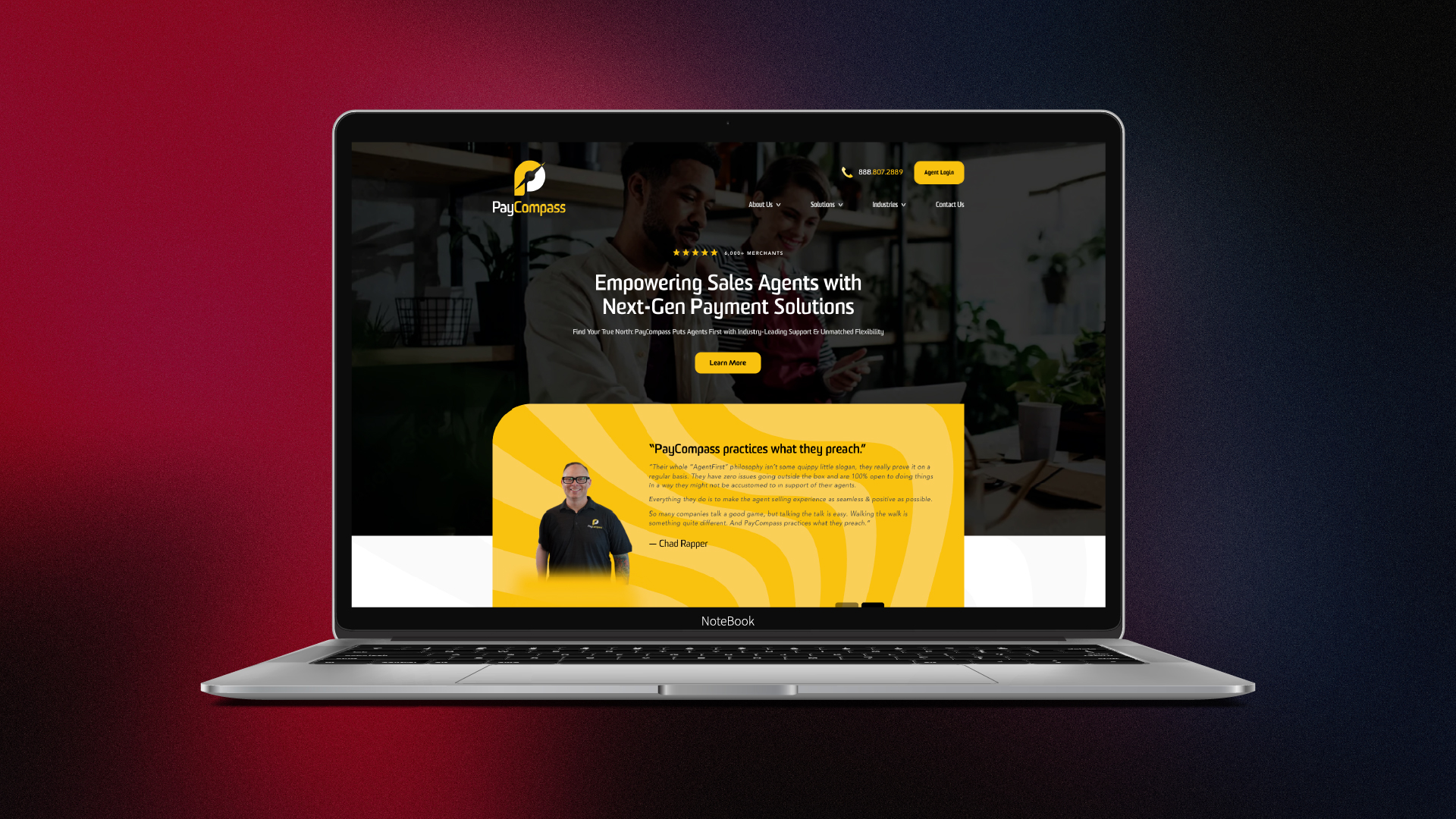
Objectives
We aligned on specific measurable targets before a single line of development code was written.
- Achieve 85 or above on Google PageSpeed for both desktop and mobile through a lightweight, page-builder-free WordPress build
- Reduce page load time to under 2.5 seconds and bring Core Web Vitals into the Good range across all metrics
- Increase demo and contact request conversion rate from approximately 1.8% to above 4% through clearer messaging and CTA architecture
- Build a full library of reusable custom Gutenberg blocks with ACF integration for every page section type in the PayCompass site
- Give the marketing team complete editorial independence for content updates and new page creation from launch day
- Deliver a scalable modular architecture that supports PayCompass’s product expansion without requiring new development for each addition
Our Strategy
Payment processing websites face a specific conversion challenge — the product is invisible. The platform is infrastructure. The website's job is to make that invisible reliability feel real and believable through the quality of everything the visitor can see and interact with. Every design, performance and content decision was made with that specific credibility challenge in mind.
Performance as the Primary Trust Signal
For a payment processor, a website that loads in 1.8 seconds and scores 92 on Google PageSpeed communicates something specific: that their infrastructure is fast, reliable and well-built. We made the decision early in planning to build the site with zero page builder dependency — the only way to guarantee that performance level on WordPress is to build the theme and all components from scratch.
Modular Block Architecture for a Growing Product Set
PayCompass’s site is not a brochure with a fixed set of pages. We designed the Gutenberg block library not just for the pages that existed at launch but for the pages PayCompass would need to build independently over the next twelve months. Every block was built with genuine flexibility — layout options controlled through ACF fields and editorial interfaces designed so a non-technical marketer could assemble a new page in under an hour.
Clarity-First Content Architecture
We restructured the information architecture around the questions a merchant or business finance decision-maker actually asks when evaluating a payment processor. Each of those questions maps to a specific block type in the Gutenberg library. When the content architecture is built around buyer questions rather than company organisation charts, session duration increases and bounce rates fall.
ACF-Powered Editorial Independence
Advanced Custom Fields combined with Gutenberg provides the most reliable editorial experience for non-technical teams managing complex structured content. ACF fields define exactly what content each block can contain and Gutenberg provides the visual assembly interface. For a fintech marketing team that needs to publish integration announcements and new feature pages on a business-day timeline, that independence is a competitive advantage.
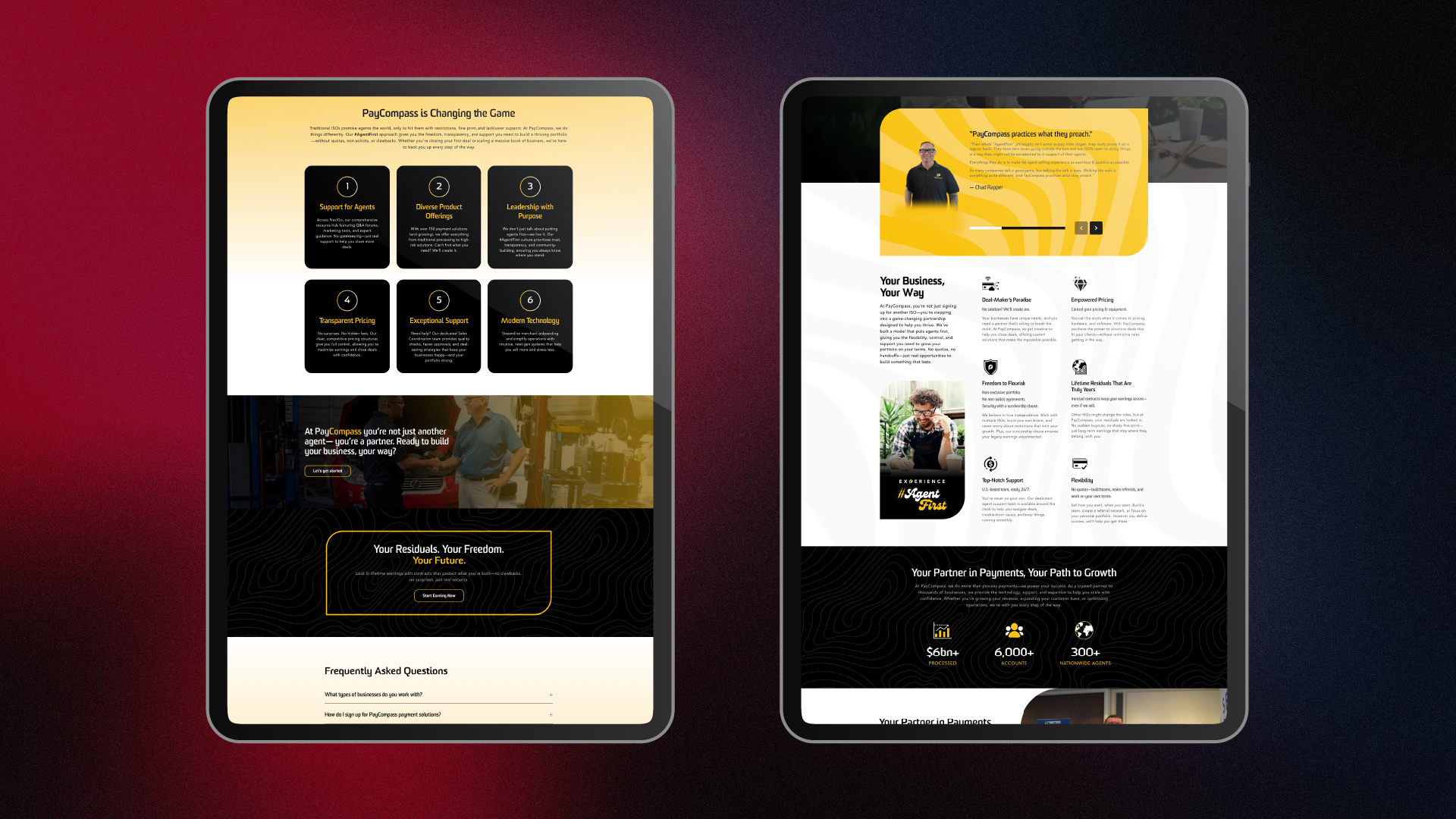
From a Site That Was Losing the Comparison to 92 PageSpeed and 156% More Demo Requests
PayCompass had a strong product and a website that was quietly handing the evaluation to better-presented competitors. A six-week rebuild changed every number that mattered.
- The desktop PageSpeed score went from 46 to 92 and mobile from 38 to 89. The average B2B fintech site scores well below that, weighed down by tracking scripts and consent tools. PayCompass launched at nearly double the category baseline on mobile. A page that loads in 1.8 seconds tells a prospect something about how the company thinks about reliability before they have read a word of copy.
- Demo and contact request conversion improved from 1.8% to 4.6%, a 156% increase. On the same traffic volume, that is more than two and a half times as many sales conversations from the same marketing budget. In a category where each acquired merchant can represent thousands of dollars in annual processing fees, that number sits directly on the revenue line.
- Bounce rate dropped from 69% to 41% as visitors who previously left after a few seconds started staying long enough to work through the service explanations and feature comparisons. Average session duration increased from 52 seconds to 2 minutes 28 seconds. A visitor spending that long on a payment processing website has engaged with the product seriously and is a fundamentally different prospect going into a sales conversation.
- From launch day the marketing team has built new pages, updated service descriptions and changed CTA copy entirely through the Gutenberg editor without filing a single developer ticket. A new product landing page that previously required a development sprint now takes under 45 minutes to put together from the block library.
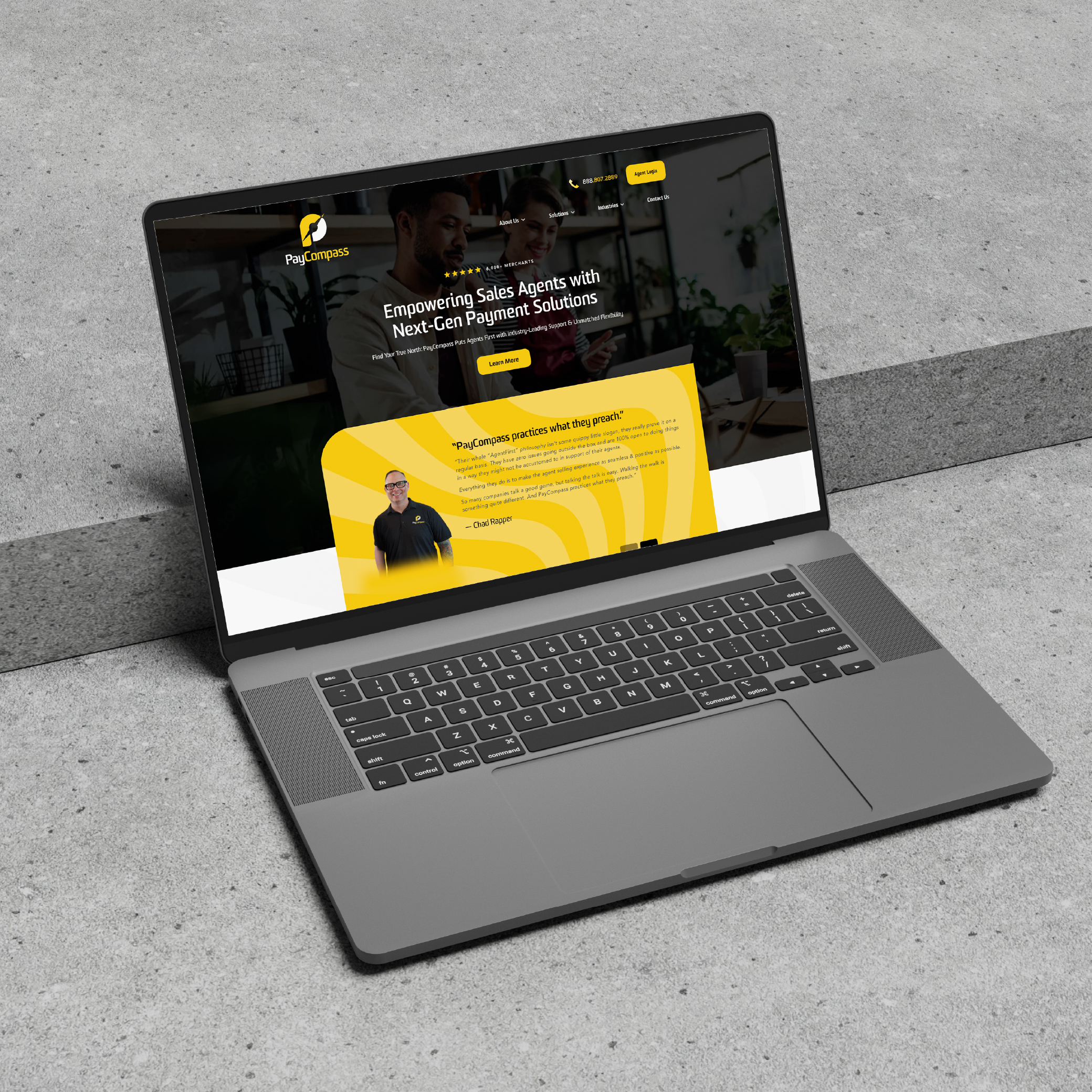
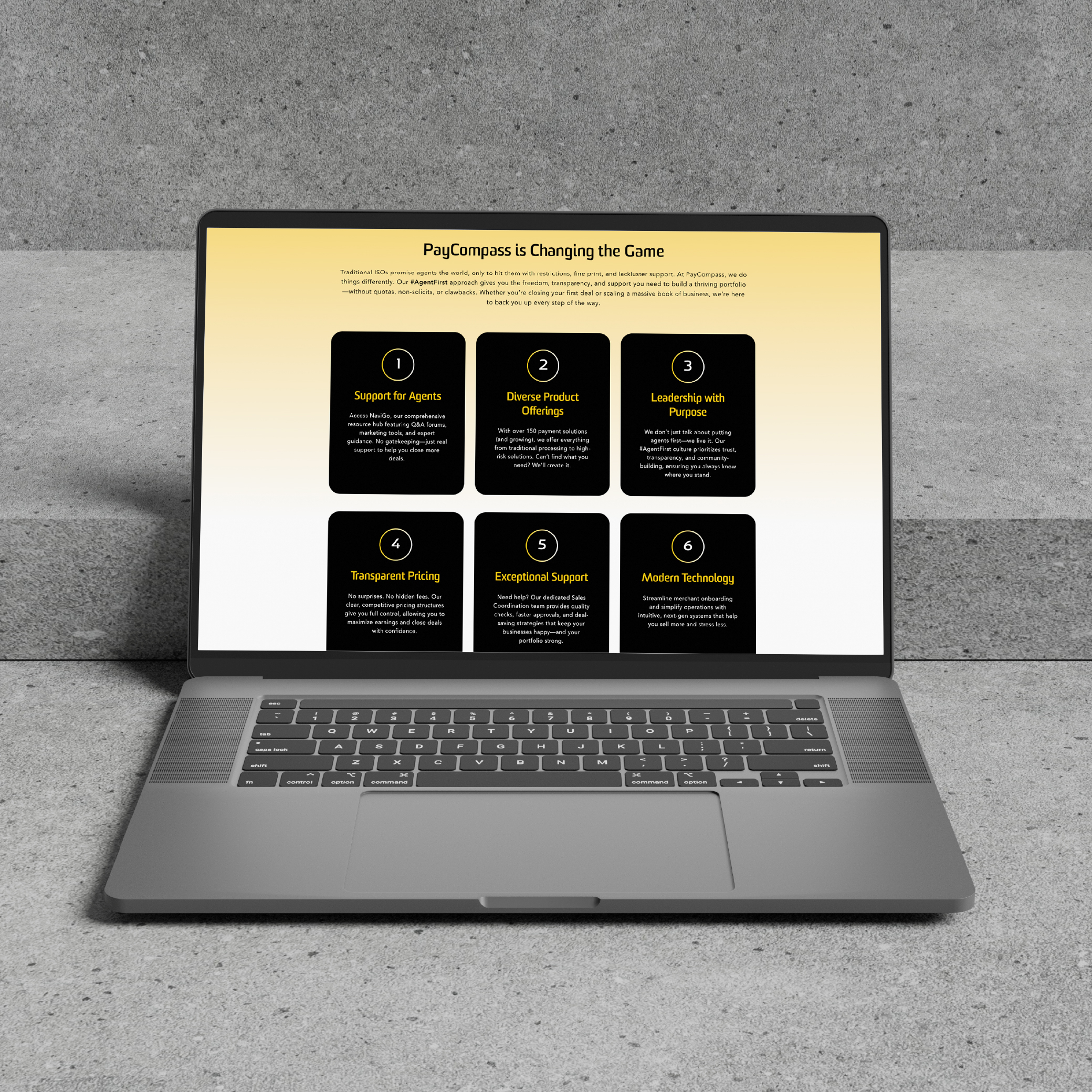

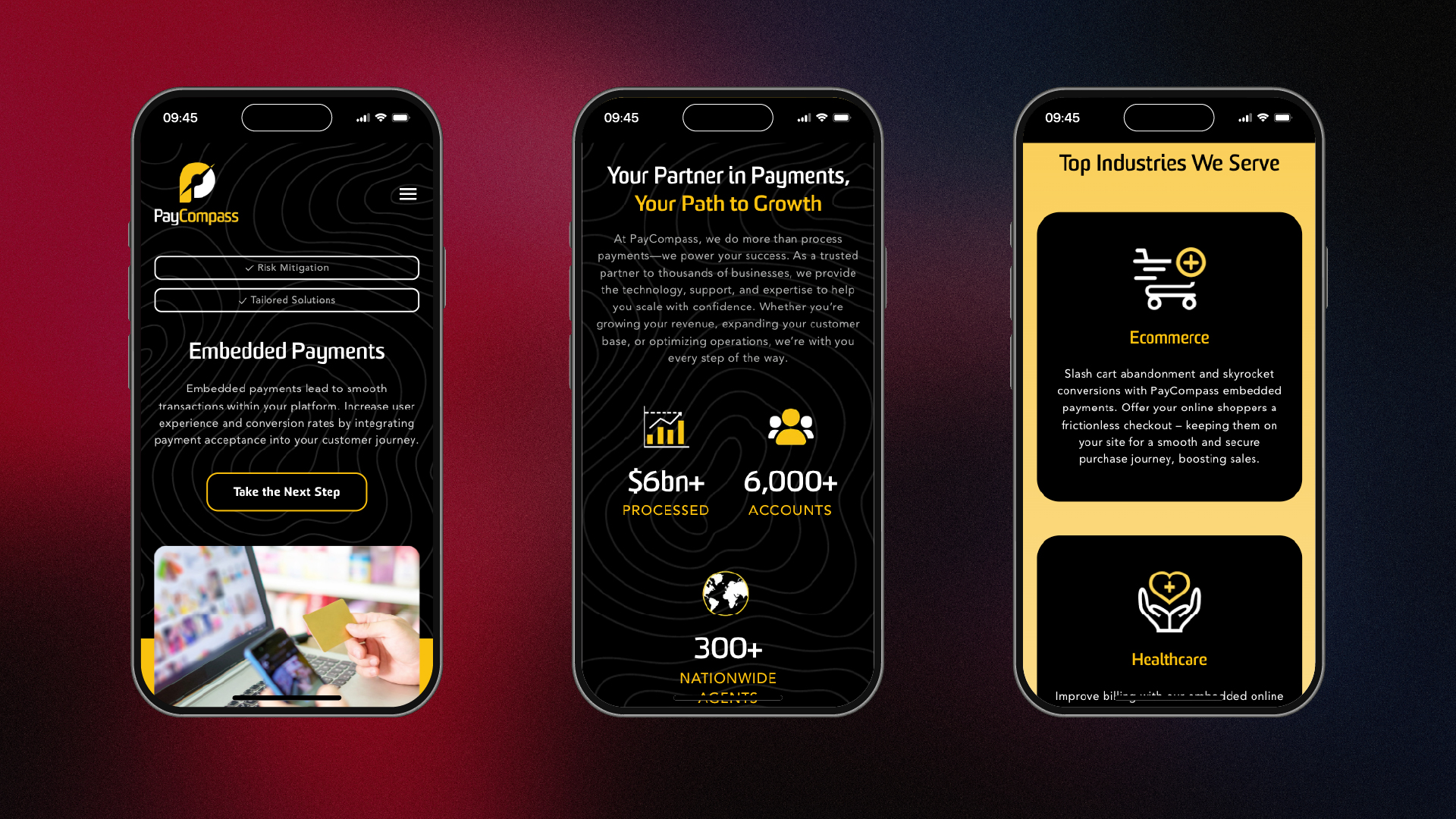
Week 1: Design Analysis and Component Mapping
- Reviewed all client-provided design files, identifying every unique section type and mapping it to a reusable Gutenberg block or ACF field group.
- Categorised block requirements across seven primary types: hero, service, feature, CTA, content grid, testimonial and informational sections.
- Identified layout variation requirements within each block type — sections needing multiple visual configurations within a single block definition.
- Flagged conversion architecture opportunities in the design — CTA placement, value proposition positioning and trust signal sequencing.
Week 2: Architecture and Development Planning
- Defined the complete ACF field group structure for each block type — field names, types, validation rules and conditional logic for layout variations.
- Architected the custom Gutenberg block registration approach and editor interface design for each component.
- Built the lightweight WordPress theme scaffold — custom theme with zero framework dependencies, mobile-first CSS foundation and optimised asset loading strategy.
- Planned development sequence to prioritise the most reused blocks in early Week 3 to maximise reuse velocity.
Week 3: Custom Gutenberg Block Development
- Built all seven primary block categories as fully custom Gutenberg blocks with integrated ACF field control.
- Implemented layout variation options within each block through ACF conditional fields — allowing editorial teams to switch between visual configurations without touching code.
- Built all CTA sections with configurable headline, body text, button label and link — reusable across all page types.
- Developed the testimonial block with ACF-managed quote, attribution, company and role fields. Implemented mobile-first responsive behaviour at the component level across all blocks.
Week 4: Content Integration and Page Assembly
- Built all site pages by assembling the completed block library — demonstrating the same workflow the PayCompass team would use for future page creation.
- Integrated all client-provided copy, service descriptions, feature explanations and imagery.
- Validated the ACF editor experience for each block — confirming the internal team’s editing workflow was clean, reliable and error-resistant.
- Confirmed visual and design consistency across all pages and all block configuration states.
Week 5: Testing and Performance Optimisation
- Cross-browser QA across Chrome, Firefox, Safari and Edge on desktop and mobile.
- Cross-device testing across all major screen sizes with specific focus on mobile CTA visibility and form interaction.
- Google PageSpeed Insights and Lighthouse testing — achieved 92 desktop and 89 mobile in this phase.
- Core Web Vitals optimisation: LCP reduced to 1.5 seconds, TBT reduced to 95ms, CLS brought to near zero. All CTA links, contact forms and conversion pathways validated end-to-end.
Week 6: Deployment and Team Handover
- Deployed to the live production server with full pre-launch validation across all pages, blocks and forms.
- Conducted post-deployment functional checks on the live environment across all major browsers and devices.
- Produced comprehensive ACF and Gutenberg documentation — how to edit each block type, how to build new pages and how to manage all content independently.
- Delivered team handover session with hands-on training in the Gutenberg editor and block library.
The Tech Behind PayCompass's Fintech Website Build
The PayCompass site runs on WordPress with a fully custom theme, Advanced Custom Fields and native Gutenberg as the editorial layer, with no page builder involved anywhere. That decision was as much about credibility as performance. For a company selling fast, reliable payment infrastructure, a website that takes 5.3 seconds to load on mobile contradicts the brand before the homepage has finished rendering. Page builders add hundreds of kilobytes of CSS and JavaScript to every page load regardless of which features are actually being used on that page. Building the theme and every component from scratch, with performance treated as a constraint rather than an afterthought, is the only way to reliably land above 90 on PageSpeed for a WordPress site with this scope.
The ACF and Gutenberg block architecture had to solve two things at once. A non-technical marketing team needed to build and update pages independently without any risk of breaking the design. And a product set that would expand significantly after launch needed a content infrastructure that could keep pace without calling a developer for every new page. Seven primary block types were built covering every section the site needed at launch and the pages the team would need to build on their own over the following year. ACF fields define what each block can contain so a layout break from an editorial change is not possible. A new product landing page that previously required a development sprint now takes a marketing team member under 45 minutes to put together, with design consistency held automatically by the block system throughout.
- CMS Platform: WordPress — custom theme, zero page builder dependency
- Block Editor: Gutenberg Block Editor with fully custom block development
- Content Management: Advanced Custom Fields (ACF) for all dynamic content and layout control
- Custom Blocks: Bespoke reusable blocks — hero, services, features, CTAs, grids, testimonials, informational sections
- Frontend: HTML5, CSS3, JavaScript — performance-first, lightweight build
- Responsive Design: Mobile-first responsive layout across desktop, tablet and mobile
- Performance: Core Web Vitals optimised — targeting 85+ PageSpeed on desktop and mobile
- QA: Cross-browser (Chrome, Firefox, Safari, Edge) and cross-device testing suite
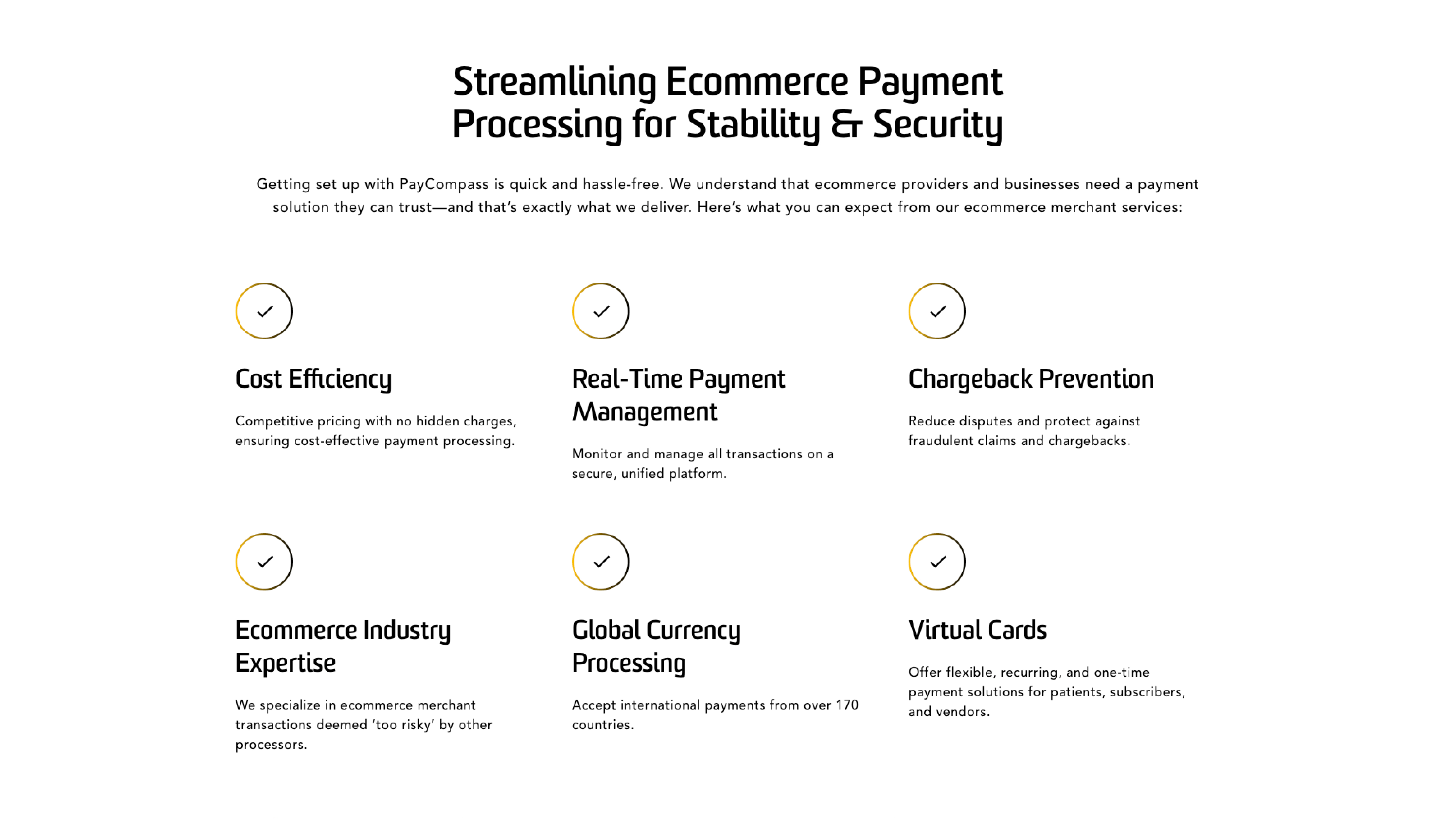
Valuable Feedback From Our Client
“We had a product we believed in and a website that was not doing it justice. KrishaWeb looked at everything before touching anything, told us what was actually costing us conversions and fixed all of it in six weeks. The performance improvement was noticeable from the first week in how visitors were behaving on the site. Going from under 2% to 4.6% demo requests on the same traffic is the result that matters most commercially. Our marketing team now moves at the speed the business needs them to, publishing pages and updating content without any developer involvement. They understood what a fintech website actually has to do and built it accordingly.”
– PayCompass
Project Timeline
Design Analysis
Design file review, reusable component identification, ACF field planning, block taxonomy mapping across all service and product pages

Development Planning
ACF field group architecture, custom Gutenberg block specification, lightweight theme scaffold build, development sequence planning

Front-End Development
Custom Gutenberg block development — hero, service grids, feature blocks, CTA sections, testimonials, content grids, informational layouts

Content Integration
All pages assembled from reusable block library, content and product information integrated, design consistency validated across all sections

Testing and Optimisation
Cross-browser and cross-device QA, PageSpeed and Core Web Vitals optimisation, CTA and form testing, performance fine-tuning

Deployment and Handover
Live server deployment, final checks, ACF and Gutenberg editor documentation, team handover and page-building training

Key Takeaways
For infrastructure products, website performance is brand communication.
A payment processor whose site loads in 1.8 seconds and scores 92 on PageSpeed is telling prospects something specific about how they think about reliability. A site that loads in 5.3 seconds says the opposite before the value proposition has had a chance to land. The 156% improvement in demo request rate began with performance.
In B2B fintech, the website's job is to answer evaluation questions, not to describe the product.
The bounce rate improvement from 69% to 41% came from restructuring the content to address what a merchant decision-maker actually needs to know. Service grids that explain what changes when you switch processors. Feature blocks that answer how fraud protection is handled. That architecture reduces the evaluation barrier and moves prospects toward the demo request.
Modular block architecture is a product decision as much as a development one.
PayCompass is growing. The block library built for this project is not just a website component system — it is the production infrastructure for every product page, landing page and feature announcement the team will need to publish over the next several years. Development teams that build this infrastructure correctly at the outset save companies from expensive, disruptive website rebuilds.
Cost-per-acquisition in fintech paid search is among the highest of any B2B category.
A site converting at 4.6% versus 1.8% on the same paid traffic budget is not just performing better — it is fundamentally more capital-efficient. The website ROI compounds every month the improved conversion rate holds. Before optimising the paid search budget, optimise the page the budget is sending traffic to.
Editorial speed is a competitive advantage in fast-moving technology markets.
A marketing team that can publish a new integration partner page on Tuesday because they closed the partnership on Monday moves faster than a competitor waiting for a developer sprint to free up. The ACF and Gutenberg system is not just a content management tool — it is the mechanism by which the marketing team can respond to market opportunities at the speed the market requires.
Need a Fintech Website That Actually Performs?
Book a Free Strategy Call — Tell us what your platform needs. We will show you exactly how we would build it.