25 Best Real Estate Website Designs and Ideas

25 Best Real Estate Website Designs and Ideas

Every home buyer’s search now starts online. According to NAR’s 2025 Profile of Home Buyers and Sellers, 100% of recent buyers used the internet during their search and 70% used a mobile device to do it. Your website is often the first showing a buyer sees, well before they ever contact an agent. Below are 25 real estate websites worth studying, each with specific features you can borrow and one concrete takeaway for your own site.

What Makes a Real Estate Website Design “The Best”

Before the list, here’s what separates a strong real estate site from one that just looks nice in a screenshot:

  • A clear value proposition above the fold, visitors know what the site does and who it serves within seconds
  • Fast, mobile-first performance, since most searches now happen on a phone
  • Advanced search and filters: location, price, property type, and lifestyle factors like schools or commute
  • Strong visual storytelling through real photography, video, and 3D tours, not stock imagery
  • Trust and credibility: agent bios, testimonials, local market data, transaction history
  • Real lead capture: forms, click-to-call, chat, or booking, not just a static contact page
  • Accessibility that meets WCAG standards, not an afterthought bolted on later

A few 2026-specific expectations are worth adding to that list: AI-assisted search that understands a query like “3-bedroom near good schools under $500K,” personalized listing feeds for returning visitors, and privacy-compliant tracking now that third-party cookies matter less than first-party data.

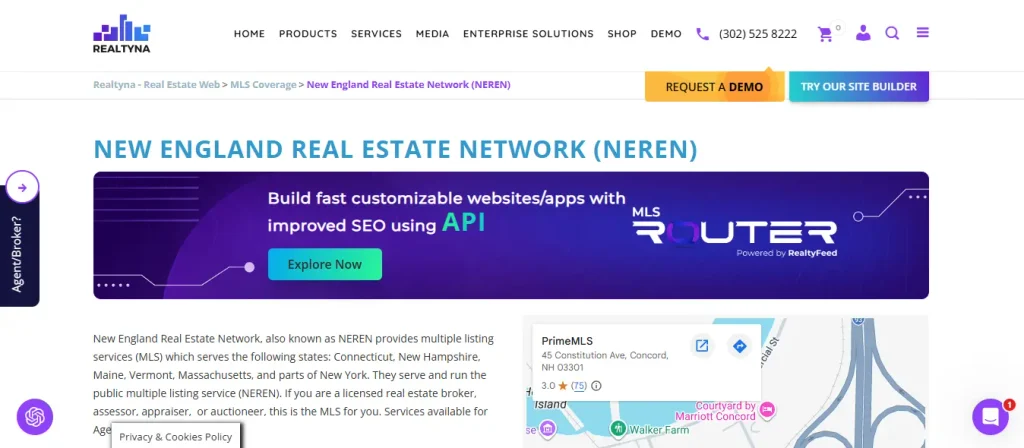
New England Real Estate Network (NEREN) powered by User Way utilizes widgets to customize the user experience. Their website contains an “Accessibility” button that allows users to adjust the text size and spacing, contrast, pause animations, highlight links, and make the content dyslexia friendly.

The company serves different regions and hence the information on the homepage is well organized for users to quickly find relevant content. Thus, the page includes search bar options to find houses by top cities, median price range, and top waterfront property listings. Lastly, the background photograph of New England Lake as seen through the bay windows adds to the appeal of the website.

25 Real Estate Website Designs Worth Studying

1. NEREN

NEREN

The New England Real Estate Network runs an accessibility-first MLS portal built on UserWay widgets.

  • A dedicated accessibility button adjusts text size, spacing, contrast, and animation, and offers a dyslexia-friendly mode
  • Homepage search options cover top cities, median price range, and waterfront listings specifically
  • A regional background image (New England lake views) reinforces the local focus without slowing the page down

What to steal: Add a visible, one-click accessibility toggle rather than relying on browser-level settings most visitors never touch.

2. The New England Real Estate Company

The New England Real Estate Company

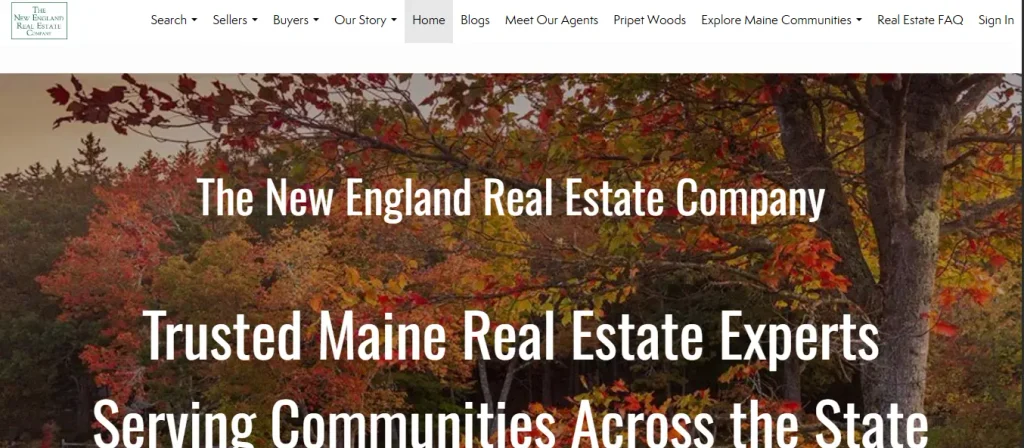
A search-first homepage built around a single, obvious next action.

  • The search bar sits centered in the hero space, not buried in a header dropdown
  • Filter options cover zip code, district, neighborhood, city, and school district
  • A light, airy background photo supports the message instead of competing with it

What to steal: Put your primary search function dead center in the hero, not off to the side.

3. Long & Foster

Long & Foster

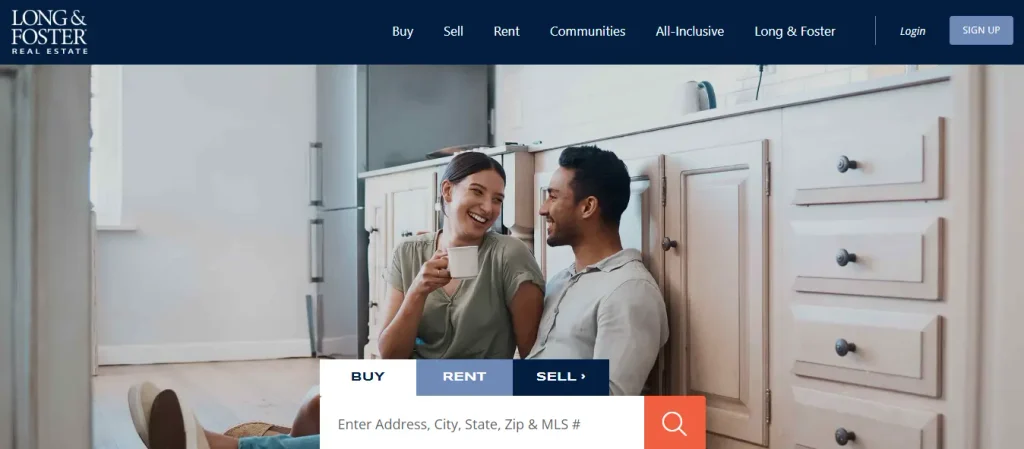
Leans on emotional storytelling rather than listings alone.

  • Homepage video captures lived-in, everyday moments (a family cooking, someone relaxing at home) instead of staged real estate photography
  • The emotional framing supports the practical search tools further down the page

What to steal: One well-shot lifestyle video can do more for brand connection than a dozen property photos.

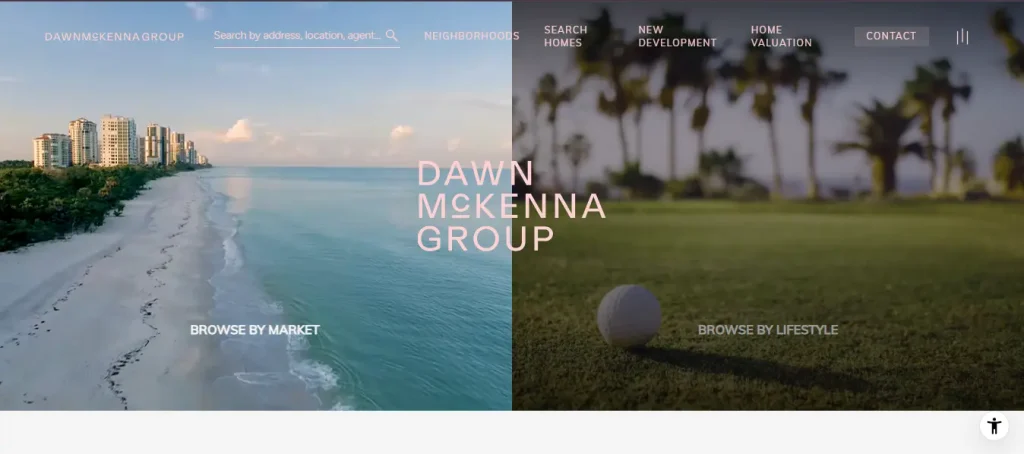
4. Dawn McKenna Group

 Dawn McKenna Group

A luxury brokerage that designs specifically around its target buyer.

  • Content prioritizes schools and suburbs over waterfront listings, matching a family-focused clientele
  • A restrained Montserrat typeface and gray-and-white palette signal luxury without shouting it
  • High-end lifestyle imagery (kitchens, interiors) reinforces the price point visually

What to steal: Design decisions should follow your actual buyer profile, not a generic idea of what “luxury real estate” looks like.

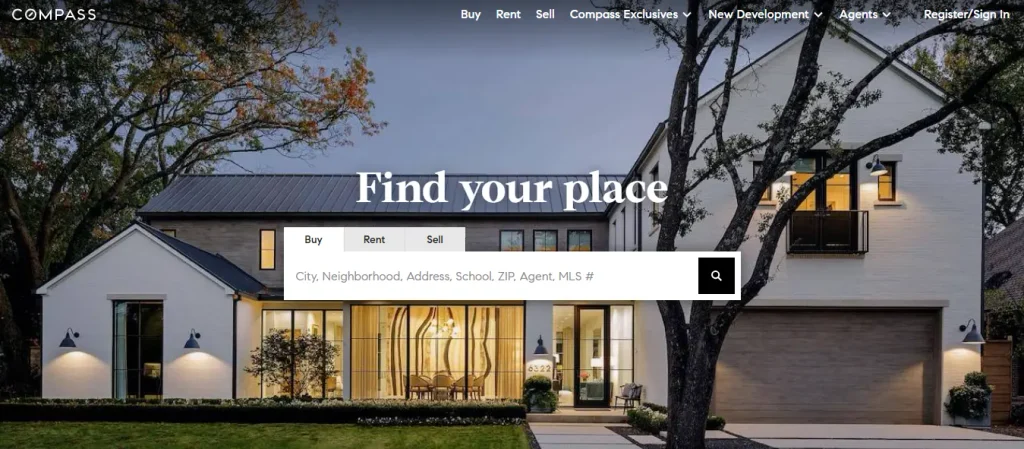
5. Compass

Compass

Strong, consistent brand identity across a national platform.

  • A black-and-white palette and geometric design language stay consistent across every page
  • Branding choices (including the yard sign design) carry through from digital to physical marketing

What to steal: Pick 2 or 3 visual elements (a color pairing, a shape, a type style) and repeat them everywhere so the brand feels intentional, not assembled from templates.

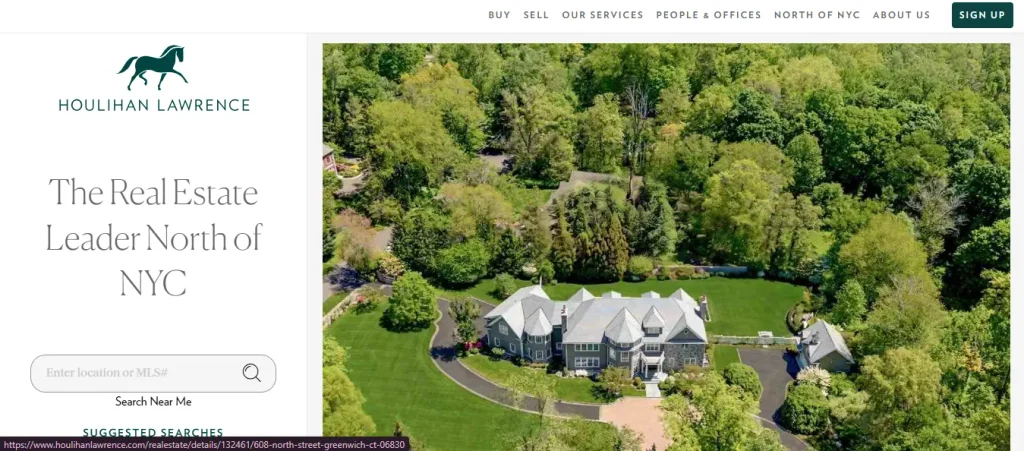
6. Houlihan Lawrence

Houlihan Lawrence

A simple layout that makes browsing effortless.

  • Clean navigation makes it easy to browse listings and property details without extra clicks
  • A “Featured Community” section surfaces niche markets the firm serves, complete with local housing data

What to steal: A dedicated community or neighborhood section builds local authority faster than scattering that content across individual listings.

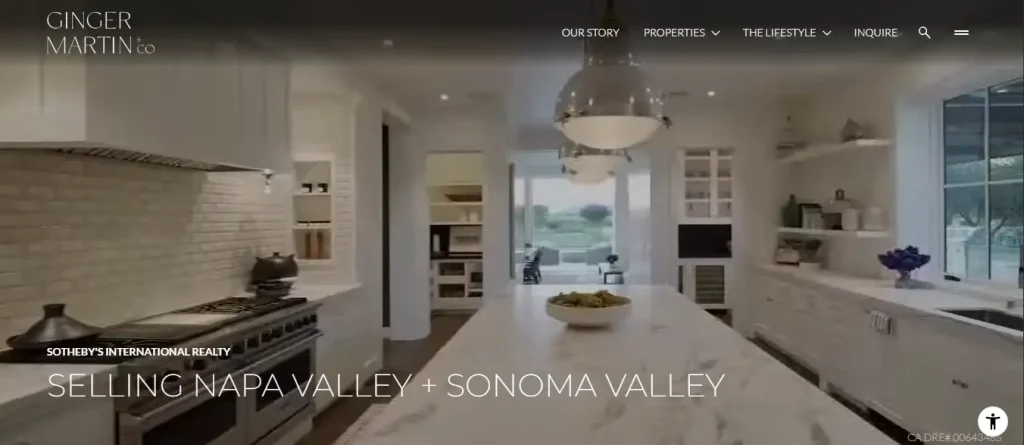
7. Ginger Martin & Co.

Ginger Martin & Co.

A California brokerage keeping the experience simple and resource-driven.

  • Checkout-style buttons with clear buying and selling pathways
  • Napa and Sonoma Valley specific listings, not a generic statewide search
  • A blog and resource section help buyers make an informed decision

What to steal: Narrow your listings and content down to a specific area, instead of trying to hit every area at the same time.

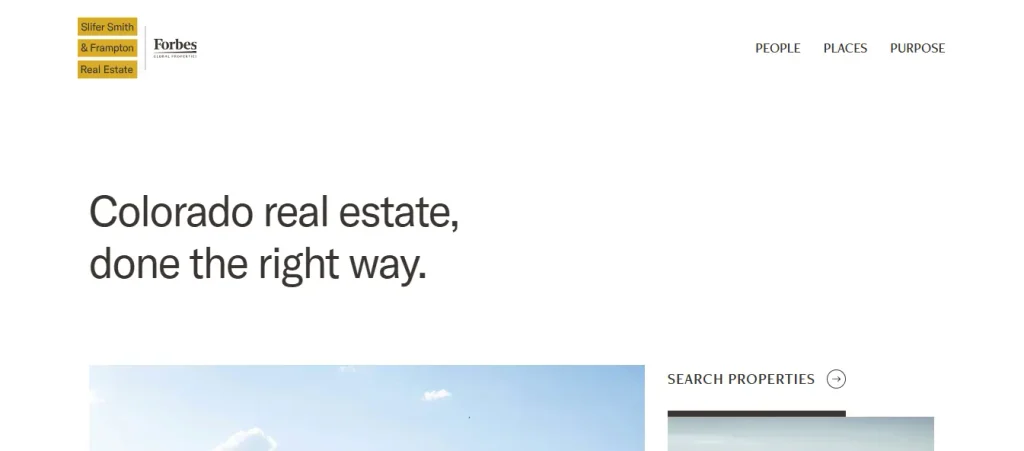
8. Slifer Smith & Frampton Real Estate

Slifer Smith & Frampton Real Estate

Built around the Vail Valley lifestyle, not just listings.

  • Local market analysis widgets sit alongside moving service information and a property alert sign-up
  • Lifestyle videos describe the region itself, not just individual homes
  • A map showing the agency’s physical office location adds a layer of credibility

What to steal: Combine market data widgets with lifestyle content so visitors get both the numbers and the feel of an area.

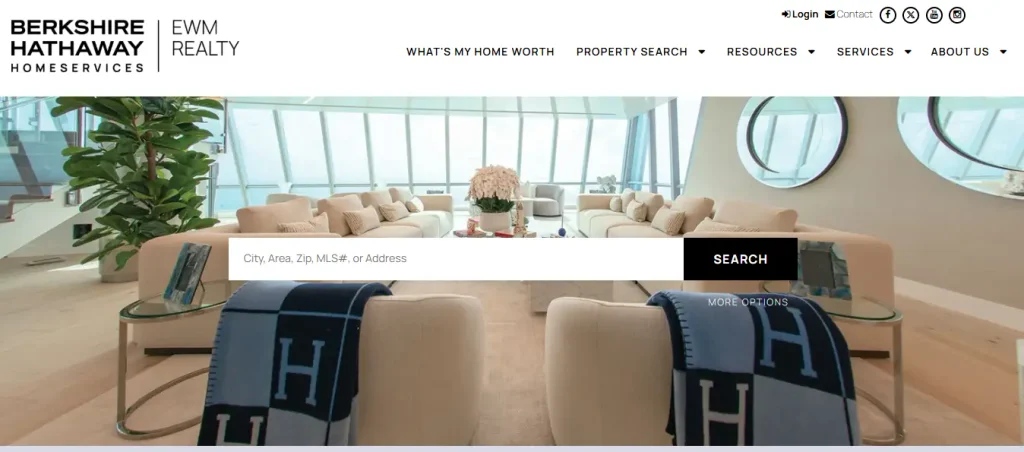
9. EWM International Realty

EWM International Realty

Full-bleed photography does the heavy lifting.

  • Large full-bleed images of property interiors and exteriors
  • Homepage has social sharing buttons, marketing collateral, open house info

What to steal: Full-bleed imagery reads as more premium than boxed, bordered photo galleries, worth testing on your top listings.

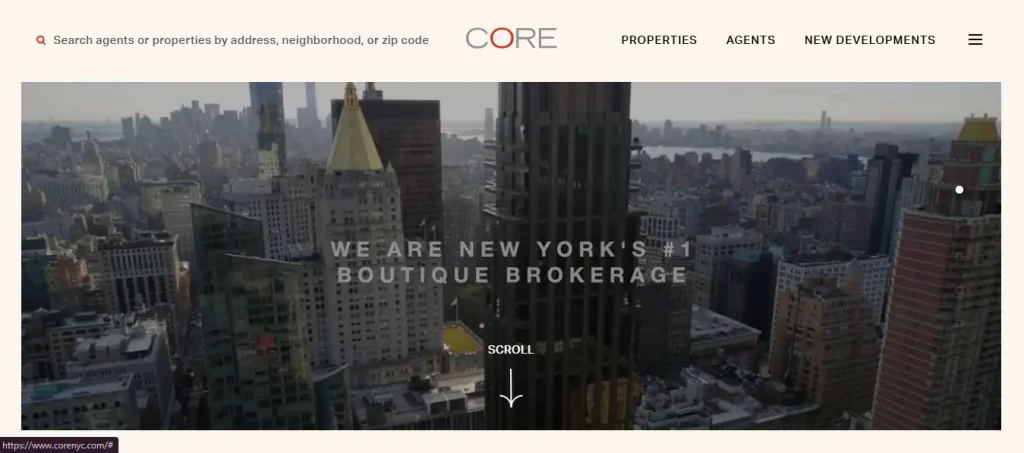
10. CORE NYC

CORE NYC

11. The Goodhart Group

The Goodhart Group

Social proof through real people, not stock photography.

  • Photos of real buyers and agents provide relatability with listings
  • Its well-proportioned spacing makes the homepage easy to scan, but also covers a lot of ground

What to steal: Real client and agent photography outperforms polished stock imagery for trust, even when the production quality is lower.

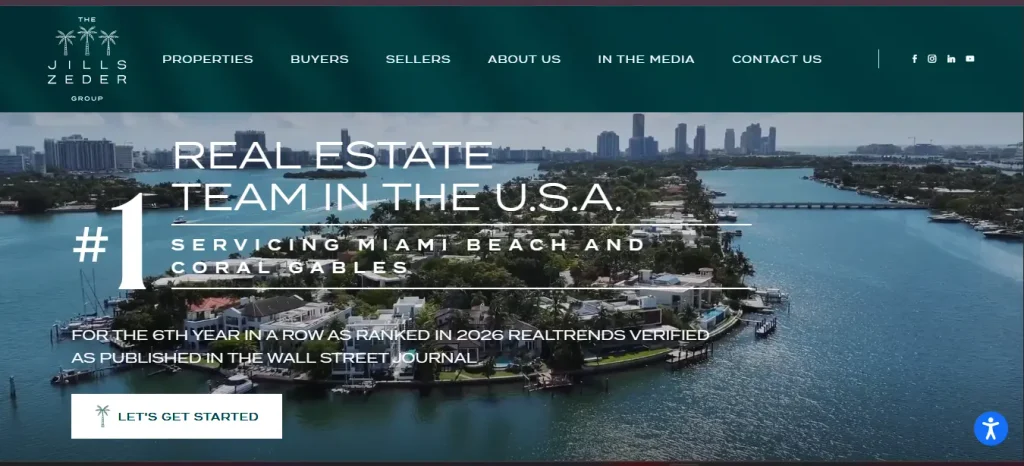
12. The Jills

The Jills

Balances the three things that make a real estate site work: navigation, search, and content.

  • A centered search function anchors the homepage
  • Detailed agent bios sit alongside widgets linking to deeper site sections
  • Local and luxury rental info, blog content, and press releases round out the brand’s authority

What to steal: Treat navigation, search, and content as three legs of the same stool. Weakness in any one undercuts the other two.

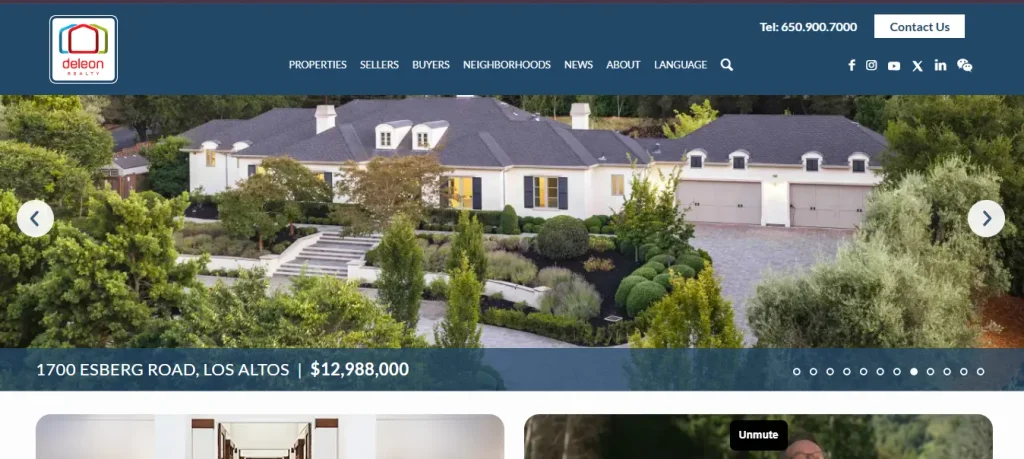
13. DeLeon Realty

DeLeon Realty

SEO-consci   ous structure paired with strong visual proof.

  • Snappy, streamlined business information is just below the top of the homepage
  • A promo video features different neighborhoods alongside the main content
  • Social proof lends credibility without the need for a dedicated testimonials page

What to steal: Write your homepage copy with search intent in mind from the start, not as an afterthought layered on later.

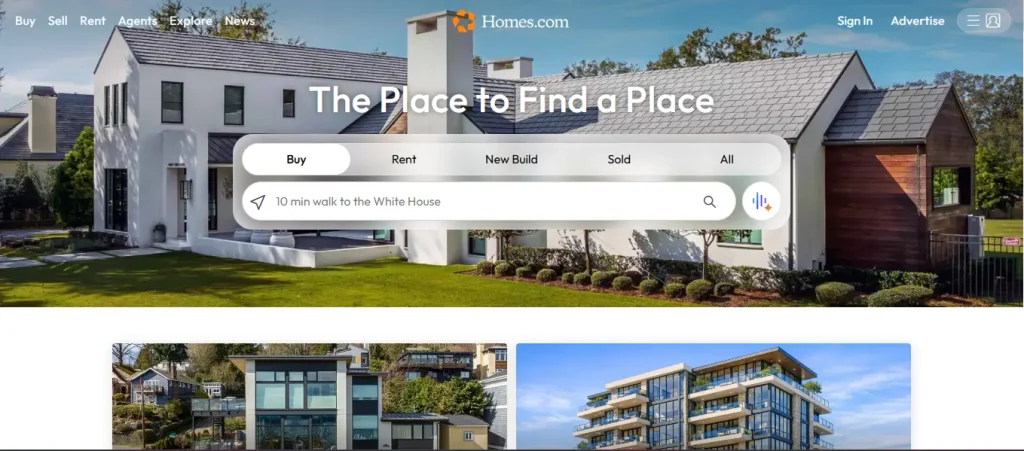
14. Homes.com

Homes.com

The NAR-backed portal that relaunched aggressively between 2023 and 2025 with an agent-first model.

  • The site is pro-agent, not agent-optional, with agent and listing profiles built for robustness
  • Mobile-first design, with thumb-friendly, large tap targets throughout
  • Search and filtering are built for speed, matching how most 2026 buyers will search from a phone

What to steal: A mobile-first layout that’s thumb-friendly isn’t optional anymore. Design for the phone first, then adapt up to desktop.

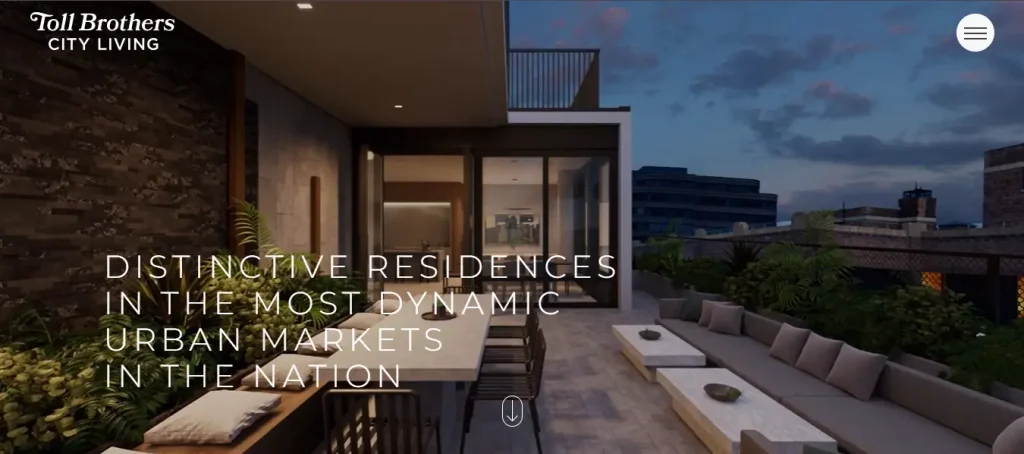
15. Toll Brothers City Living

Toll Brothers City Living

A cinematic introduction to New York City living.

  • A sweeping aerial video of the skyline opens the homepage
  • Hover-sensitive navigation collapses into a hamburger menu for a clean mobile experience
  • Short, punchy headlines against the skyline imagery drive visitors toward the projects section

What to steal: A strong hero video can carry a homepage on its own, as long as the navigation underneath stays simple.

16. HomeLight

HomeLight

A tool-driven site built around one standout feature.

  • A regional hero image sets the scene without distracting from the content
  • A search field helps visitors find agents specifically for selling
  • The “HomeLight Simple Sale” feature lets sellers estimate a sale price and connect with pre-approved cash buyers

What to steal: One clearly explained, differentiated tool can be a stronger conversion driver than a dozen generic features.

17. My Agent Finder

Built entirely around capturing quality leads fast.

  • A homepage search field with live suggestions reduces friction
  • An animated arrow draws attention directly to the search button
  • Only a phone number appears at the top of the page, a deliberate, singular call to action

What to steal: Fewer options at the top of the page usually means more conversions, not fewer. Pick one primary action and commit to it.

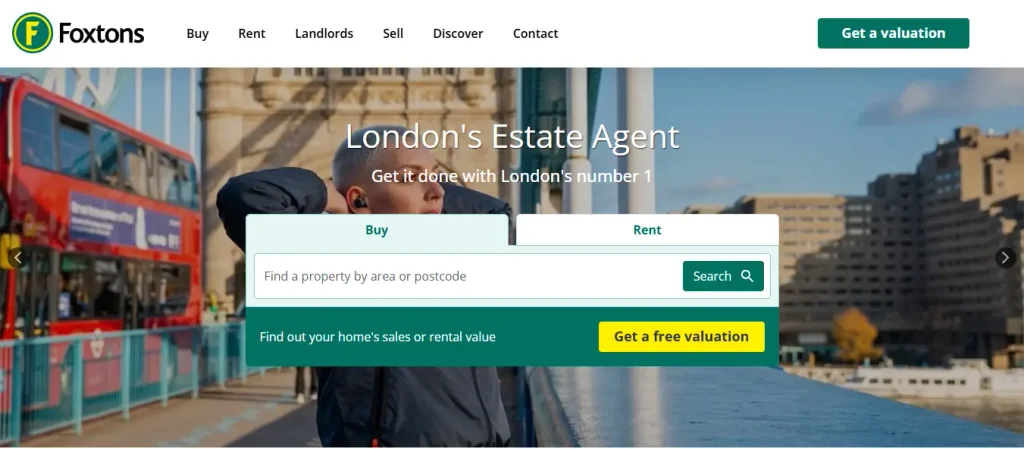
18. Foxtons

Foxtons

A UK brokerage whose multi-functional search sets a high bar.

  • Background video reinforces a message of peace and everyday prosperity
  • A single search field lets visitors search by postcode, area, station, school, or travel time
  • A one-line rating summary from thousands of renters builds instant social proof

What to steal: A search field that handles multiple query types (location, commute, school) reduces the need for separate filter menus.

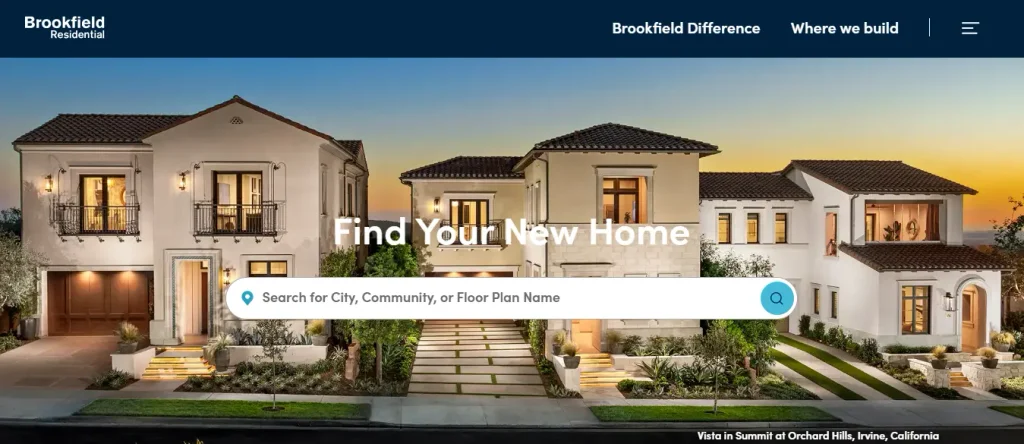
19. Brookfield Residential

Brookfield Residential

Aspirational imagery paired with practical navigation.

  • A striking regional photo (in this case, Hawaii) sets an emotional tone before any copy loads
  • Live chat and contact buttons sit in consistent corners across the site
  • A dropdown groups social links and blog content alongside core navigation like “Find Your Home” and “Explore by Island”

What to steal: Let one striking image do the emotional work, then keep every practical action (chat, contact, search) exactly where visitors expect to find it.

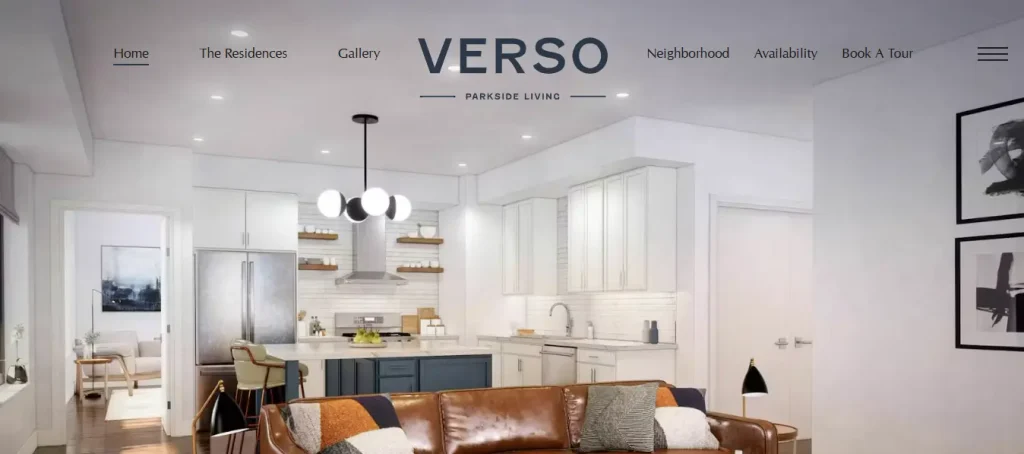
20. Verso

Verso

Luxury and warmth in equal measure.

  • A warm, soft color palette stands out from the colder, minimalist trend common in luxury real estate
  • Smooth, low-friction browsing keeps visitors engaged across pages

What to steal: Warm tones can signal luxury just as effectively as cold minimalism, worth testing against category norms.

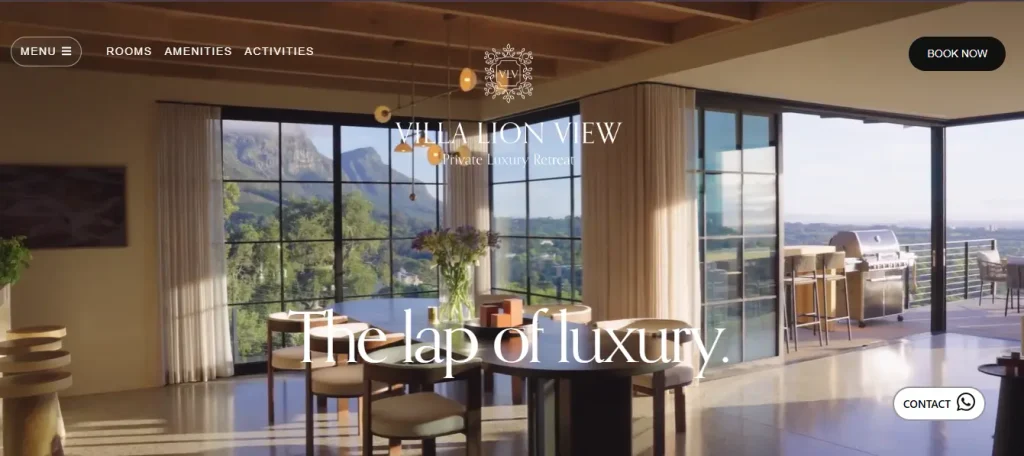
21. Villa Lion View

Villa Lion View

A hero video that immediately sets the scene.

  • A full-width hero video showcases the property’s amenities before any scrolling
  • Accordion sections let visitors browse rooms and nearby attractions without leaving the page

What to steal: Accordion-style sections are an easy way to pack detailed content into a single page without overwhelming a first-time visitor.

21. Villa Lion View

Villa Lion View

A hero video that immediately sets the scene.

  • A full-width hero video showcases the property’s amenities before any scrolling
  • Accordion sections let visitors browse rooms and nearby attractions without leaving the page

What to steal: Accordion-style sections are an easy way to pack detailed content into a single page without overwhelming a first-time visitor.

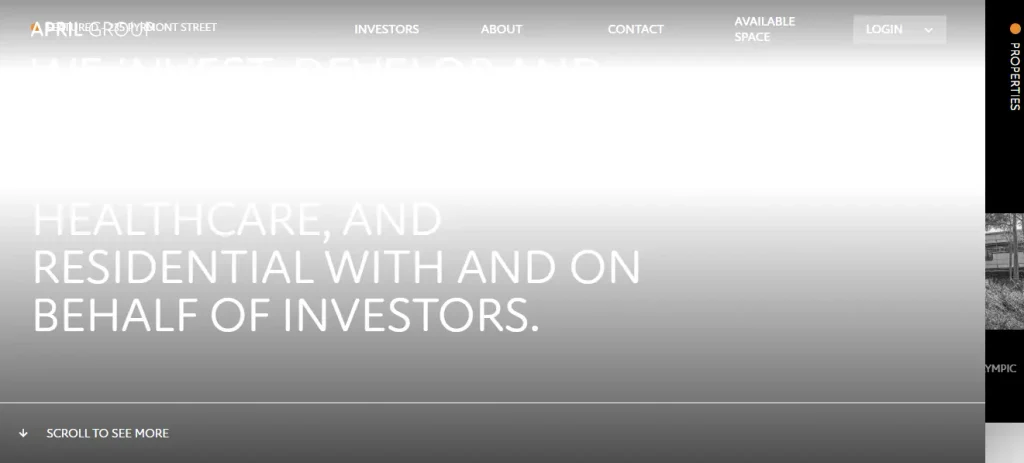
22. April Group

April Group

Positioned for forward-thinking property investors.

  • A technology-inspired typeface and sleek layout target an investor audience specifically
  • Past projects are displayed prominently as proof of a track record

What to steal: If your audience is investors rather than homebuyers, your visual language should look and feel different, not just your copy.

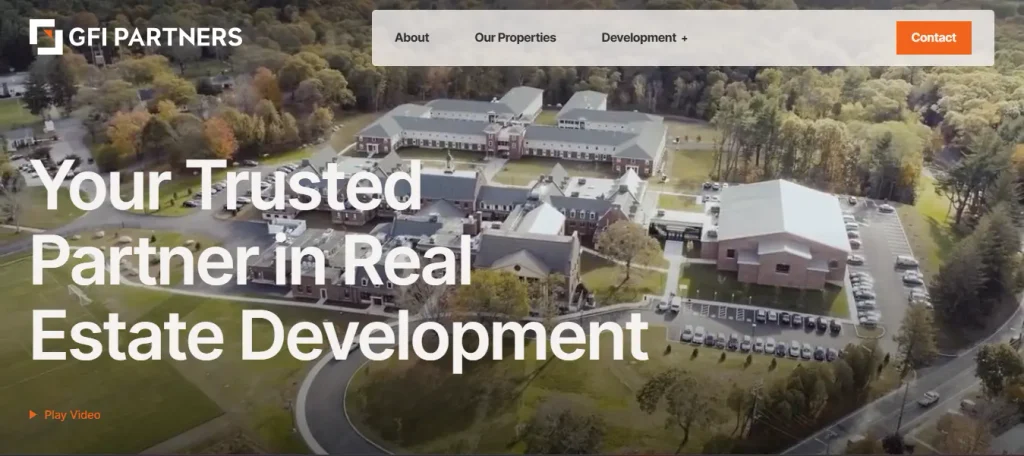
23. GFI Partners

GFI Partners

A simple, credibility-first layout for an investment firm.

  • Real photos of the team and leadership build trust ahead of any sales pitch
  • Case studies demonstrate results instead of relying on broad claims

What to steal: For B2B-facing real estate, case studies with real numbers do more work than polished mission statements.

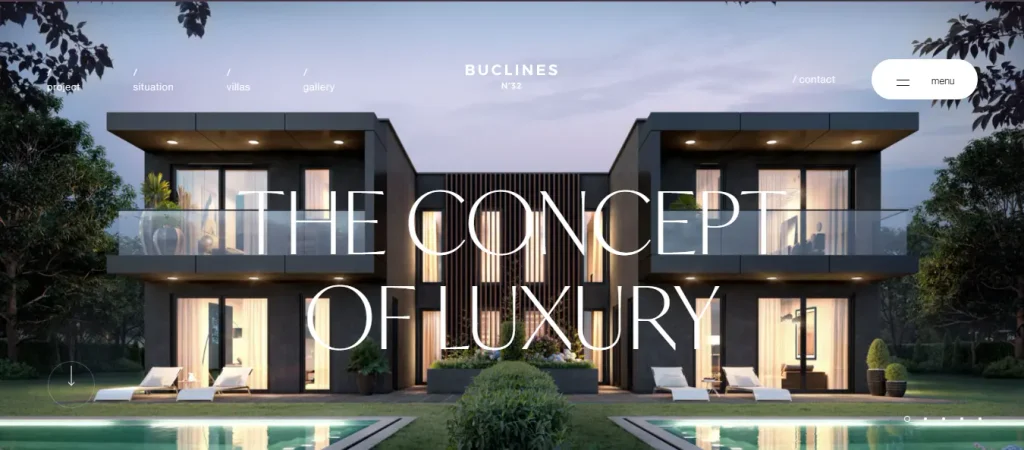
24. Buclines

Buclines

A dark, elegant aesthetic built for a luxury audience.

  • A largely black color scheme adds to a premium feel throughout
  • Always uses original concept art and photography without combining stock imagery
  • Typography continues the dark, stylish visual direction on each page

What to steal: If you’re going to go dark and moody, go all the way. A half-committed dark theme reads as unfinished rather than intentional.

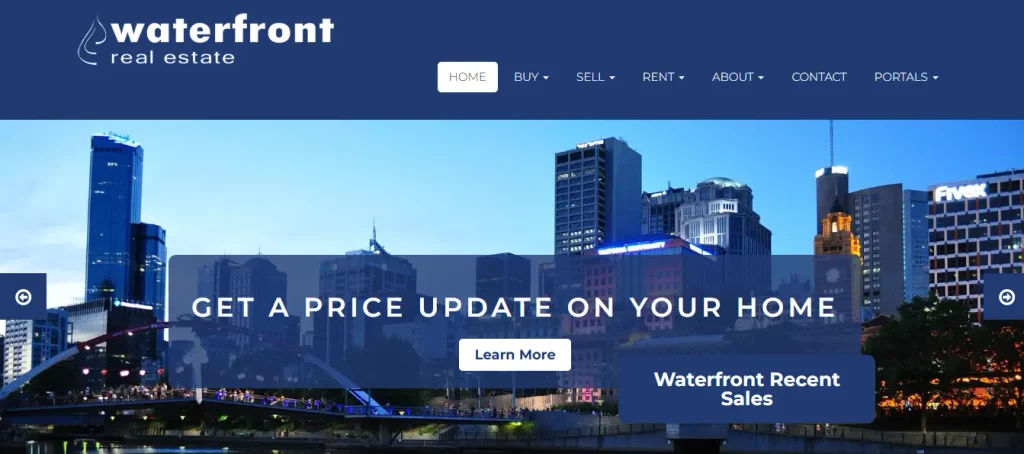
25. The Waterfront

Sells a lifestyle as much as a property.

  • High-quality, exotic photography and concept imagery set an aspirational tone
  • Content is not just the specs of a unit but the lifestyle around it

What to steal: For luxury or resort-style properties, sell the lifestyle around the property, not just the square footage.

  • AI-powered search and assistants: conversational queries like “3-bedroom near good schools under $500K” are becoming a real search pattern, not a novelty
  • Hyperlocal content hubs: neighborhood guides, school ratings, commute times, and lifestyle video content
  • Video-first homepages: hero videos, short agent intros, and vertical, short-form area tours
  • Interactive maps and data layers: price heatmaps, sold comps, walkability scores, and planned development info
  • Personalized property feeds for returning, logged-in visitors based on browsing and saved-search behavior
  • Immersive tech: 3D tours, AR-based staging, and virtual open houses embedded directly on listing pages
  • Accessibility and inclusivity, meeting current WCAG guidelines rather than treating accessibility as optional
  • Performance as a real feature: fast load times, optimized media, and mobile-first design by default

Must-Have Features for a High-Converting Real Estate Website

  • Advanced search with saved searches and alerts for new matching listings
  • Detailed property pages: photo gallery, video, 3D tour, floor plans, and neighborhood data together
  • Agent profiles with real photos, bios, specialties, reviews, and a direct booking link
  • Multiple lead capture paths: short forms, click-to-call, text or WhatsApp, and chat
  • Visible trust elements: testimonials, case studies, transaction stats, and press mentions
  • A content engine: blog, market reports, and a newsletter signup that keeps the site earning organic traffic
  • CRM and marketing automation integration for follow-ups and retargeting
  • Analytics and testing tools: heatmaps, session recordings, and A/B testing on CTAs and forms

Our guide on improving UI/UX to increase conversion covers how to prioritize these features without redesigning everything at once.

Common Real Estate Website Design Mistakes to Avoid

  • A cluttered homepage with too many competing CTAs and no clear priority
  • Slow load times caused by unoptimized images and video
  • A weak mobile experience: tiny tap targets, hidden search, awkward scrolling
  • No real differentiation, looking like every other template-based agent site
  • Heavy reliance on stock photography instead of real listings and local imagery
  • Complicated contact forms with no instant communication option
  • Accessibility treated as optional rather than built in from the start
  • No clear path from browsing to booking a viewing or talking to an agent

How to Use These Examples to Redesign Your Site

  • Audit your current site against the criteria above: speed, search, trust, and conversion
  • Pick 3 to 5 sites from this list that match your niche, luxury, local, rentals, or investment
  • List the specific elements worth copying: layout, search behavior, CTAs, content structure
  • Prioritize quick wins first: hero section, search bar, agent pages, contact flow
  • Plan bigger upgrades next: video strategy, AI-assisted search, personalization, CRM integration
  • Set clear KPIs to track: leads per month, view-to-contact rate, time on site, mobile conversion rate

Turning These Examples Into Your Own Redesign

Great real estate websites blend strong visuals, smart search, local expertise, and frictionless lead capture. Use these 26 examples as a swipe file, not a template to copy directly, and adapt what fits your brand and market. For a broader look at what current design trends look like across industries, our roundup of modern website design examples is worth a look too.

Need help redesigning your real estate website? Contact KrishaWeb for a free UX audit, or explore our real estate industry expertise to see how we’ve approached this for other clients.

What makes a real estate website design effective?

An effective real estate website combines a clear value proposition, fast mobile performance, strong search and filtering, real photography and video, and multiple ways to capture a lead. Design alone doesn’t convert visitors. It has to be paired with fast load times and a clear next step for every type of visitor.

Which features are most important for a realtor website?

Advanced search with saved alerts, detailed property pages with real photos and video, agent profiles with genuine reviews, and simple lead capture (click-to-call, chat, short forms) matter most. A site can look polished and still underperform if any of these core features are weak or missing.

Should I focus more on luxury design or local SEO for my real estate site?

Both matter, but they solve different problems. Luxury design and branding help convert visitors once they arrive. Local SEO determines whether those visitors find your site at all. A stunning site nobody finds in search results won’t generate leads, so local SEO usually deserves attention first.

How can I use AI in my real estate website design?

AI now shows up in a few practical places: conversational search that understands natural-language queries, personalized listing feeds based on browsing behavior, and AI chat tools that answer common buyer questions outside business hours. Start with one of these rather than trying to add AI everywhere at once.

What are some good examples of mobile-friendly real estate websites?

Homes.com is one of the strongest current examples, built mobile-first with large, thumb-friendly tap targets. Toll Brothers City Living and NEREN also handle mobile navigation well, collapsing complex menus into clean, simple patterns rather than shrinking a desktop layout down.

Ready to Scale Your Agency?

Tell us what you are trying to deliver. Schedule a call to talk it through, or contact us with your project.


author
Nisarg Pandya
Project Manager

Experienced Project Manager and Scrum Master at KrishaWeb, delivers expertise in Scrum methodologies, Laravel, React.js, UX design, and project management, ensuring efficient project delivery and agile implementation.

author

Recent Articles

Browse some of our latest articles...

Prev
Next
subscribe