



 KrishaLabs
 KrishaStudio
 KrishaStore
Result At Glance
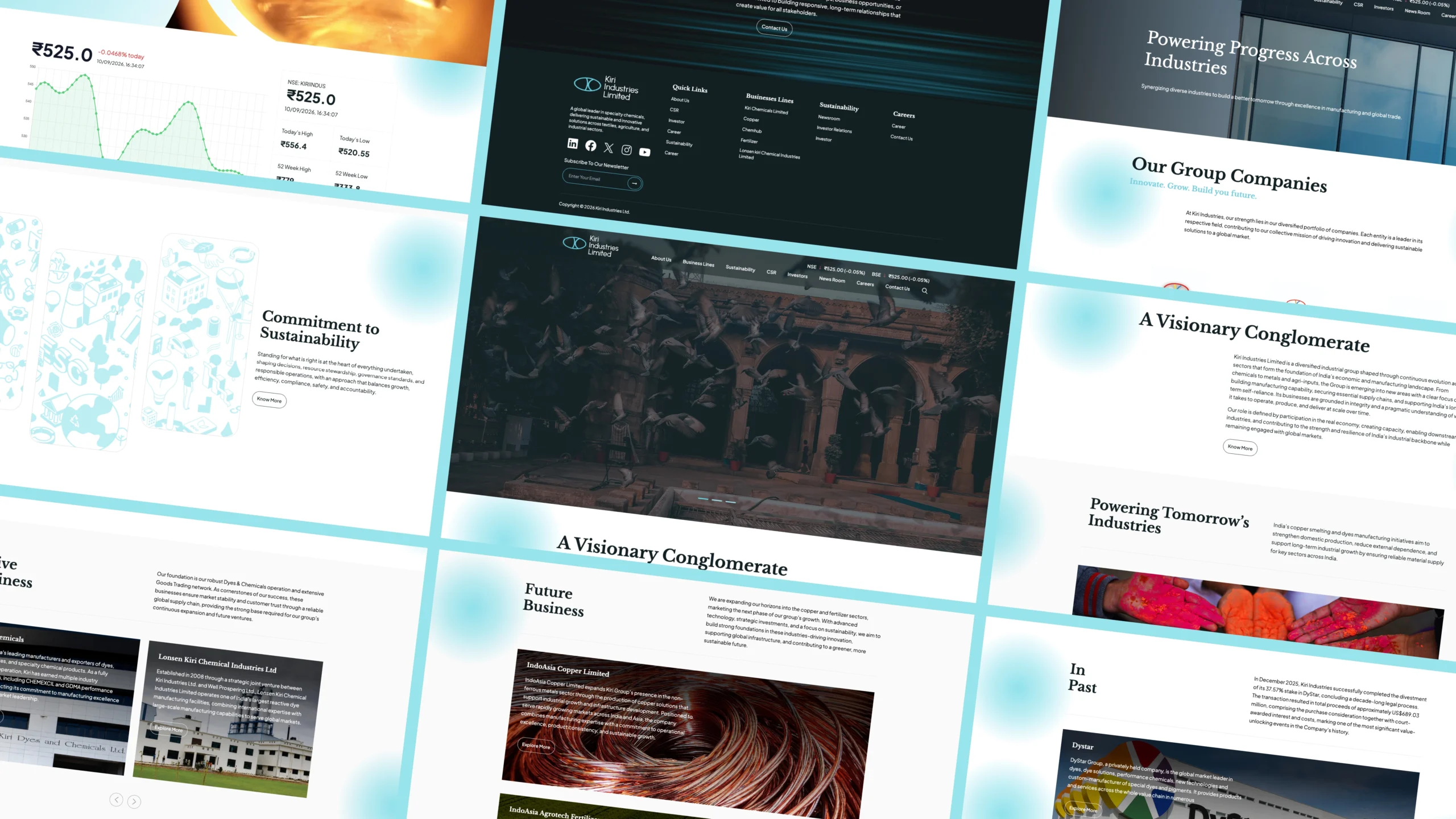
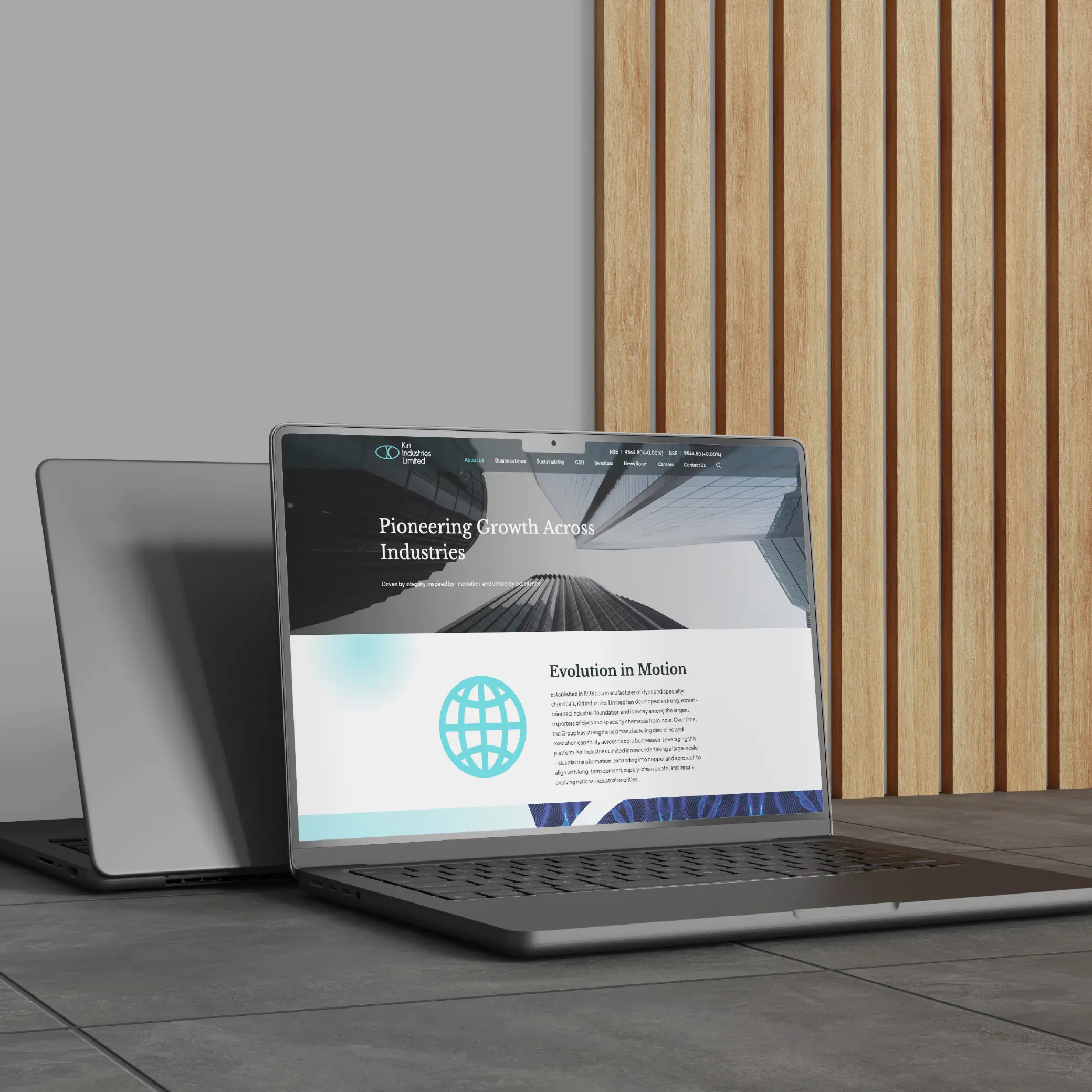
Kiri Industries Limited operates across chemicals, metals, agri-inputs, and other sectors central to India’s manufacturing infrastructure. Representing that range through a single, coherent digital presence, without making any one sector feel like a footnote, took a different kind of website thinking. KrishaWeb delivered a custom WordPress platform in five weeks, built for how a diversified industrial group needs to communicate.
Metrics: Before and After
There were no pre-existing traffic or conversion metrics to compare against, since this was a new website build rather than an optimisation engagement. The improvements below reflect the operational and content management outcomes delivered through the project:
| Area | Before | After |
|---|---|---|
| Digital Presence | No unified corporate website representing the full Group | Fully custom WordPress site communicating the Group’s scale, diversity, and credibility |
| Multi-Sector Presentation | Business areas with no consistent visual framework | Unified component system presents all sectors as one coherent industrial group |
| Content Management | No flexible CMS capability for the internal team | Editable Gutenberg and ACF blocks allow full content management independently |
| Page Creation | New pages required developer involvement each time | Reusable components let the team build pages without a development request |
| Design Consistency | No system to hold visual standards as the site grew | Component architecture enforces consistent layouts and branding automatically |
| Scalability | Fixed structure limiting future growth | Modular architecture built for new sectors, business units, and corporate content |
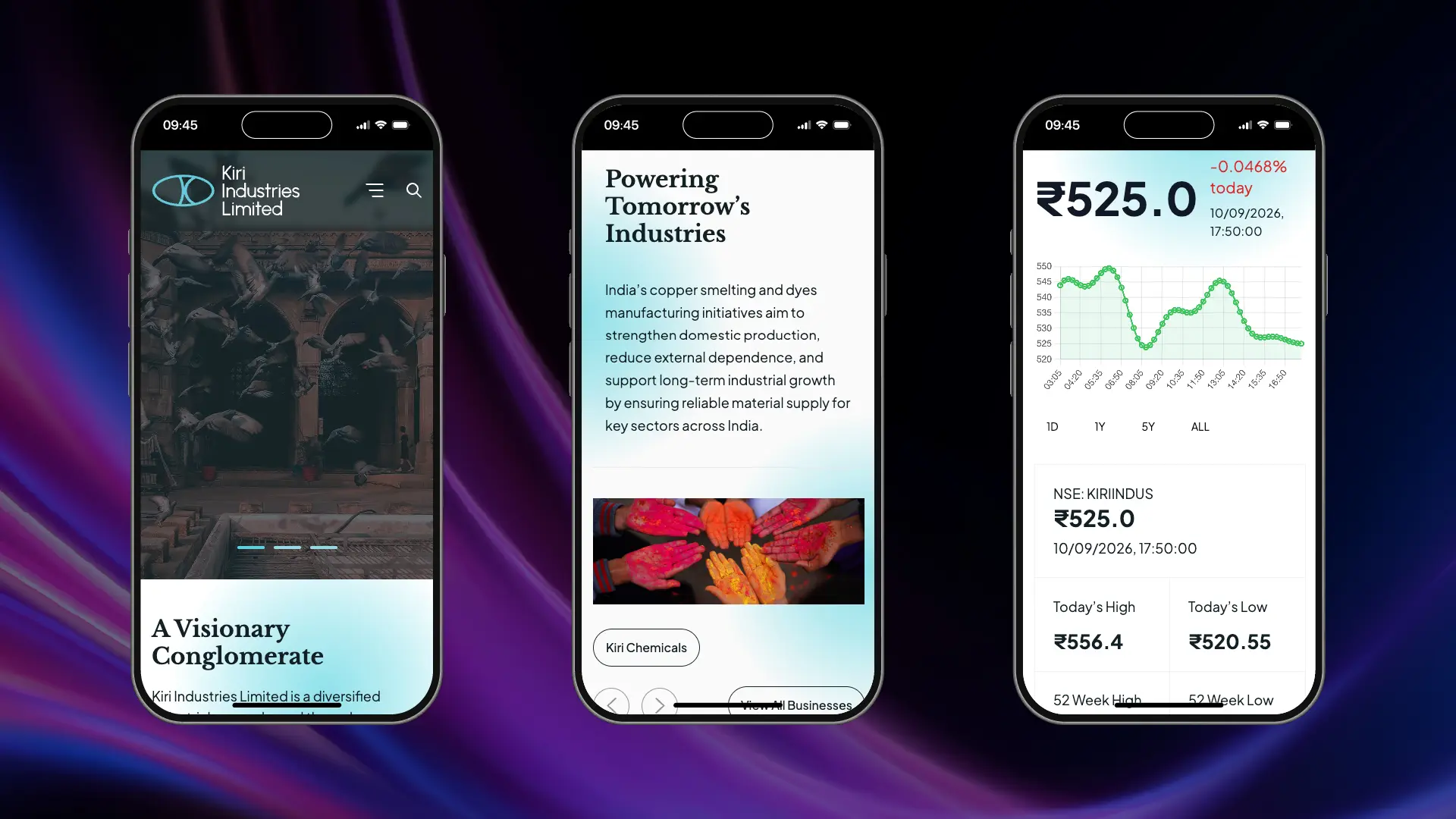
| Responsive Experience | No optimised mobile or tablet experience | Fully responsive across desktop, tablet, and mobile |
| Launch Readiness | Untested and unvalidated | Cross-browser QA, device testing, and UAT completed before go-live |
- Kiri Industries Limited
- KrishaWeb
- Discovery & Business Mapping
- UI/UX Design
- Front-End Development
- WordPress Development
- QA/QC & UAT
Building a Scalable Website for Kiri Industries
Kiri Industries Limited is a diversified industrial group operating across chemicals, metals, agri-inputs, and sectors tied to India’s manufacturing and supply chain infrastructure. The Group’s focus is on strengthening domestic manufacturing, building industrial capacity, and supporting the downstream industries that depend on its output, while staying active in global markets.
That breadth creates a specific communication challenge. Investors, partners, customers, regulators, and prospective employees all arrive at the corporate website with different questions, and each needs a clear answer without any one business overshadowing the rest. Presenting a group this diverse as cohesive rather than fragmented was the brief, and it is a design and architecture problem before it is a content problem.
The Challenge
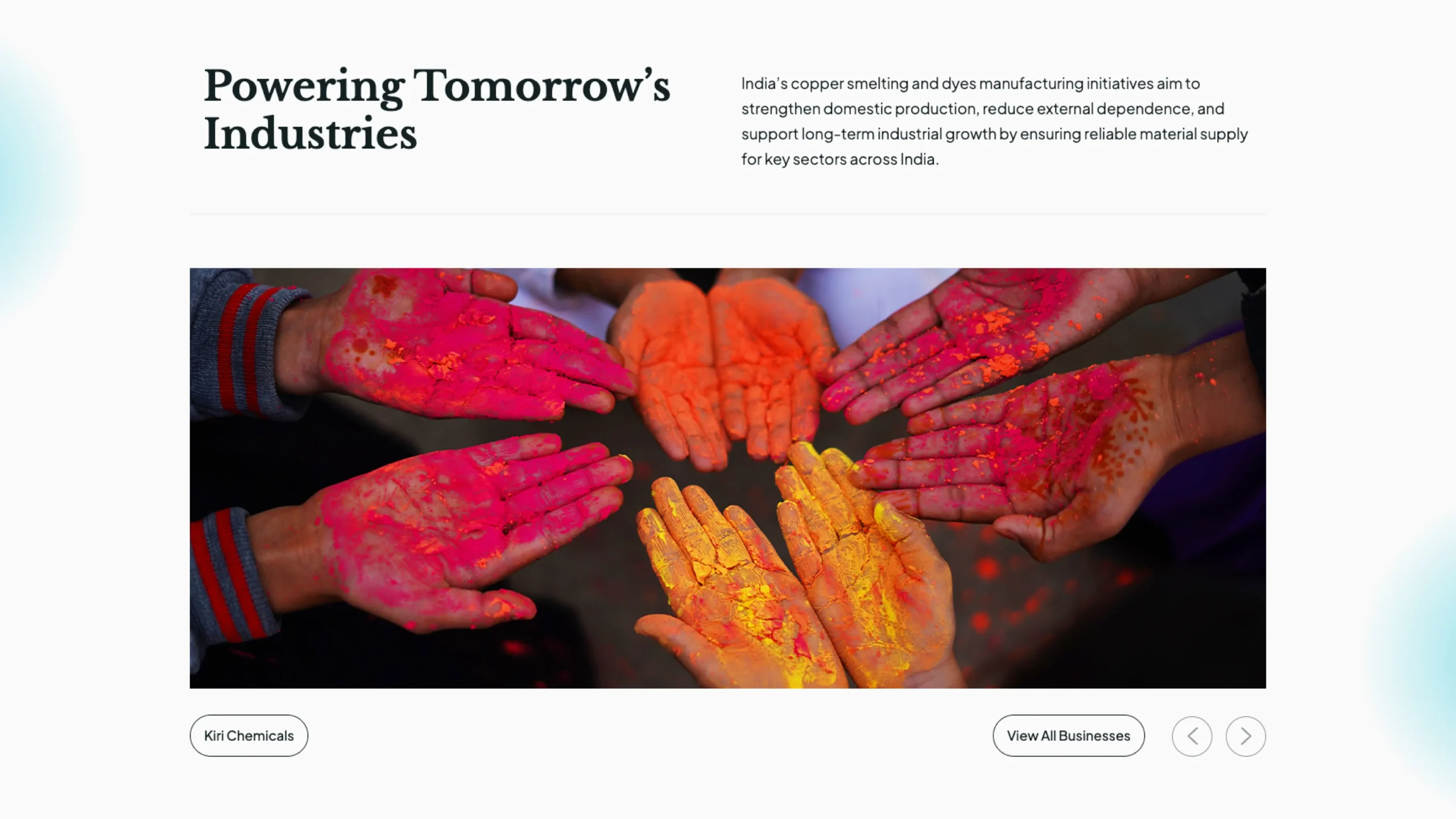
Building a website for a diversified industrial group is structurally different from building one for a single-product business. Across chemicals, metals, and agri-inputs, there is no single story, no single audience, and no single set of priorities. Multiple stories have to coexist, each important in its own right, each adding to the overall picture of the Group.

Unifying a Multi-Sector Group
Give each business unit its own visual language and the site feels like separate companies sharing a domain. Force everything into one generic look and the units lose their identity. The answer is a unified system that flexes across sectors while still reading as one organisation.

Scalable Content, Consistent Design
Kiri Industries is not static. New business areas, partnerships, and corporate developments keep emerging. A site built on fixed templates, where each new sector means fresh development, becomes a constraint. The Group needed a platform its own team could expand, with the design staying consistent.

Corporate Credibility at the Group Level
The corporate site is judged by a sophisticated audience: institutional investors, joint venture partners, government bodies, and senior industrial professionals. They look for governance quality, operational breadth, and strategic coherence. A template build does not pass that evaluation; a custom platform that conveys the Group’s standing does.

Performance That Reflects the Brand
A group of this scale cannot present a slow, generic site to the stakeholders evaluating it. Performance and polish are read as proxies for operational quality, so the build had to be fast, responsive, and properly tested before it ever reached a prospect.
Objectives
The objectives covered both the immediate website delivery and the long-term operational needs of a growing industrial group:
- Design a custom corporate UI/UX aligned with Kiri Industries’ industrial positioning and a Group-level audience.
- Build a visual system that presents multiple sectors clearly and consistently within one platform.
- Develop on WordPress with a clean, performance-first architecture and no page-builder dependencies.
- Create a full library of reusable Gutenberg and ACF components covering every required section type.
- Give the internal team complete editorial independence for new pages, sector content, and routine updates.
- Deliver a fully responsive experience and complete cross-browser QA, device testing, and UAT before launch, within five weeks.
Our Strategy
The real question was not what the site should look like, but how to build a visual and content system that fits a multi-sector industrial group today and whatever the Group becomes over the next five years. That led us to a component-based approach from the first planning session.
Business Structure Before Visual Design
We mapped Kiri Industries’ business structure before any design began: how the Group was organised, which sectors carried the most strategic weight, and what audience each section served. That groundwork shaped everything. Information architecture was the first design decision, then wireframes, then visual design, in that order.
A Design System, Not a Collection of Pages
The visual design was built as a system, a typographic hierarchy, a colour framework, and a component vocabulary, rather than a set of individual pages. Every page built from it inherits the system’s quality. It was calibrated for industrial communication: authoritative, structured, and able to hold dense factual content without losing clarity.
Gutenberg and ACF as the Editorial Engine
The system was implemented through Gutenberg and Advanced Custom Fields. ACF field groups define what each block can contain; the Gutenberg editor handles visual assembly. Together they let the Kiri Industries team build any page from the approved library, with the design enforced by the system rather than a designer reviewing every new page.
A Unified Presence for a Diversified Group
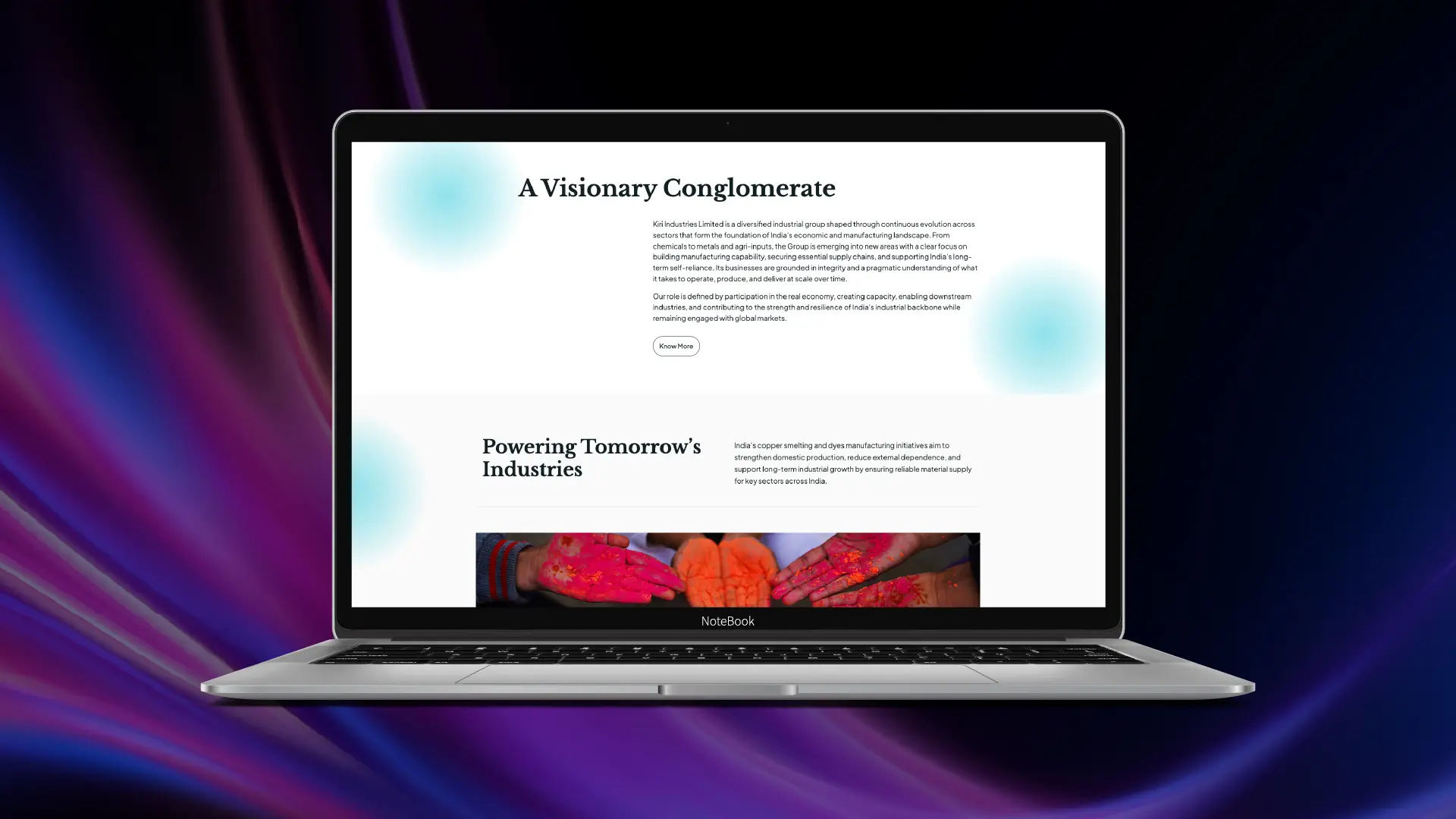
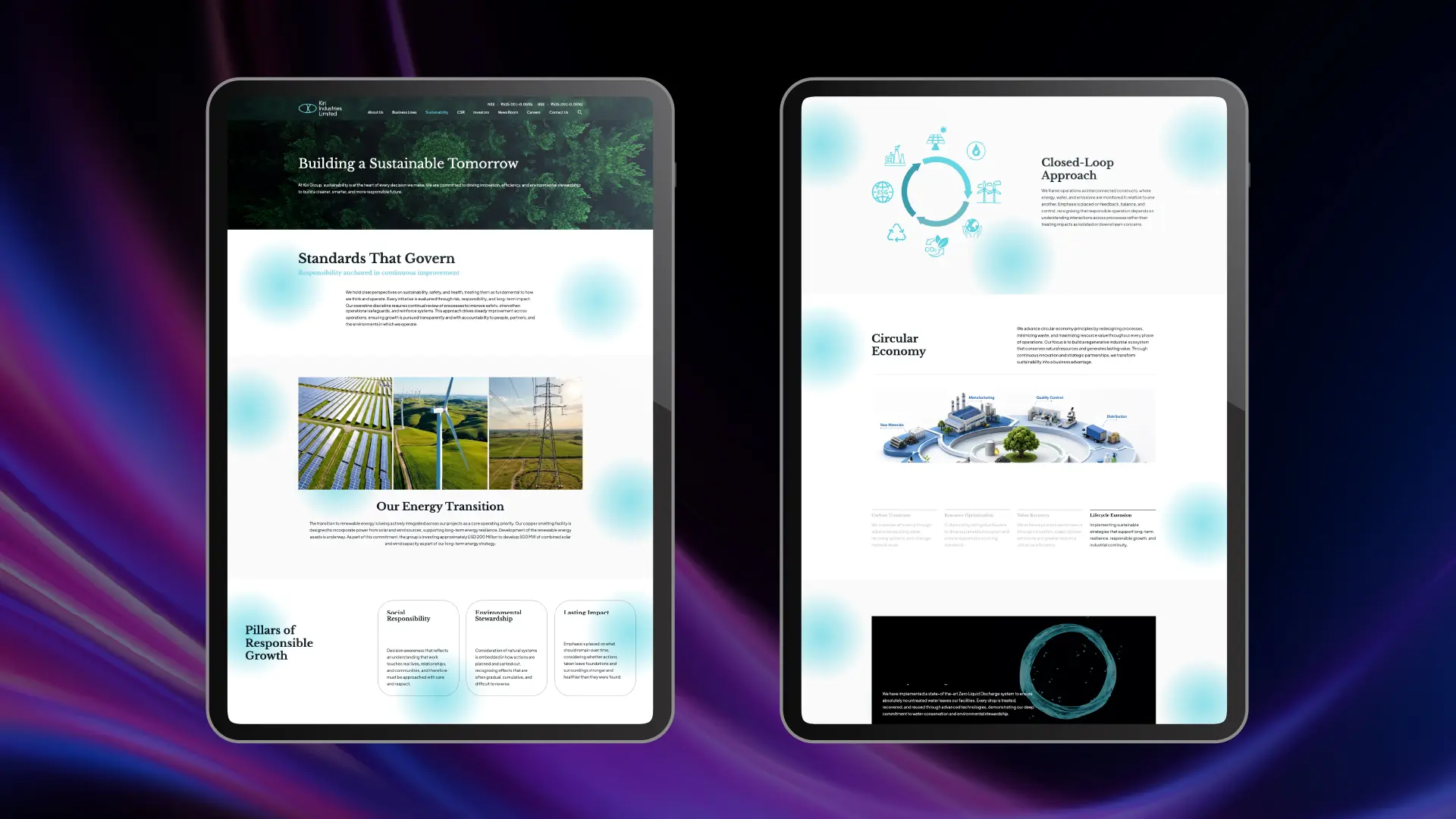
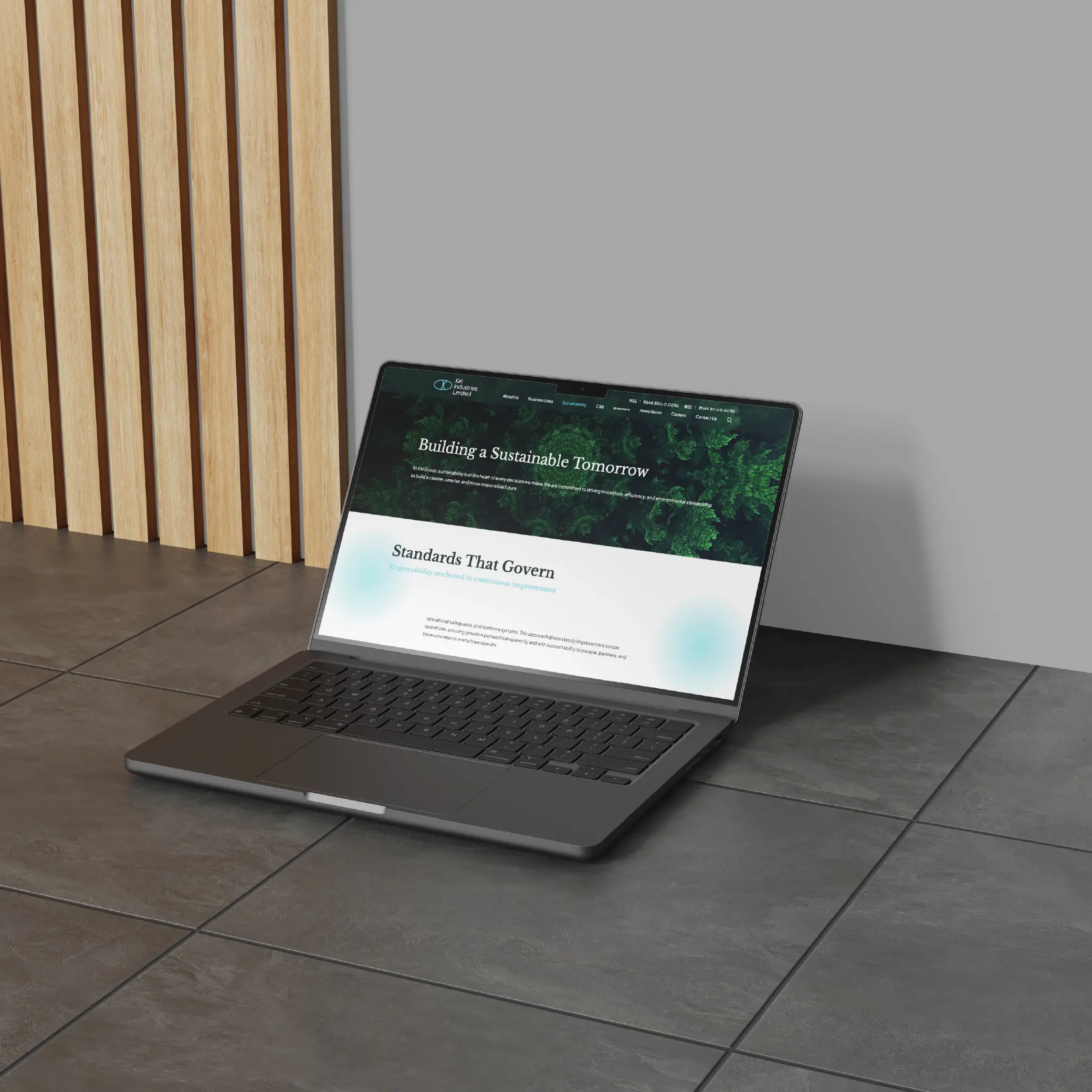
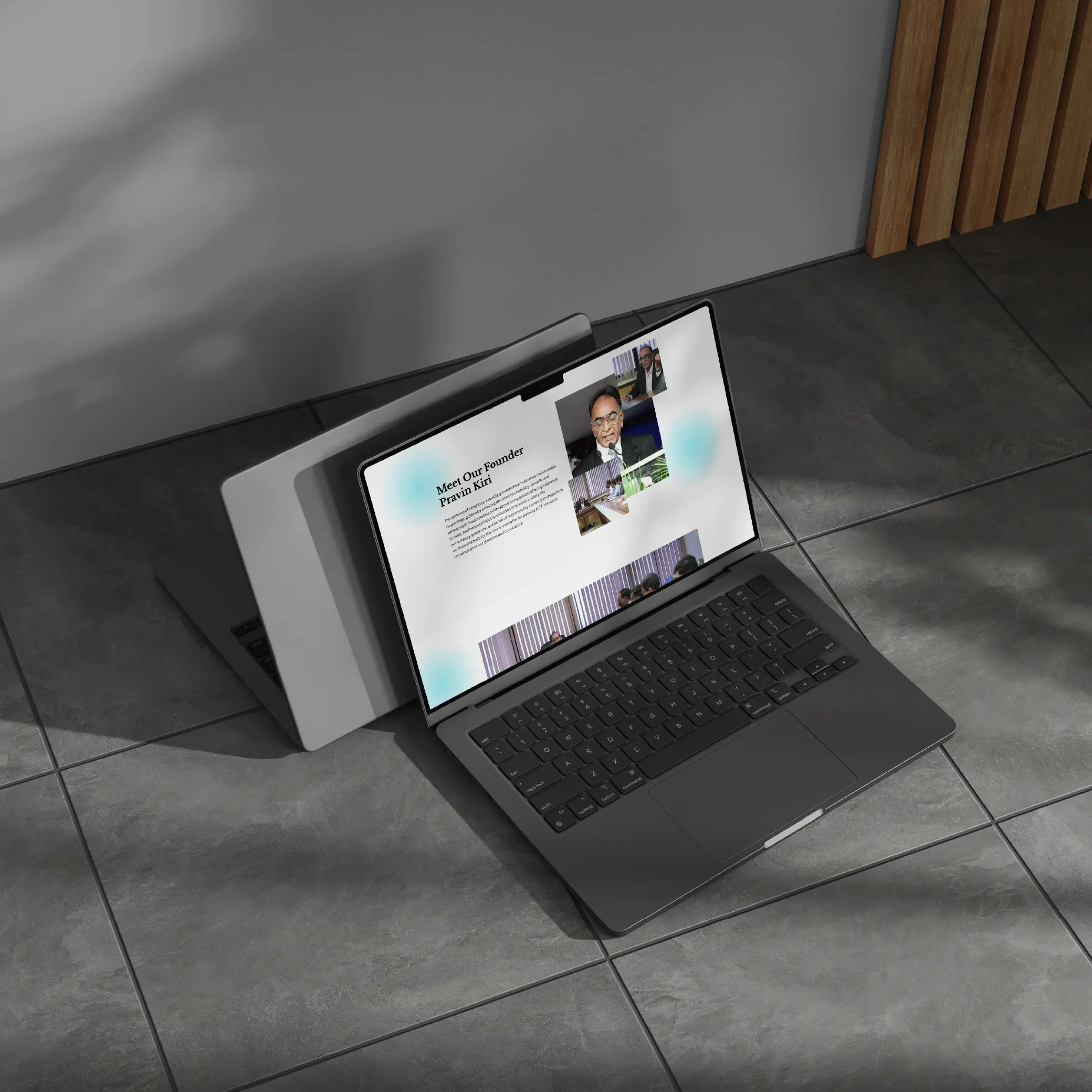
Kiri Industries launched with a platform that presents a group operating across multiple industrial sectors as one coherent, authoritative organisation. Rather than appearing as a chemicals company with a metals section added on, the website positions Kiri Industries as a unified Group with strategic breadth and a digital presence that reflects its scale. The design communicates the Group’s diverse capabilities and long-term vision, presenting it at a standard that meets the expectations of investors, partners, regulators, and senior prospects. Each business area has its own dedicated content space tailored to its needs, while a shared component library and consistent design system ensure that the Group’s diversity comes across as strategic breadth rather than fragmentation.
From launch day, the team has been able to create pages, update sector information, and publish corporate announcements independently, without submitting development requests. This allows new developments to reach stakeholders as they happen rather than waiting for developer availability, helping maintain the website’s credibility and relevance. The platform also provides a scalable foundation for future growth, enabling the team to add new sectors or publish joint venture pages using existing components instead of commissioning new development. As a result, new pages can go live in hours rather than weeks, reflecting a scalability objective built into the project from the initial planning stages.
Phase 1: Discovery and Requirement Gathering
- Ran structured discovery sessions to map the Group’s business structure, sector priorities, corporate messaging, and target stakeholder audiences.
- Documented content requirements across chemicals, metals, agri-inputs, and corporate sections before wireframing.
- Defined the component library requirements: which section types were needed and what editorial flexibility each required.
Phase 2: Custom Corporate UI/UX Design
- Built wireframes defining content hierarchy, navigation logic, and page structure before visual design began.
- Created a custom visual design system calibrated for industrial corporate communication, serving multiple sector content types in one visual language.
- Designed the site as a system first, typography, colour, component vocabulary, and layout principles, then ran design review and approval with the Kiri Industries team.
Phase 3: Responsive Front-End Development
- Converted all approved designs into clean, responsive HTML5, CSS3, and JavaScript.
- Implemented interactive elements and consistent cross-browser rendering at the front-end stage.
- Optimised asset loading and performance at the component level throughout development.
Phase 4: Custom WordPress Development
- Built the full site on a custom WordPress theme with zero page-builder dependency.
- Developed the complete Gutenberg and ACF block library, all sector and corporate section types, as reusable, editable components.
- Configured the CMS for independent editorial management and validated the editorial workflow end to end before handover.
Phase 5: Quality Assurance and Launch
- Cross-browser testing across Chrome, Firefox, Safari, and Edge on desktop and mobile, with cross-device validation.
- Functional testing of all content-management workflows and component interactions across sector and corporate page types.User Acceptance Testing with the Kiri Industries team, then production deployment following sign-off with post-launch verification.
The Kiri Industries Platform Architecture
At the core of the Kiri Industries platform sits a custom WordPress installation built on a clean, page-builder-free theme. That choice was deliberate. Page builders add load overhead that cannot be optimised away and tend to drift from the approved design as non-technical users edit. Building only what the site needs keeps it fast and keeps the corporate design intact as the team adds content across sectors over time.
The editorial engine is Gutenberg and Advanced Custom Fields. Every corporate section, hero, business-unit grid, sector highlight, leadership profile, content panel, and media block, exists as a reusable component with an ACF field structure that defines exactly what the team can edit. The fields hold the content; the block template holds the layout. A team member with no development background can assemble a correctly structured, on-brand page for a new sector or announcement, because the system only exposes the decisions they are meant to make. That same discipline, custom theme, structured components, and performance treated as a constraint from the first line of code, is what lets the platform scale to new business units without a redesign.
- CMS Platform: WordPress, custom theme, zero page-builder dependency
- Block Editor: Gutenberg with fully custom block development
- Content Management: Advanced Custom Fields (ACF) for structured, sector-specific field management
- Custom Blocks: Reusable corporate sections: hero, business-unit grids, sector highlights, leadership profiles, CTA blocks, content panels, media sections
- Frontend: HTML5, CSS3, JavaScript, performance-first, lightweight architecture
- Responsive Design: Mobile-first responsive layout across desktop, tablet, and mobile
- UI/UX Design: Full custom design from wireframe to high-fidelity, tailored to industrial corporate positioning
- QA and Testing: Cross-browser (Chrome, Firefox, Safari, Edge), cross-device, functional, and UAT testing
Valuable Feedback From Our Client
“We needed a website that could represent a group operating across very different industrial sectors without feeling like several companies stitched together. KrishaWeb understood that from the first conversation. They designed one visual system that holds all of our businesses together, and built it so our own team can add new sector content and corporate pages without going back to a developer each time. The platform presents the Group at the standard our operations warrant, and it is built to grow as we do.”
– Kiri Industries Limited
Project Timeline
Planning & Design
Discovery sessions, business structure mapping, requirement gathering, wireframing, initial UI/UX concepts, corporate visual direction, and content hierarchy planning.

Design Finalisation
Client feedback incorporated, final UI/UX direction approved, page layouts finalised, and visual assets and specifications prepared for development.

Front-End Development
Approved designs converted to responsive HTML5, CSS3, and JavaScript; interactive elements implemented; multi-device layout optimisation.
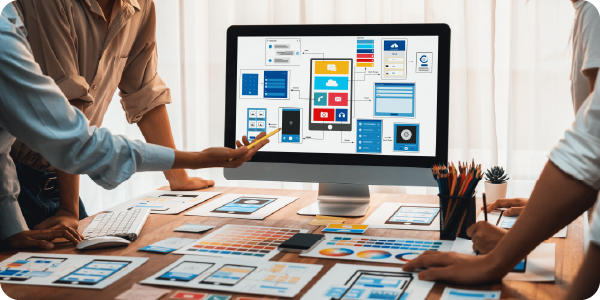
WordPress Development
Front end integrated with WordPress; reusable section library built; custom Gutenberg and ACF blocks developed; CMS configured for independent page management.
QA, UAT, and Launch
Functional, responsive, cross-browser, and component testing; bug resolution; UAT sign-off; and final deployment preparation.

Key Takeaways
Diversified businesses have a digital communication challenge single-sector businesses do not.
The site has to present multiple business areas coherently without flattening the differences or making the group feel fragmented. That calls for a system-level design approach, not a collection of individually designed pages. The component architecture makes every new sector a content operation rather than a design project.
For corporate and industrial groups, credibility is communicated through design before content.
A sophisticated audience forms a view of a group's operational quality within seconds of landing on its website. Custom design is not a preference at this level, it is a qualification signal, which is why Kiri Industries' site was built from scratch rather than from a template.
Editorial independence matters most for groups that move faster than developer availability.
A new acquisition, partnership, or regulatory filing all need to reach the site quickly. The Gutenberg and ACF system means the team publishes at the pace of the business, not the pace of a development queue.
Design consistency comes from architecture, not governance.
The component system enforces visual consistency automatically. The team cannot accidentally build an off-brand page, because the blocks they build from are the brand. That makes the design quality self-maintaining, whoever creates the content.
A five-week corporate delivery works when planning is treated as rigorously as development.
Mapping the business structure before wireframing, wireframing before design, and designing before development is the sequence that produces a coherent platform instead of one that has to be rebuilt because the information architecture was wrong from the start.
Does Your Group's Website Reflect the Breadth of What You Actually Do?
Book a Free Strategy Call. Tell us what your platform needs, and we will show you exactly how we would build it.