



 KrishaLabs
 KrishaStudio
 KrishaStore
Result At Glance
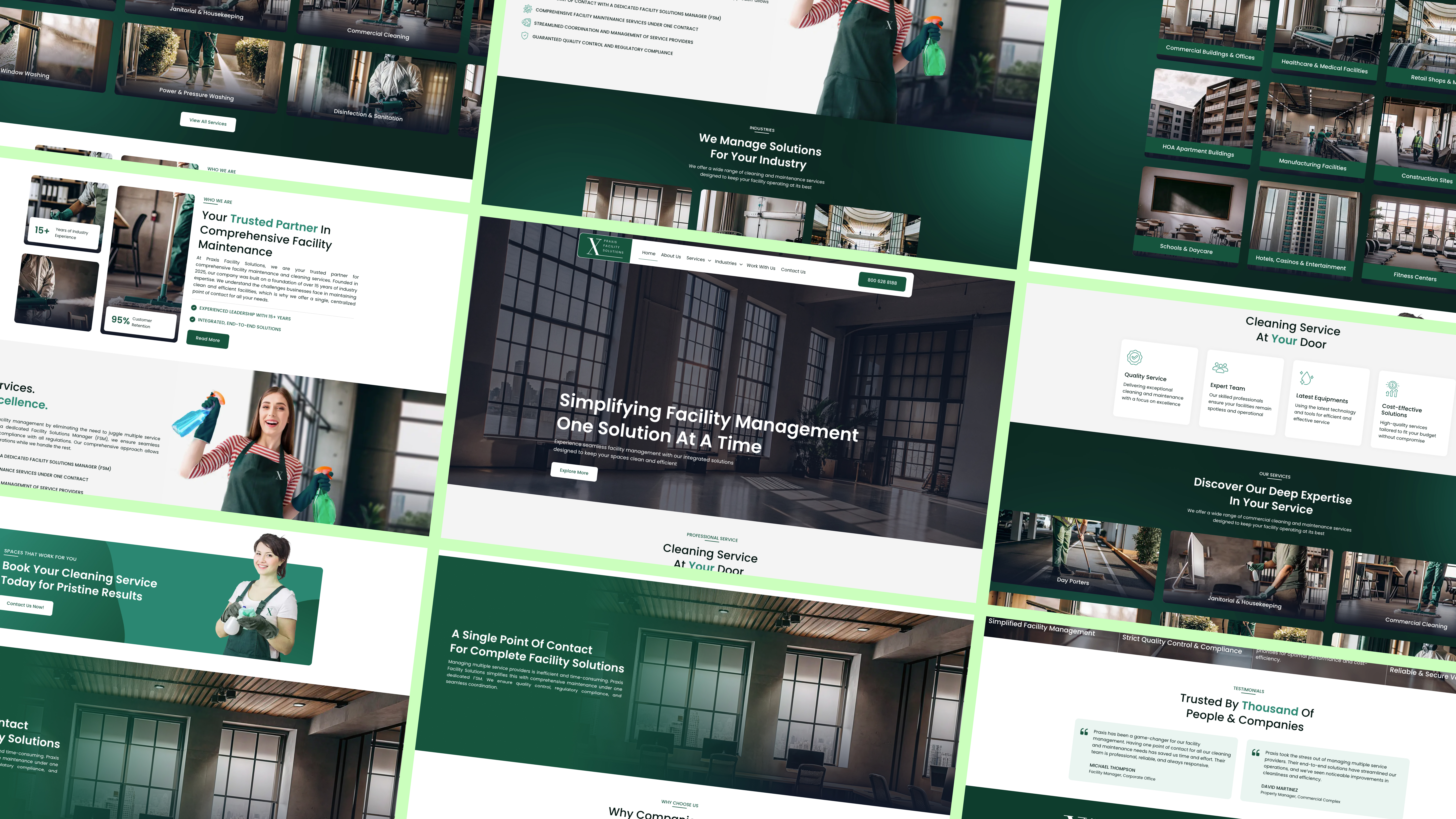
Praxis Facility Solutions needed a professional digital presence that could grow with the business without creating a permanent developer dependency for every update. KrishaWeb delivered a fully custom WordPress website in five weeks — designed from scratch, built on a reusable Gutenberg and ACF component system, and handed over to a team that now operates it entirely on their own.
Metrics: Before and After
There were no pre-existing traffic or conversion metrics to compare against, since this was a new website build rather than an optimisation engagement. The improvements below reflect the operational and content management outcomes delivered through the project:
| Area | Before | After |
|---|---|---|
| Digital Presence | No professional website aligned with the business | Fully custom WordPress site reflecting the Praxis Facility Solutions brand |
| Content Management | Every update required developer involvement | Internal team manages and updates content independently through the CMS |
| Page Creation | New pages required development time and cost | New pages assembled from reusable components in under an hour |
| Design Consistency | No system to maintain visual consistency at scale | Component-based design system enforces consistent layouts automatically |
| Device Experience | No optimised mobile or tablet experience | Fully responsive across desktop, tablet, and mobile |
| CMS Flexibility | Fixed layouts, limited editorial control | Custom Gutenberg and ACF blocks give full content flexibility within a governed structure |
| Launch Readiness | Platform untested and unvalidated | Cross-browser QA, device testing, and UAT completed before go-live |
- Praxis Facility Solutions
- KrishaWeb
- Front-End Development
- WordPress Development
- QA/QC & UAT
How KrishaWeb Built a Website Praxis Facility Solutions Runs Independently
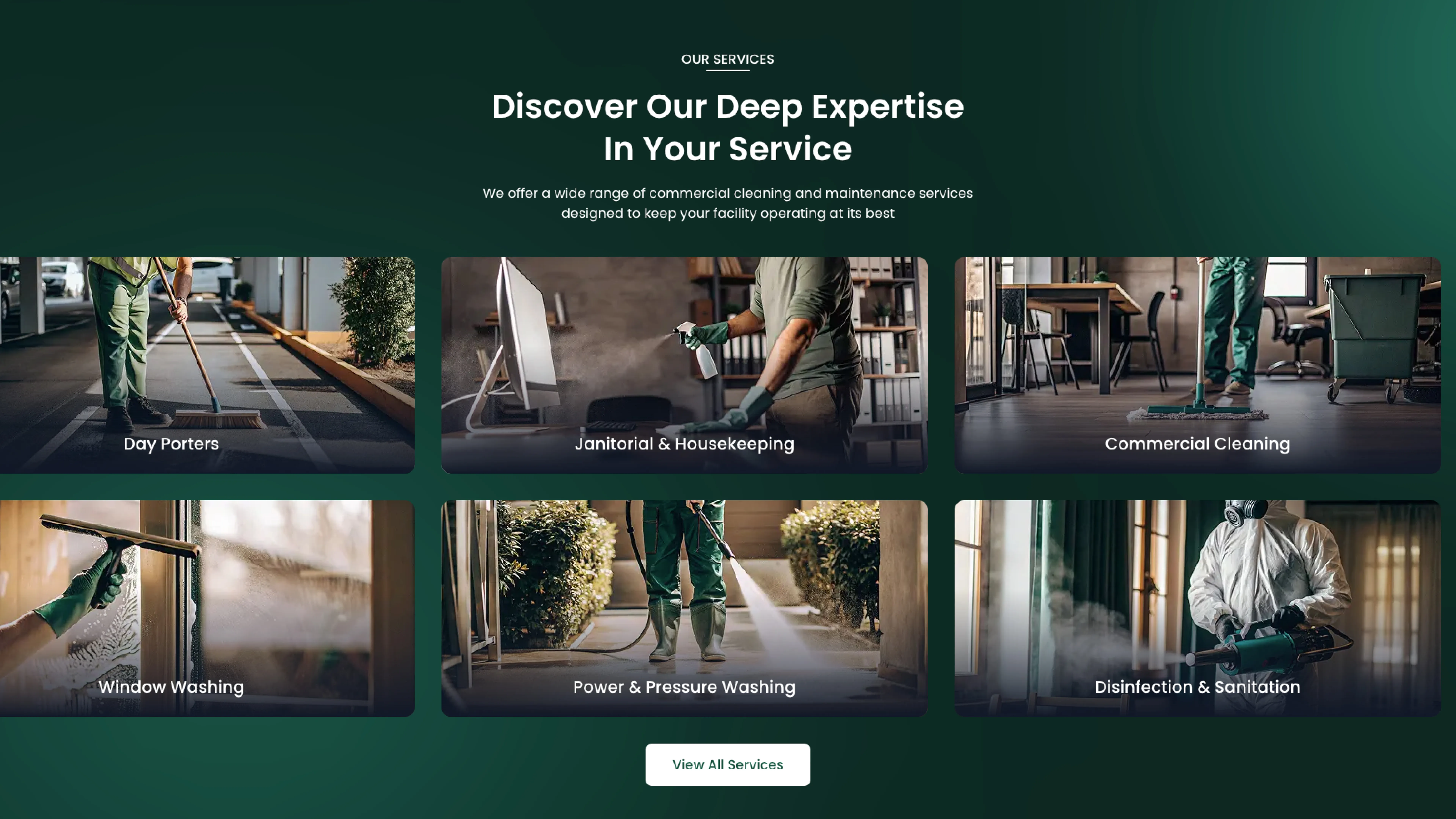
Praxis Facility Solutions provides integrated facility management services — helping businesses maintain clean, efficient, and well-managed spaces. The company works with facilities directors, property managers, and operations teams at organisations of significant size.
Like many established service businesses, Praxis had built its reputation through the quality of its work rather than the strength of its online presence. What they found online did not match what they delivered in person. The business needed a site that communicated capability and reliability — and a team that could maintain it without raising a developer ticket every time something needed updating.
The Challenge
The challenge on this project was one that affects many growing service businesses: how do you build a website that looks genuinely professional while giving a non-technical team the ability to manage it confidently on their own?

A Website That Did Not Match the Business
For a B2B facilities management business competing for contracts with large organisations, the website is part of the vendor evaluation. A generic or underdeveloped site creates doubt before the team has had a chance to speak. Praxis needed a site that signalled the same operational competence their service delivery did.

Content Management That Did Not Scale
Praxis was growing — adding services, entering new sectors, updating team information. Every content change requiring a developer ticket meant the website consistently lagged behind the business it represented. The team needed genuine editorial independence, not just the ability to edit text in fixed boxes.

No Design System to Maintain Consistency
Without a component-based structure, every new page added by a non-designer risked breaking the visual coherence of the site. There was no system to ensure that pages added over time looked like they belonged to the same brand.

No QA or Testing Process Before Go-Live
Updates and new pages were deployed directly without cross-browser validation or device testing. For a B2B business where the website is a vendor qualification signal, an untested page reaching a prospective client carried real commercial risk.
Objectives
Before the first wireframe was drawn, we aligned on a clear set of outcomes:
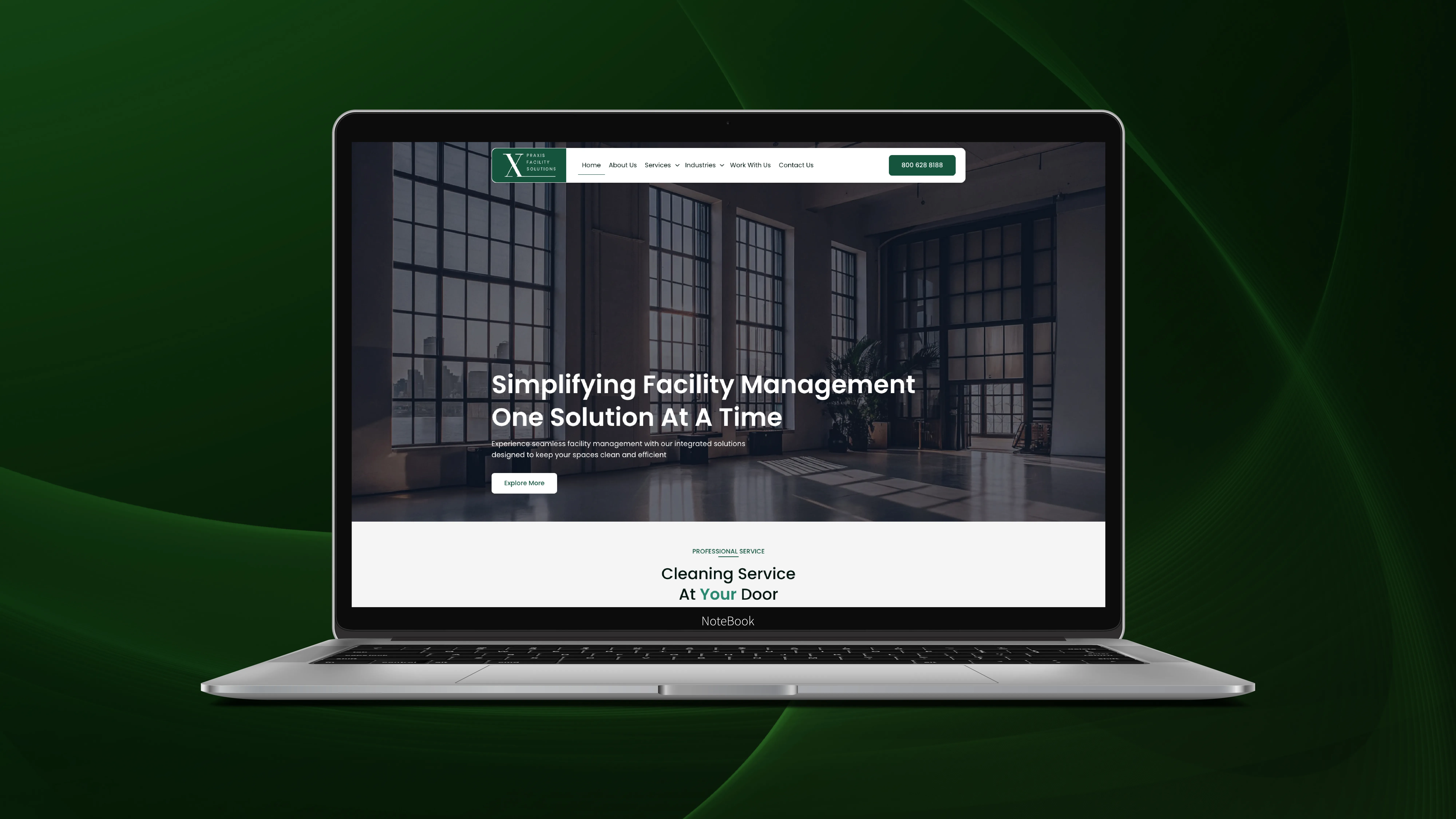
- Design a custom UI/UX that reflects Praxis Facility Solutions’ brand — built from scratch, not from a template
- Develop the website on WordPress with a page-builder-free architecture for long-term performance and maintainability
- Build a reusable Gutenberg and ACF block library covering all required page section types
- Give the internal team the ability to create pages and update content through the WordPress editor without developer support
- Maintain design consistency automatically through the component system, regardless of who builds the page
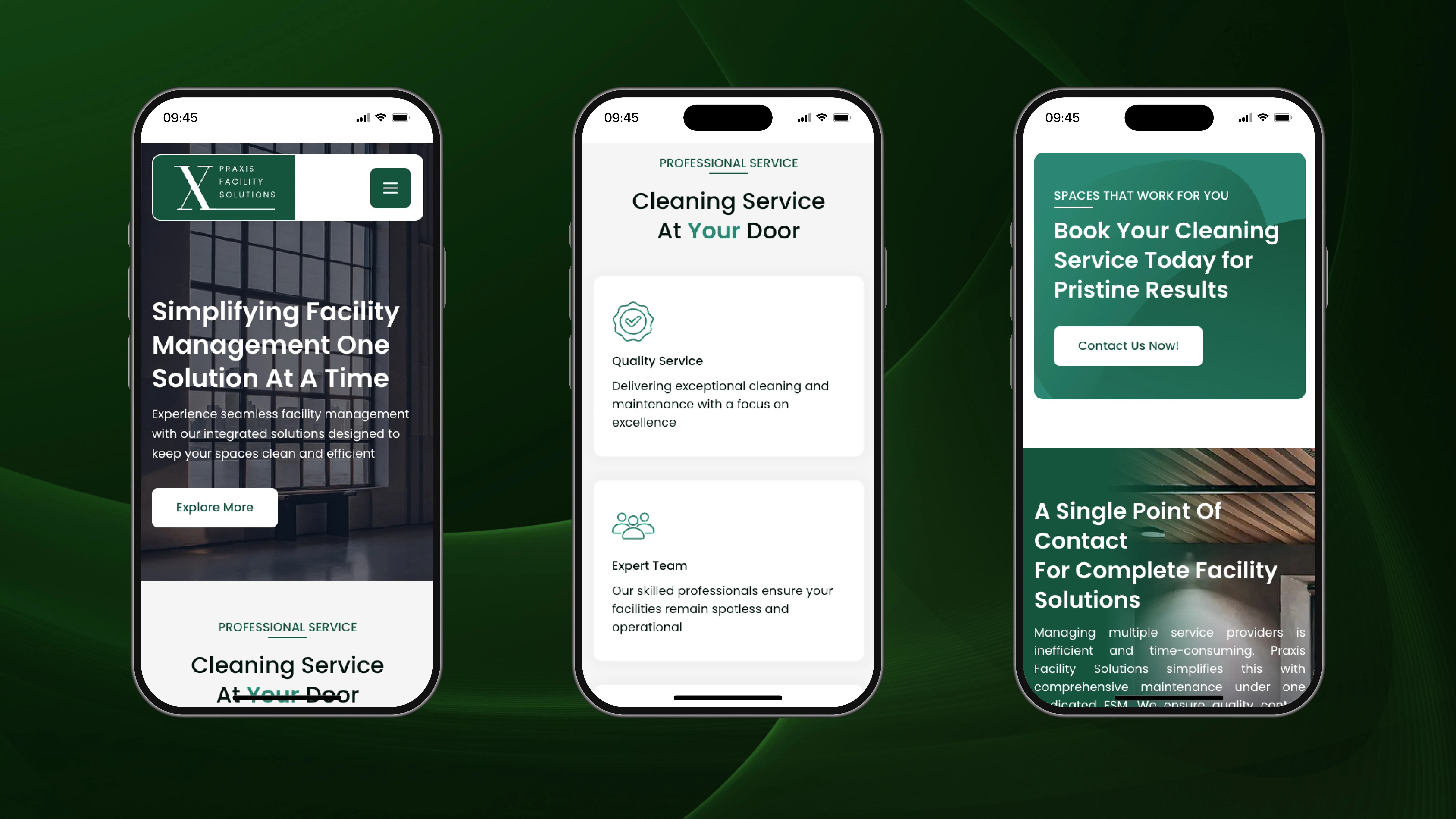
- Deliver a fully responsive experience across desktop, tablet, and mobile
- Complete cross-browser QA and UAT before any production deployment
- Launch within the five-week project timeline
Our Strategy
The strategic question was not what to build — the brief was clear. It was how to structure the build so the outcome served the business both at launch and over the years that followed.
Custom Design, Not a Template
We ran structured discovery sessions before any design work began — understanding the service lines, target clients, and how Praxis wanted to be perceived by a prospect arriving on the site for the first time. Those sessions shaped the information architecture and visual hierarchy. A template cannot replicate that.
Component Architecture as the Editorial System
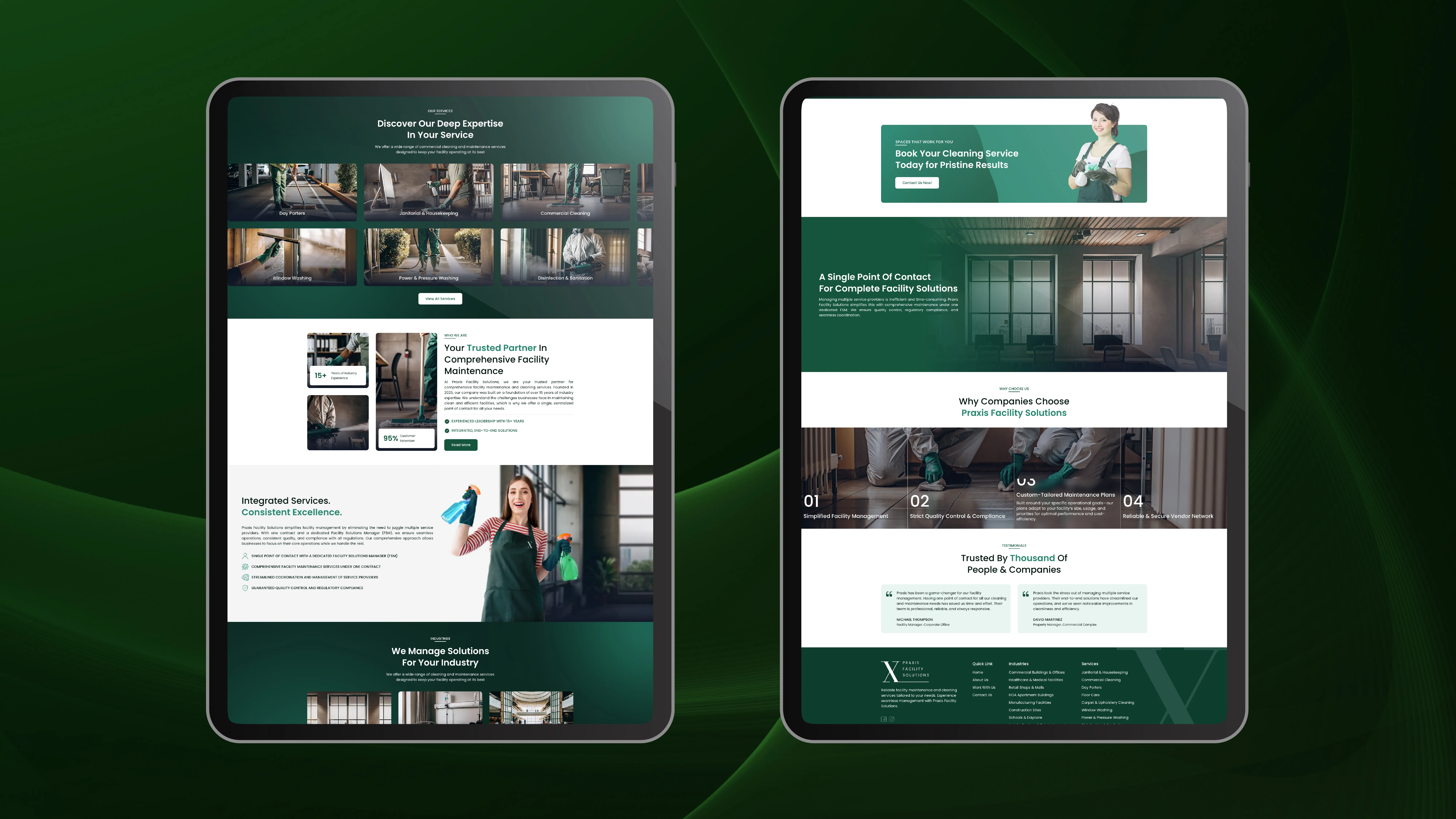


Every page is assembled from a library of reusable sections — hero blocks, service grids, feature highlights, CTA panels, content grids, testimonials — each with its own ACF field structure, fully editable through the Gutenberg editor. The team can edit what each block contains. The template controls how it looks. That separation is what makes editorial independence practical.
Performance and Quality Built In
We built the site on a custom WordPress theme with no page builder overhead. QA was built into the project schedule from the start — a dedicated week for cross-browser testing, device validation, functional testing, content management verification, and UAT before any production deployment.
A Website That Presents the Business Professionally and Runs Itself
Praxis Facility Solutions launched with a website that does two things simultaneously. It presents the business professionally to prospective clients. And the internal team handles all content operations without ongoing developer support.

The design was built from scratch to reflect the business accurately — the services it provides, the clients it serves, the standard it holds itself to. A facilities management company managing complex environments for demanding clients needs a website that signals operational competence before a prospect has read a single line. The custom design does that work in the first seconds of a visit.
The more durable result is operational. Six months after launch, the site reflects what the business does today. New service lines have dedicated pages. New sectors the business has moved into have targeted content. The website grows with the business rather than being left behind by it. The component system enforces design consistency automatically — when someone builds a new page, they cannot accidentally create a layout that clashes with the rest of the site.
Phase 1: UI/UX Design
The Problem:
No professional digital presence reflecting the business quality
What We Did:
Custom wireframes and high-fidelity visual design built from scratch
Phase 2: Component Library
The Problem:
Every new page required developer time and created inconsistent layouts
What We Did:
Reusable Gutenberg and ACF blocks for every section type across the site
Phase 3: CMS Configuration
The Problem:
Content changes required developer involvement for every update
What We Did:
WordPress configured for full editorial independence through the Gutenberg editor
Phase 4: Front-End Build
The Problem:
No mobile experience — no performance-first development
What We Did:
Responsive HTML5, CSS3, JavaScript — mobile-first, asset loading optimised at component level
Phase 5: QA and Launch
The Problem:
No systematic testing process before production deployment
What We Did:
Cross-browser, cross-device, functional testing, UAT, and post-launch verification
The Architecture Behind the Praxis Facility Solutions Website
The site runs on WordPress with a fully custom theme and zero page builder dependency. Page builders add load overhead that cannot be optimised away and produce output that drifts from the approved design as non-technical users edit it. A custom theme carries only the code the site needs.
The editorial system is built on Gutenberg and Advanced Custom Fields. Every section type exists as a custom block with an ACF field structure that controls what the team can edit. The fields define the content. The block template defines the layout. A team member with no development background can build a correctly structured, visually consistent page in under an hour because the system only presents the decisions they are supposed to make.
The front end is HTML5, CSS3, and JavaScript — responsive across desktop, tablet, and mobile, with asset loading optimised at component level throughout development. Cross-browser testing across Chrome, Firefox, Safari, and Edge was completed in the dedicated QA week. The Praxis team received a site that had been properly tested and a CMS validated end to end.
- CMS Platform: WordPress — custom theme, zero page builder dependency
- Block Editor: Gutenberg with fully custom block development
- Content Management: Advanced Custom Fields (ACF) for structured, flexible field management
- Custom Blocks: Hero, service listings, feature highlights, CTAs, content grids, testimonials
- Frontend: HTML5, CSS3, JavaScript — responsive, performance-first build
- QA and Testing: Cross-browser, cross-device, functional, and UAT testing before go-live
Valuable Feedback From Our Client
“We had a clear picture of what the business needed to communicate — but the website we had was not saying it. KrishaWeb ran a proper discovery process before anything was designed, which meant the final result actually reflected how we work and who we work with. The component system they built has been particularly valuable. Our team updates the site regularly now — new service pages, sector content, case studies — and nothing has broken, nothing has gone off-brand, and we have not needed to raise a single developer ticket since launch. The five-week timeline felt ambitious when we agreed it. They hit it, the site was properly tested before it went live, and the handover was thorough. It is exactly what we needed.”
– Praxis Facility Solutions
Project Timeline
Discovery and Design Planning
Structured sessions covering service lines, target clients, brand positioning, and CMS requirements. Wireframes, information architecture, and component library scope defined.

Design Finalisation
High-fidelity visual design built from wireframes — typography, colour system, component layouts, and page structures. Client review and approval before development.

Front-End Development
Approved designs converted to responsive HTML5, CSS3, and JavaScript. Interactive elements implemented. Cross-browser rendering prepared.

WordPress and CMS Development
Custom theme and full Gutenberg and ACF block library built. CMS configured for independent content management. Editorial workflow validated end to end.
QA, UAT, and Launch
Cross-browser and device testing, functional testing, content management validation, UAT with the Praxis team, final deployment, and post-launch verification.

Key Takeaways
For professional services businesses, the website is part of the vendor evaluation.
A generic or underdeveloped site does not just underperform on search — it actively undermines the credibility the business has built through its work. Custom design is not a luxury in this category. It is a commercial requirement.
Developer dependency is a business constraint, not just an operational inconvenience.
Every content update that requires a developer ticket is an update that gets delayed or skipped. Over time that accumulates into a website that consistently lags behind the business it represents. The Praxis team was independent before the project even closed.
Component architecture solves the flexibility versus consistency problem.
Give administrators full freedom and design degrades. Lock everything down and the team depends on developers. Gutenberg and ACF together deliver structured flexibility — the team builds any page they need and the system ensures it looks like it belongs.
Five weeks is the right timeline when the architecture is planned before development begins.
One week each: discovery and design, design finalisation, front-end, WordPress development, and a dedicated week for QA and UAT. No compressed testing. No post-launch fire-fighting.
A website launch is the beginning of a content programme, not the end of a project.
The most important question at the start of a build is not what pages are needed now — it is how the team will manage the site in twelve months. The component library was designed for the website the business will have in a year, not just the one it launched.
Does Your Business Have a Website That Matches What You Deliver?
Book a Free Strategy Call — Tell us what your website needs. We will show you exactly how we would build it.