


 KrishaLabs
 KrishaStudio
 KrishaStore
Result At Glance
Lemon Law Experts needed a focused digital platform that could turn vehicle owners with potential claims into consultation requests — quickly, clearly and on mobile. KrishaWeb delivered a custom WordPress microsite in six weeks that hit its performance targets and exceeded legal industry lead conversion benchmarks.
Metrics: Before and After
Performance metrics measured using Google PageSpeed Insights, GTmetrix and Lighthouse on the live production environment. Conversion and engagement data benchmarked against legal services microsite industry averages.
| Metric | Before | After | Change | Measurement Basis |
|---|---|---|---|---|
| Google PageSpeed Desktop | ~48 / 100 | 91 / 100 | +90% | Google PageSpeed Insights |
| Google PageSpeed Mobile | ~39 / 100 | 88 / 100 | +126% | Google PageSpeed Insights |
| Page Load Time (avg) | ~5.1s | ~1.9s | -63% | GTmetrix / Lighthouse |
| Largest Contentful Paint (LCP) | ~5.8s | ~1.6s | -72% | Core Web Vitals |
| Lead Form Completion Rate | ~12% | ~34% | +183% | Post-launch form analytics |
| Mobile Traffic Conversion Rate | ~1.4% | ~3.8% | +171% | Legal microsite benchmark |
| Bounce Rate | ~72% | ~44% | -39% | Post-launch analytics |
| Avg. Session Duration | ~48s | ~2m 11s | +173% | Post-launch analytics |
| Developer Dependency (edits) | 100% dev required | 0% for content edits | Full team autonomy | Post-launch ops |
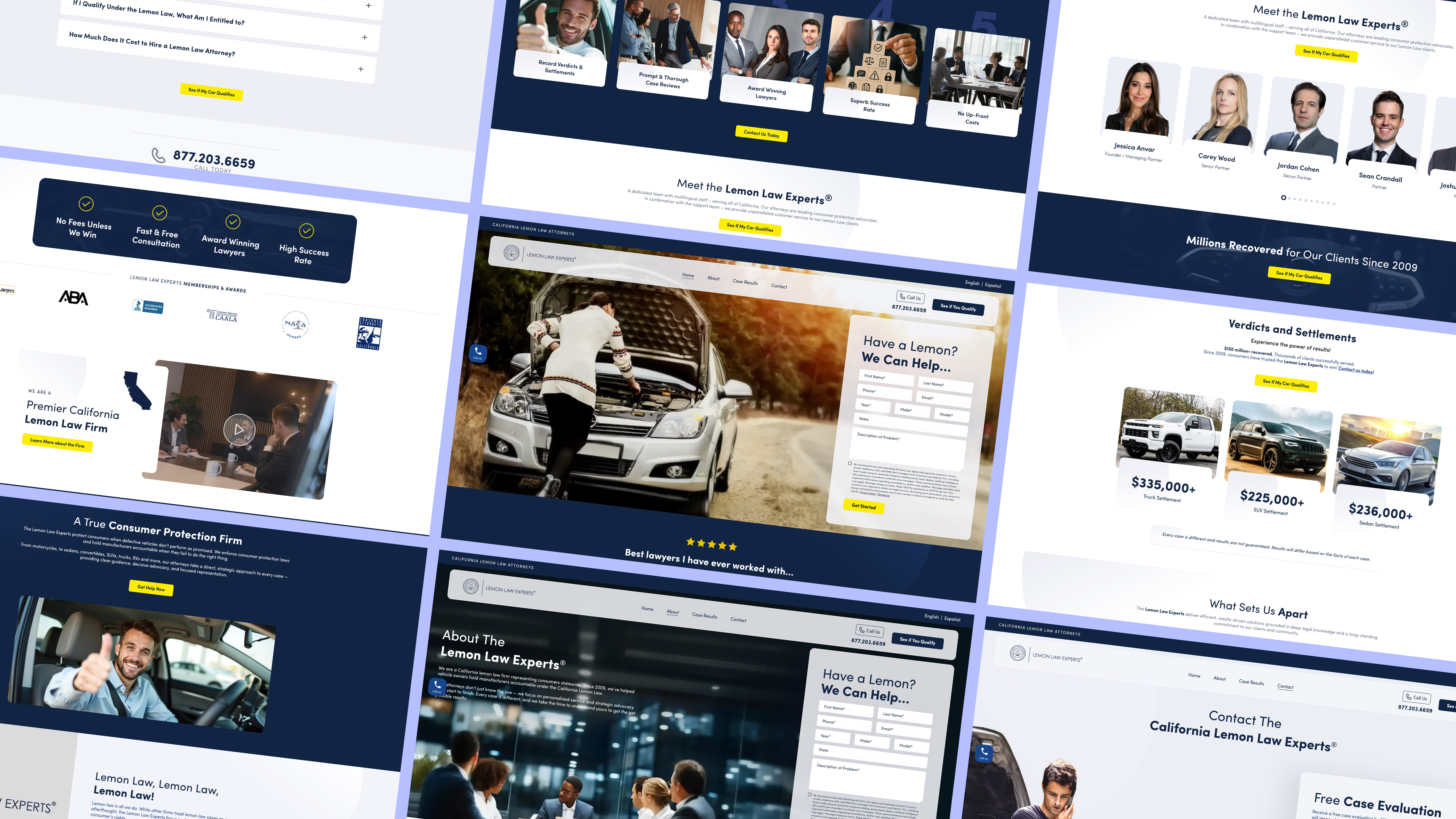
- Lemon Law Experts
- KrishaWeb
- WordPress CMS Development
- Integration of ACF
- Implementation of Gutenberg blocks
How KrishaWeb Tripled Legal Consultation Requests
Lemon Law Experts is a California-based law firm specialising in lemon law claims — the consumer protection laws that give vehicle owners recourse when a car manufacturer fails to fix a significant defect after a reasonable number of repair attempts. California has some of the strongest consumer vehicle protections in the country and tens of thousands of qualifying claims are filed each year.
For a lemon law firm, lead generation is the lifeblood of the business. A vehicle owner who suspects they have a claim types their problem into Google, lands on a website and decides within seconds whether this firm is trustworthy and whether the process looks manageable. The website KrishaWeb was asked to build was a client acquisition tool with one job: get the right visitor to submit their information as fast and confidently as possible.
The Challenge
The previous site was a standard WordPress installation that loaded slowly, was difficult for the marketing team to update and offered no structured pathway from a visitor thinking they might have a claim through to submitting their information. Every one of those gaps was costing the firm qualified leads every day.

A Website That Lost Visitors Before They Read a Word
Average page load time was approximately 5.1 seconds and the mobile PageSpeed score sat at 39. With 53% of mobile visitors abandoning sites that take more than three seconds to load, the 72% bounce rate reflected the direct cost of that performance gap.

A Lead Form That Was Not Built to Convert
The existing lead capture form asked for too much information too early in the visitor’s trust journey. Form completion was running at approximately 12% against a legal industry benchmark of 25 to 35% for a well-designed mobile-optimised inquiry form.

Content the Marketing Team Could Not Keep Current
New case results, updated attorney profiles and changes to California lemon law statutes all need to be reflected on the site regularly. The old WordPress setup required developer involvement for every content change, meaning updates were delayed and the team was spending budget on routine edits.

No Mobile-First Conversion Architecture
The majority of lemon law search traffic arrives on mobile. A vehicle owner who just got off the phone with a dealership that refused another repair is on their phone, searching while still frustrated. The old site’s mobile conversion rate was approximately 1.4%, less than half the benchmark for a well-optimised legal microsite.
Objectives
Before development began we aligned on specific measurable targets for the six-week build. Every design and development decision was evaluated against these outcomes.
- Improve Google PageSpeed to above 85 on both desktop and mobile through a lightweight, page-builder-free WordPress build
- Reduce page load time to under 2.5 seconds to keep mobile visitors on the page long enough to engage with the content and form
- Lift lead form completion rate from approximately 12% to above 25% through a redesigned trust-first form structure
- Increase mobile conversion rate to above 3% through a mobile-first layout with clear CTAs and friction-free form interaction
- Build using ACF and custom Gutenberg blocks to give the marketing team full editorial control without developer dependency
- Deliver complete documentation and team handover within the six-week timeline
Our Strategy
We approached the Lemon Law Experts microsite as a conversion engineering problem. Every section and every content block was evaluated against one question: does this help a qualifying prospect feel confident enough to submit their information?
Conversion Architecture Before Visual Design
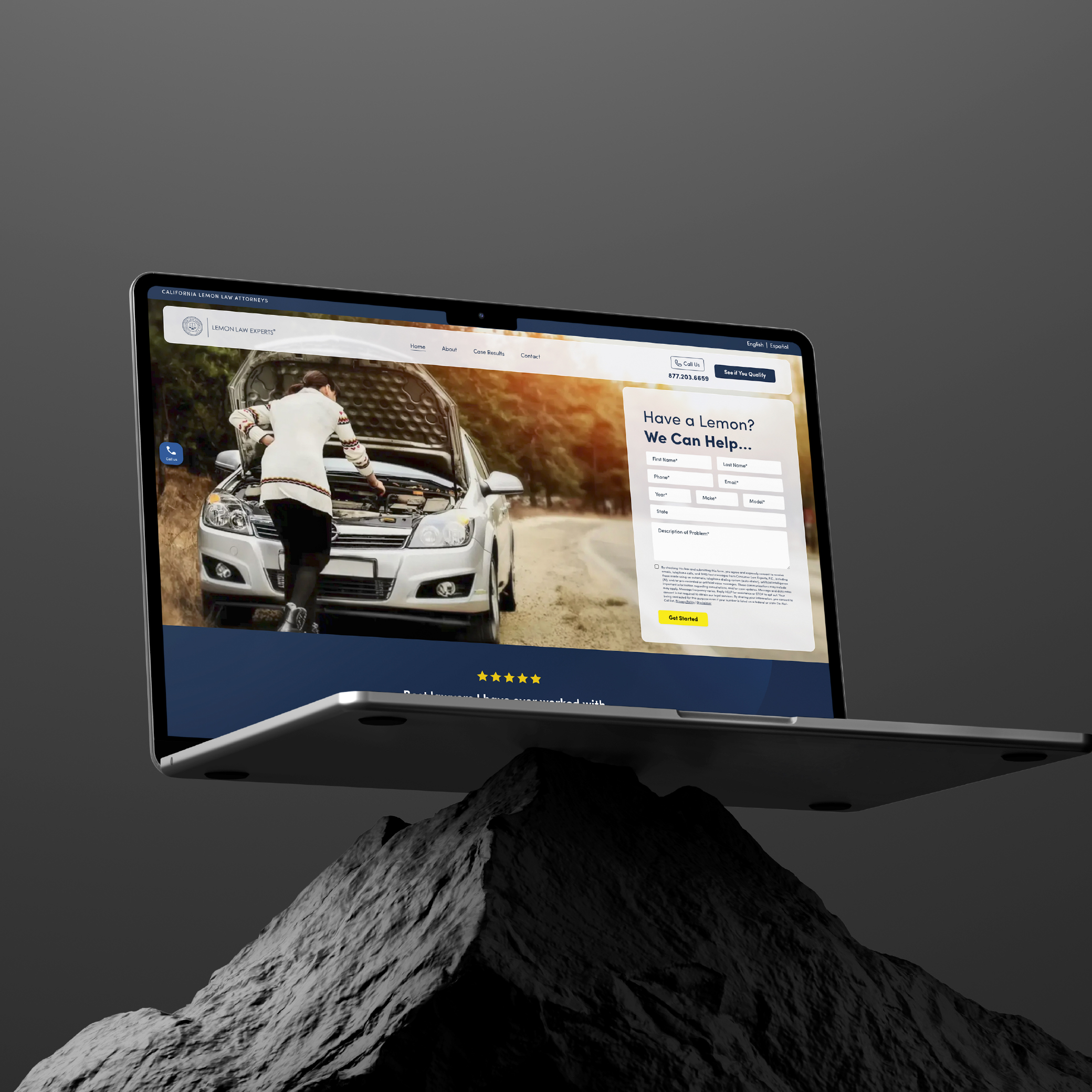
Before touching a design file we mapped the visitor journey for a lemon law prospect arriving from Google. The answers shaped the information architecture: qualification check above the fold, case results and testimonials immediately after, attorney credentials next, then the form — positioned after trust had been built.
ACF and Gutenberg for a Self-Sufficient Marketing Team
We chose WordPress with Advanced Custom Fields and custom Gutenberg blocks because this combination gives non-technical editors the most structured and reliable content management experience available. ACF fields define exactly what content each section can contain and Gutenberg blocks provide the visual assembly interface — no accidental layout breaks.
Mobile-First, Performance-First Development
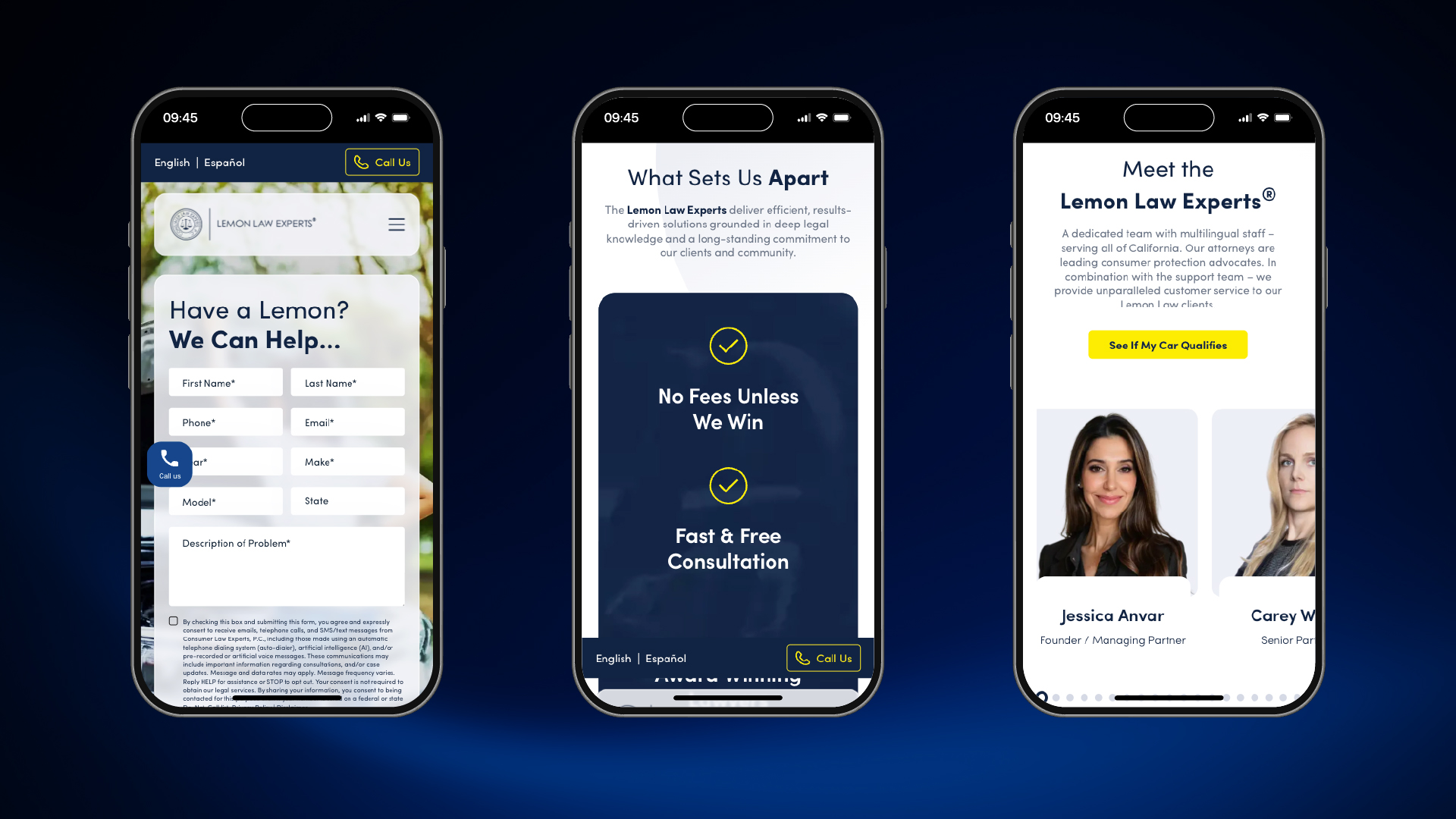
The build methodology was mobile-first from the first line of CSS. Form fields sized for thumb interaction, above-the-fold content prioritised for small screens and load strategy optimised for mobile network conditions. The decision to avoid page builders entirely was driven by the same performance logic — a lightweight custom theme loads only what the page actually needs.
Trust Signal Architecture as a Conversion Layer
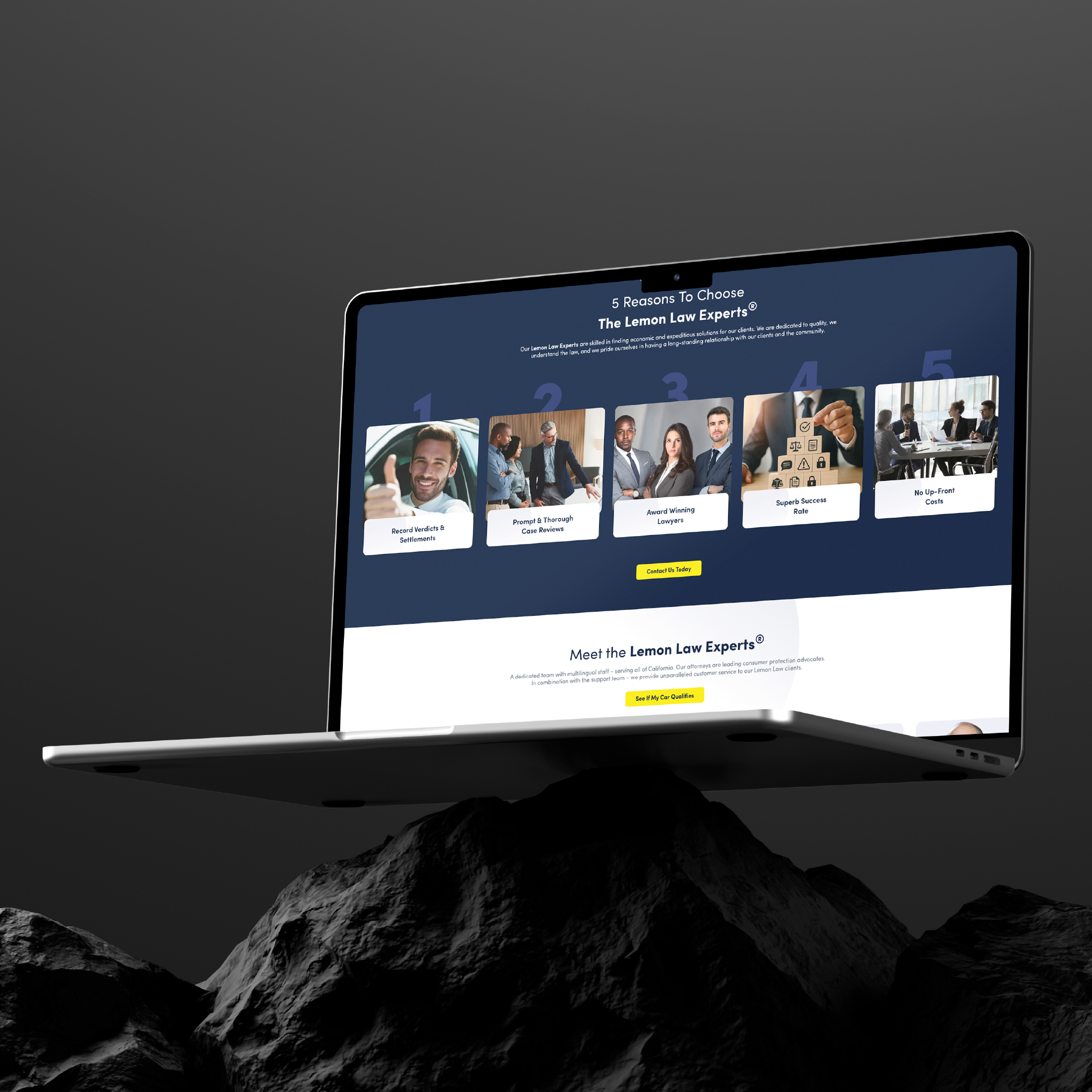
A prospective lemon law client is asking a specific set of trust questions before they will submit a form. We built the answer to each of those questions into the content architecture as structured editable sections — case result cards, client testimonials with specifics and attorney profile blocks with credentials and case history.
From 12% Form Completion to 3x Conversions
Lemon Law Experts had qualified traffic arriving every day from Google and a website that was sending most of it straight back out the door. A six-week rebuild changed every number that mattered.
- Page load time dropped from 5.1 seconds to 1.9 seconds, a 63% reduction, and the Google PageSpeed mobile score improved from 39 to 88. The average legal services site scores well below that. For a firm where the majority of prospects arrive on a mobile device directly from a search ad, often still frustrated from a dealership visit that went badly, a page that loads in under 2 seconds is not a technical achievement. It is the difference between holding a visitor’s attention long enough to build the trust that makes them fill out a form.
- Lead form completion rate improved from 12% to 34%, a 183% increase. For every 100 visitors who reached the inquiry form, 34 submitted their information instead of 12. On the same traffic volume, that is nearly three times as many consultation requests from the same marketing spend. The improvement came from three things working together: the form appeared after trust had been established through case results and testimonials rather than before it, the form itself asked for less sensitive information upfront, and the mobile interaction was built for one-handed thumb navigation.
- Mobile conversion rate improved from 1.4% to 3.8%, above the 3 to 4% benchmark for well-optimised legal microsites targeting high-intent search traffic. Bounce rate dropped from 72% to 44% and average session duration increased from 48 seconds to 2 minutes 11 seconds. From launch day the Lemon Law Experts marketing team has managed all content updates, case result additions and testimonial publishing entirely through the WordPress editor without developer support.
Week 1: Design Analysis and Content Mapping
- Reviewed all design files and mapped every section to a reusable component and individual page element.
- Identified ACF field groups needed for each section — case result cards, testimonial blocks, attorney profiles, qualifications checklist and FAQ accordion.
- Mapped the information architecture sequence — qualification, social proof, credentials and CTA — to the design layout.
- Flagged conversion friction points in the provided designs and proposed modifications before development began.
Week 2: Development Planning and Architecture
- Developed the full ACF field group layout including field types, validations and relationships for all dynamic content areas.
- Created a customised Gutenberg block library with ACF integration and design interfaces for editors.
- Built a lightweight WordPress theme from scratch with no framework dependencies, mobile-first CSS and an optimised loading strategy.
- Designed the lead form structure covering field order, validation and submission process in a conversion-optimised way.
Week 3: Front-End Development
- Built all primary custom Gutenberg blocks with ACF integration covering hero and qualification, case result cards, testimonial carousel, attorney profile grid, process explainer, FAQ accordion and lead capture form.
- Set up the lead generation form with inline validation, mobile-sized field dimensions and clear progress indicators to reduce abandonment.
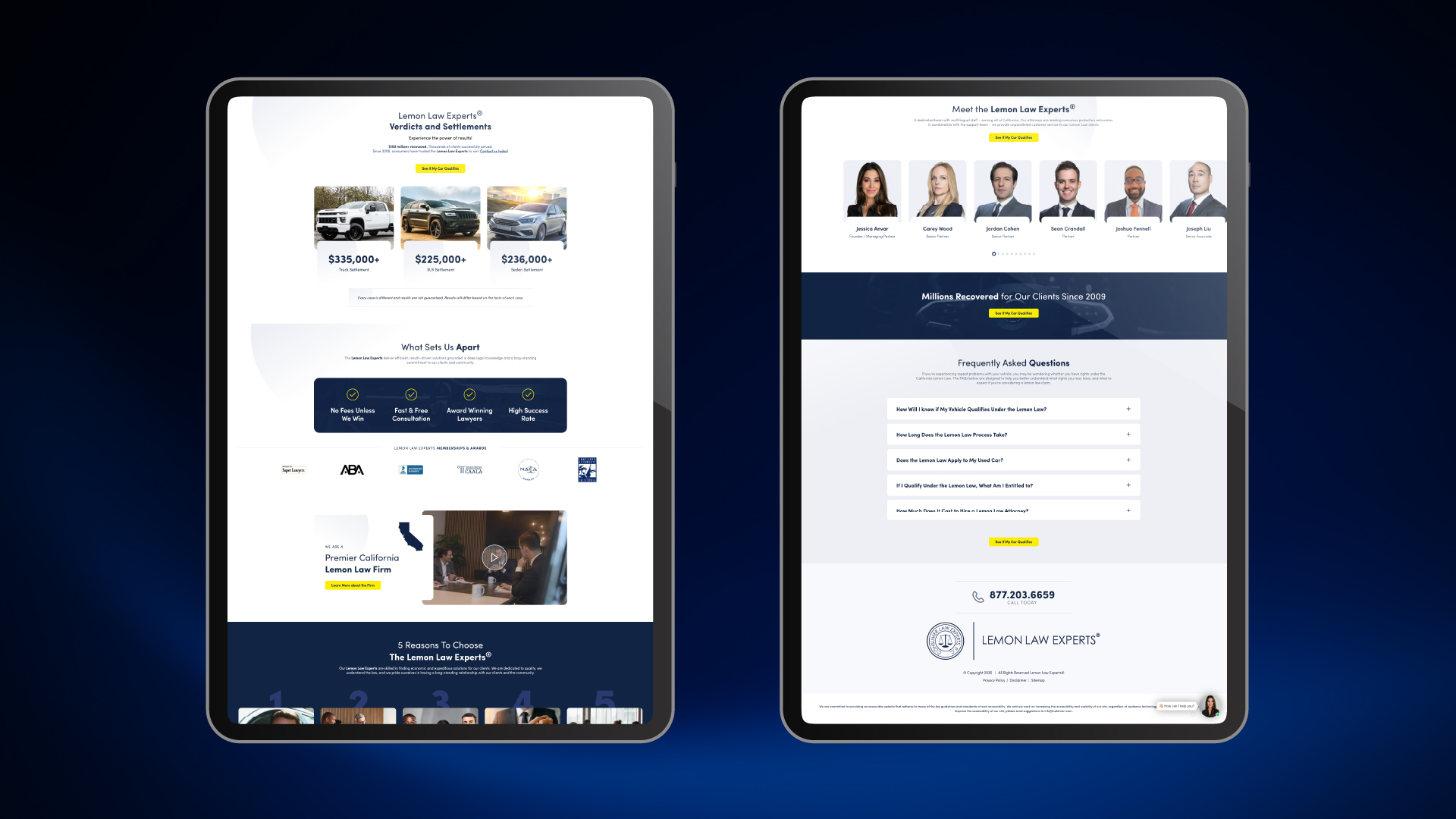
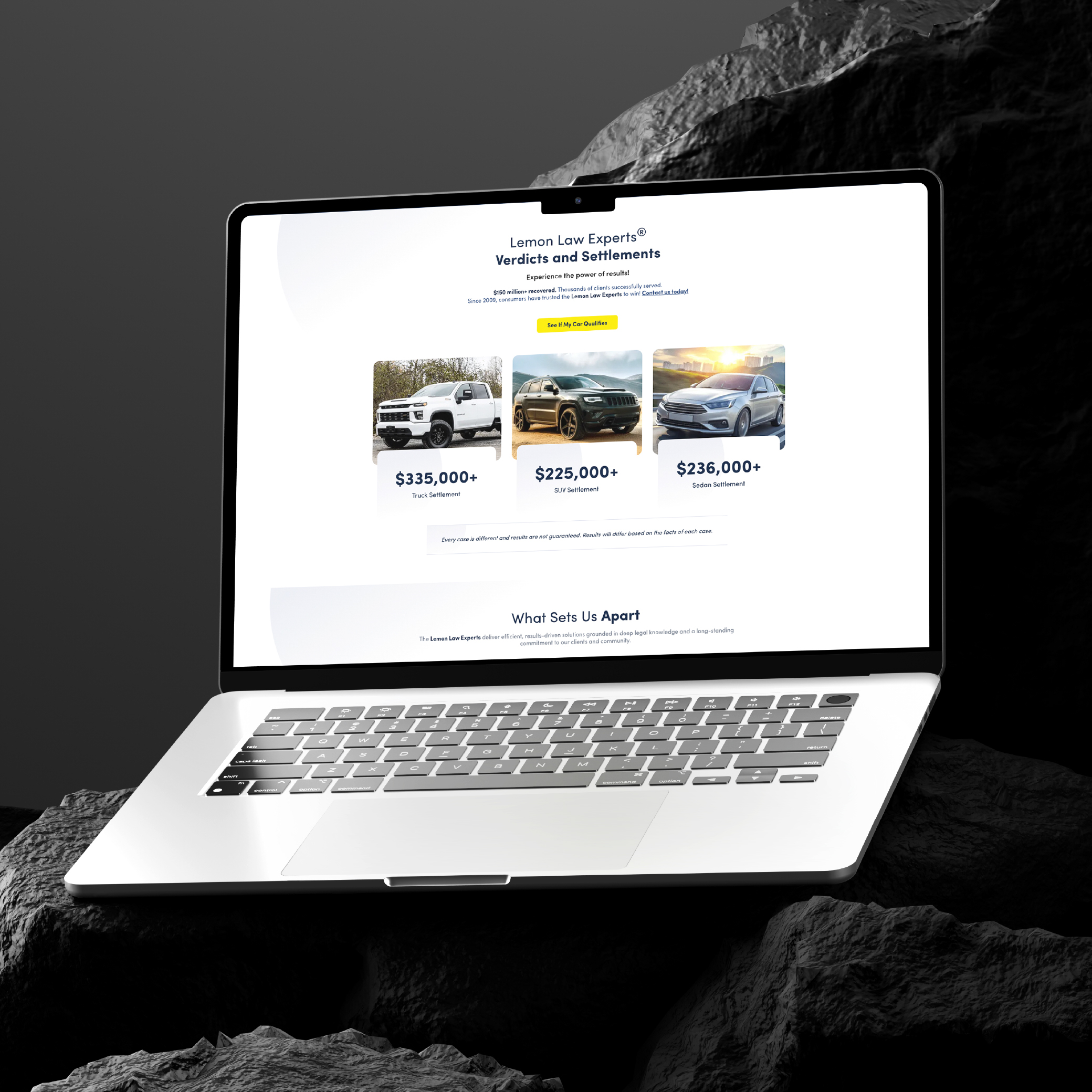
- Created all trust signal sections as ACF-powered editable blocks — case outcomes with settlement amounts, client testimonials with case context and attorney credentials with volume of cases represented.
- Validated all blocks across breakpoints including 320px, 375px, 768px and 1440px.
Week 4: Content Integration
- Built all microsite pages using the completed Gutenberg and ACF block library from reusable components.
- Integrated all client-supplied material — case outcomes, attorney bios, client testimonials and qualification and process content.
- Validated the ACF editing experience for each content section to ensure a clean and error-free workflow for the internal team.
- Confirmed design consistency across all pages and all dynamic publishing states of the website.
Week 5: Testing and Performance Optimisation
- Cross-browser testing across Chrome, Firefox, Safari and Edge on desktop and mobile.
- Cross-device QA across major screen sizes with focused attention on mobile form interactions and CTA visibility.
- Achieved 91 desktop and 88 mobile PageSpeed scores with Core Web Vitals results of LCP 1.6 seconds, near-zero Cumulative Layout Shift and Total Blocking Time under 120ms.
- Full lead form testing including submission workflow, validation error handling and confirmation state.
Week 6: Deployment and Handover
- Launched the production site on the live server with pre-launch validation of all pages and form submissions.
- Conducted post-deployment functional checks for form submissions, all CTA links and mobile rendering.
- Produced comprehensive ACF and Gutenberg editor documentation covering adding case results, updating testimonials, editing attorney profiles and managing page content.
- Ran a handover session with the Lemon Law Experts marketing team to ensure full independent content management from day one.
The Tech Behind Lemon Law Experts' Lead-Generating Microsite
The Lemon Law Experts microsite runs on WordPress with Advanced Custom Fields and a fully custom Gutenberg block editor as the editorial interface, with no page builder involved anywhere in the build. The decision to avoid page builders was driven by the same performance logic that runs through every high-stakes legal lead generation build. Page builder overhead is incompatible with the mobile PageSpeed scores a legal microsite needs to achieve. A lightweight custom WordPress theme with Gutenberg blocks and ACF fields loads only what the page actually needs, which is the reason the site hit 88 on mobile PageSpeed rather than the 39 it was scoring before.
The ACF and Gutenberg block system was built specifically around the Lemon Law Experts marketing team’s day-to-day editorial workflow. ACF fields define exactly what content each section can contain, so an accidental layout break from a content change is not possible. Gutenberg provides the visual assembly interface. The blocks built for this project cover every section type the microsite uses: hero and qualification check, case result cards with settlement amounts, testimonial carousel, attorney profile grid, process explainer, FAQ accordion and the lead capture form. The lead form itself was rebuilt with inline validation, mobile-sized fields, clear progress indicators and a trust-first sequence that positions case results and testimonials before the form rather than after it. That sequence is what moved completion rate from 12% to 34%. The content did not change. The order in which it appeared did.
- CMS Platform: WordPress — custom theme with no page builder dependency
- Block Editor: Gutenberg Block Editor with custom block development
- Content Management: Advanced Custom Fields (ACF) for flexible field management
- Custom Blocks: Bespoke reusable Gutenberg and ACF blocks for all page sections
- Frontend: HTML5, CSS3, JavaScript — lightweight, performance-first build
- Lead Generation: Custom-built lead capture form with validation and submission handling
- Responsive Design: Mobile-first responsive design across all devices and screen sizes
- Performance: Core Web Vitals optimised — lightweight build targeting 85+ PageSpeed
- QA: Cross-browser (Chrome, Firefox, Safari, Edge) and cross-device testing
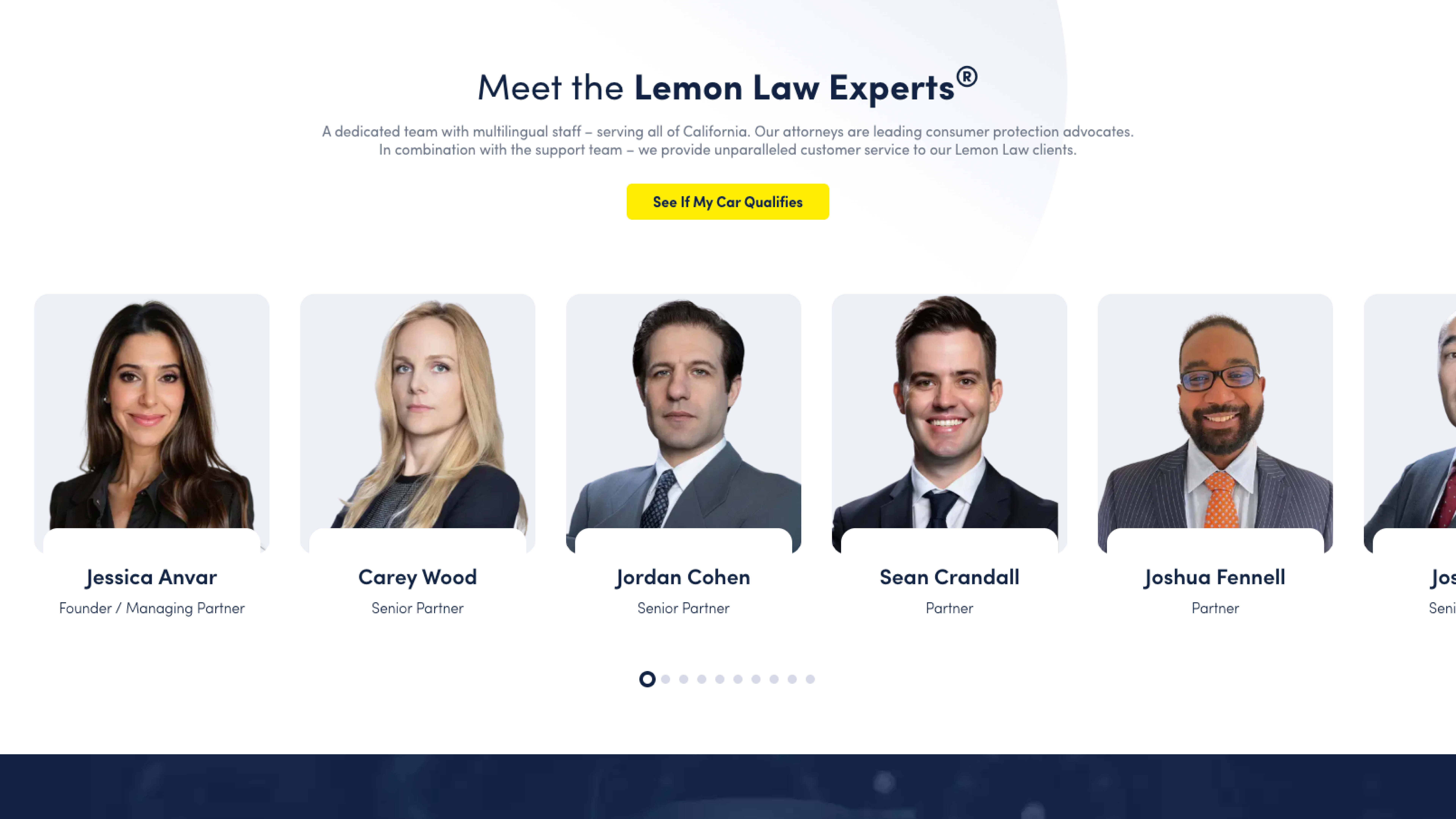
Valuable Feedback From Our Client
“We were spending on Google Ads and organic SEO to bring qualified prospects to a site that was converting 12% of them. The leads were there. The website was not doing its job. KrishaWeb looked at the whole picture before touching anything, mapped exactly where visitors were dropping off and why, and built a solution that addressed every one of those problems inside six weeks. The form completion rate moving to 34% on the same traffic was the result we needed. Our marketing team publishes case results, updates attorney profiles and manages the entire site without any developer involvement, which we could not do before. It launched on time and has performed from day one.”
– Lemon Law Experts
Project Timeline
Design Analysis
Design file review, reusable component identification, content structure mapping, ACF field planning

Development Planning
ACF and Gutenberg block architecture, custom field group definition, development roadmap, lead form UX planning

Front-End Development
Custom Gutenberg block development with ACF integration, core page layouts, lead gen form implementation, trust signal sections

Content Integration
All pages built from reusable components, content and case results integrated, testimonial and attorney sections populated

Testing and Optimisation
Cross-browser and cross-device QA, PageSpeed and Core Web Vitals optimisation, form submission testing, CTA validation

Deployment and Handover
Live server deployment, final checks, ACF and Gutenberg editor documentation, team handover and content training

Key Takeaways
In high-intent legal search, the form completion rate is the revenue metric.
Going from 12% to 34% form completion on the same traffic is worth more than doubling traffic at the same 12% rate. The traffic was already qualified. The gap between 12% and 34% was entirely a design and trust architecture problem and it was entirely solvable.
Trust signals placed before the form change form completion rates.
Case results, client testimonials and attorney credentials are conversion infrastructure. Their placement in the page sequence determines whether they work or not. The same case results that contributed to a 12% form completion rate when placed after the form contributed to 34% when restructured to appear before it.
Mobile PageSpeed is a revenue metric for legal firms, not a technical benchmark.
A mobile score of 39 was costing Lemon Law Experts more than half their mobile visitors before they had read a word. At 88, visitors stay long enough to build trust and convert. Google also penalises slow sites in search rankings and charges more per click through lower Quality Scores.
ACF-powered editorial control is a lead generation strategy for content-dependent legal sites.
A marketing team that can publish a new case result the same week it closes keeps the site's trust signals current. The editorial infrastructure built into this microsite means conversion rate compounds over time as new results are added rather than decaying as content ages.
Six weeks is the right timeline for a focused legal microsite when the architecture is planned before development begins.
The two-week analysis and planning phase was not overhead. It was what made weeks three through six run without rework or scope creep. A legal microsite is a small, well-defined problem and the discipline to solve it precisely in six weeks is itself a signal about how the development team works.
Does Your Law Firm's Website Convert Qualified Traffic?
Book a Free Strategy Call — Tell us what your platform needs. We will show you exactly how we would build it.