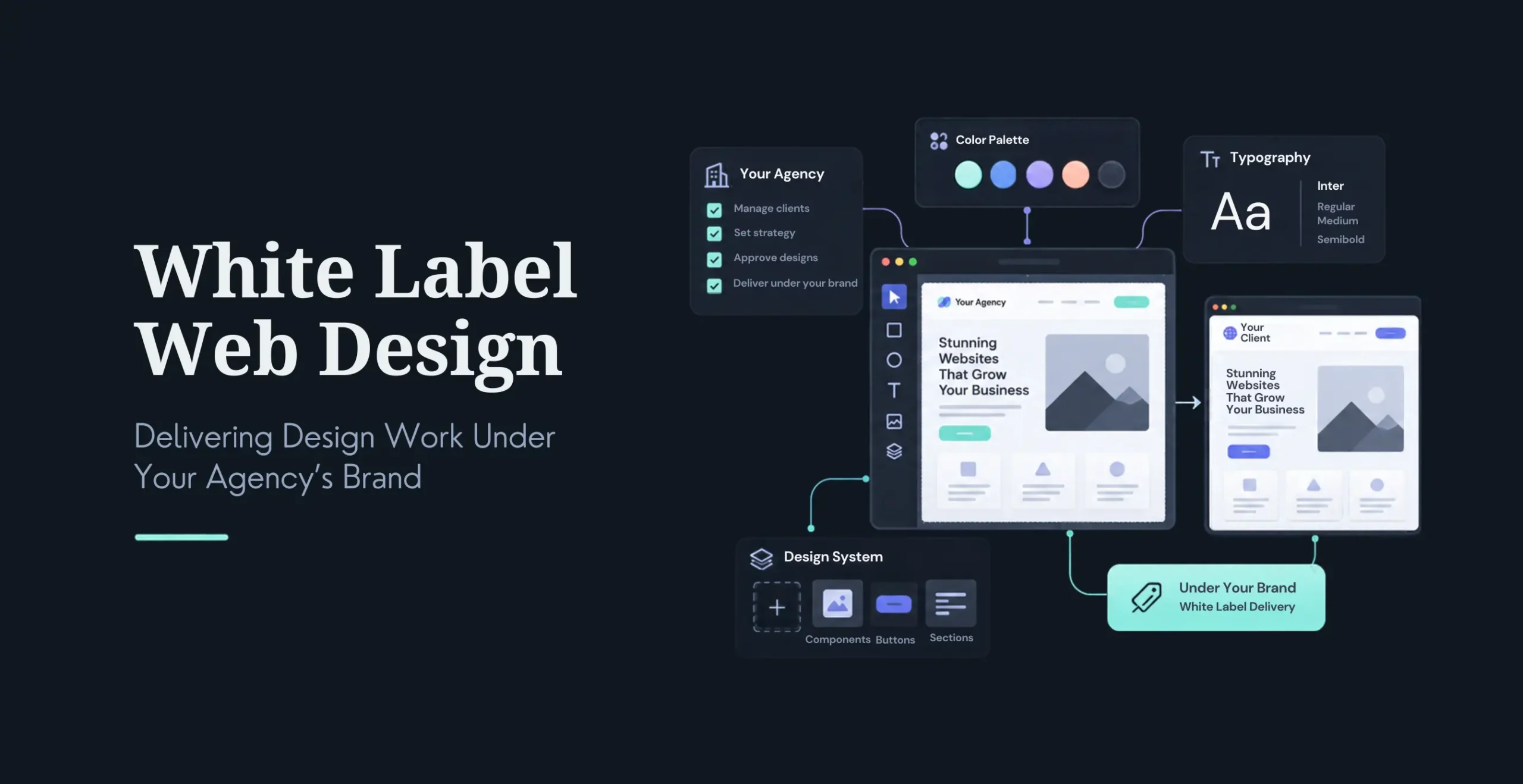
It is Q4, and if you run an agency, you are probably staring at the same decision most agency owners face this time of year: hire for next year, turn good work away, or find a way to deliver more without adding payroll. White label web development is how a growing number of agencies solve that third option. In plain terms, it means a third-party team builds websites and web apps that your agency delivers under its own brand, while you keep the client, the strategy, and the relationship.
The promise is straightforward. You take on more projects, keep full ownership of the client, and skip the fixed cost and risk that come with hiring. At KrishaWeb, we have built this way for agencies for years, under NDA, across WordPress, Shopify, Webflow, React, Laravel, and custom stacks, so the guide below is written from the delivery side of that arrangement, not the theory.
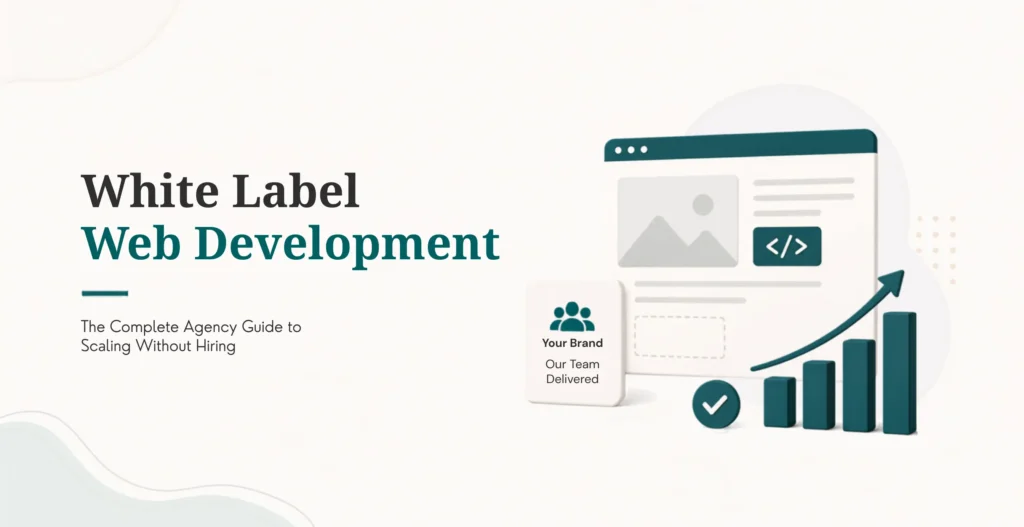
Strip away the jargon, and it is simple: a partner team builds the work, and your agency delivers it under your own name. Your client sees your brand, talks to your people, and pays your invoice. Behind that, a development partner does the build, and the client never knows they exist.
The important part is what stays with you. You keep the client relationship, the strategy, the pricing, and every conversation. The partner handles design implementation, development, QA, and launch support: the production work, not the account. Confidentiality is not a bonus feature in this model; it is the whole point. A good white label development partner is invisible by design: no logos on the staging site, no name on the deliverables, and no footprint your client could trace back.
What has changed by 2026 is how agencies think about it. White label used to be the thing you reached for in a panic when a project was slipping. Now it is a standard capacity layer, a deliberate part of how agencies plan their year, sitting alongside their in-house team rather than rescuing it.
Why Do Agencies Choose White Label Development?
The core reason is that project flow is lumpy, and payroll is not. You might win three builds in a month and then nothing for six weeks, but a full-time developer costs the same either way. White label turns that fixed cost into a variable one. You pay for delivery when you have projects, and you pay nothing when you do not, which is a very different risk profile from a salary.
Then there is the range problem. Your clients do not care that you specialize in WordPress; they want a Shopify Plus store, or a React front end, or a custom Laravel app, and they want it from you. Hiring a specialist for every platform your clients might ask for is impossible. A capable white label partner covers the stacks you do not, so you can say yes to briefs you would otherwise have to decline or refer away.
Speed matters more than most agencies admit. Hiring takes 2 to 4 months from job post to productive developer. An opportunity does not wait that long. With a partner already in place, you can commit to a project in days, which is often the difference between winning the work and watching it go to a competitor who could start sooner.
The margins hold up, too, when it is done right. You buy delivery at a wholesale rate and price to the client based on the value you deliver, which leaves a healthy spread to cover your project management, your QA, your client communication, and your profit. And the least obvious benefit is focus: when your own team is not buried in production, they can do the strategy, creative, and account growth that actually build the agency.
Picture the common version of this. You pitch a retail client, they love you, and the project turns out to need Shopify Plus, which nobody on your team has touched. Without a partner, you either turn it down or scramble to hire. With one, you take the project, brief the partner, and deliver it under your brand while your client is none the wiser. That single project often pays for the entire arrangement.
How White Label Web Development Works, Step by Step
The mechanics are less mysterious than people expect. Here is the flow of a typical project.
It starts with you winning the work and signing the client contract, entirely your relationship, on your paper. You then share the brief, the designs, the requirements, and the timeline with your partner, who builds on a neutral staging environment under NDA, with nothing on it that identifies them.
You review the work as it comes together, run your own QA, and consolidate your client’s feedback into a single clear set of revisions. The partner implements those and prepares for launch. Finally, you present the work, launch it, and own every post-launch conversation with the client.
Three rules make the whole thing hold together. The client never sees the partner. All the code and assets belong to you. And every line of communication runs through your agency, never around it. By 2026, the agencies that do this well treat structured intake, disciplined staging, and documented handover as baseline requirements, not nice-to-haves, because that discipline is what keeps the model invisible and reliable.
Services You Can Deliver Through a White Label Partner
Most agencies start by white labeling one thing and quickly realize how much more they can offer once the capacity is there. The common categories are custom website development across platforms like WordPress, Webflow, and Laravel; eCommerce builds on Shopify, WooCommerce, or custom carts; front-end application work in React, Next.js, and Vue; and back-end and API development in Node.js, PHP, Python, or .NET. Beyond the build itself, a strong partner also covers UI/UX design support, QA and testing, and ongoing maintenance and support retainers, the recurring work that keeps clients on your books for years.
The strategic point is bigger than any single service. When you have a partner who can cover this range, your agency stops being defined by what it can build in-house and starts being defined by what your clients need. You say yes to a wider set of briefs without hiring a specialist for each one. If you want the full picture of what that can include, see our full white label development offering.
Pricing Models and Realistic Margins
There are three pricing models agencies typically use, and the right one depends on how steady your work is.
Project-based fixed pricing suits irregular flow. You agree to a price per project, the partner carries the utilization risk between jobs, and you pay a somewhat higher per-project rate in exchange for that flexibility.
Monthly retainers work when the scope is predictable, ongoing maintenance, small tasks, and a steady trickle of client work, and they give you a steady margin on steady effort.
A dedicated developer or pod is a fixed monthly cost for named capacity that is yours, and it is the most economical option once your utilization is consistently high enough to keep that person busy.
On margins, the 2026 norm for white label projects sits around 50 to 70% gross. The math is not complicated: a partner charges you $3,000 for a build, and you bill the client somewhere between $6,000 and $9,000. That spread is not markup for its own sake; it pays for your project management, your QA, the client communication, and your profit, all real work that the client is paying you to do. The mistake to avoid is pricing off the partner’s cost. Price is off the value the finished website delivers to the client, which is almost always higher than a cost-plus calculation would suggest. For a deeper breakdown, see our white label pricing models guide. [Link pending — see flag below]
Legal and Confidentiality: the NDA You Actually Need
Confidentiality is the foundation the whole model rests on, so the NDA is not paperwork you rush through. A proper one spells out that the partner will not disclose their involvement to your clients or anyone else, will not contact your client directly without your written approval, and will deliver everything under your brand alone, with no partner logos, domains, or footprints anywhere. It assigns all intellectual property to your agency on payment and includes a non-solicitation clause so the partner cannot poach your client, and states clear consequences if any of that is breached.
The way a partner reacts to the NDA tells you a lot before you have signed a thing. Be wary if they hesitate to sign before seeing project details, if their staging URLs or invoices carry their own branding, or if they ask to be introduced to your client “just for alignment.” Each of those is a small crack in the invisibility the model depends on. By 2026, the better agencies treat NDA discipline and brand compliance as non-negotiable, because one leak, one client who discovers the work was outsourced, can undo years of trust.
White Label vs. Freelancers vs. In-House: an Honest Comparison
None of these three is universally right; they solve different problems. Here is the honest version.
Factor
White Label Partner
Freelancer
In-House Developer
Cost structure
Variable: per project or retainer
Variable: per project or hour
Fixed salary, benefits, overhead
Reliability
Team-backed, with cover if someone is out
Single point of failure
Depends on one person
Confidentiality
Built for the agency model, NDA-first
Variable, often informal
Full control
Scalability
Scales with your project volume
Limited by one person’s capacity
Needs a new hire to scale
Technical range
Broad, across platforms
Limited to one skill set
Limited to who you hired
Best for
Regular flow that needs reliability
Occasional, low-stakes tasks
High, steady volume
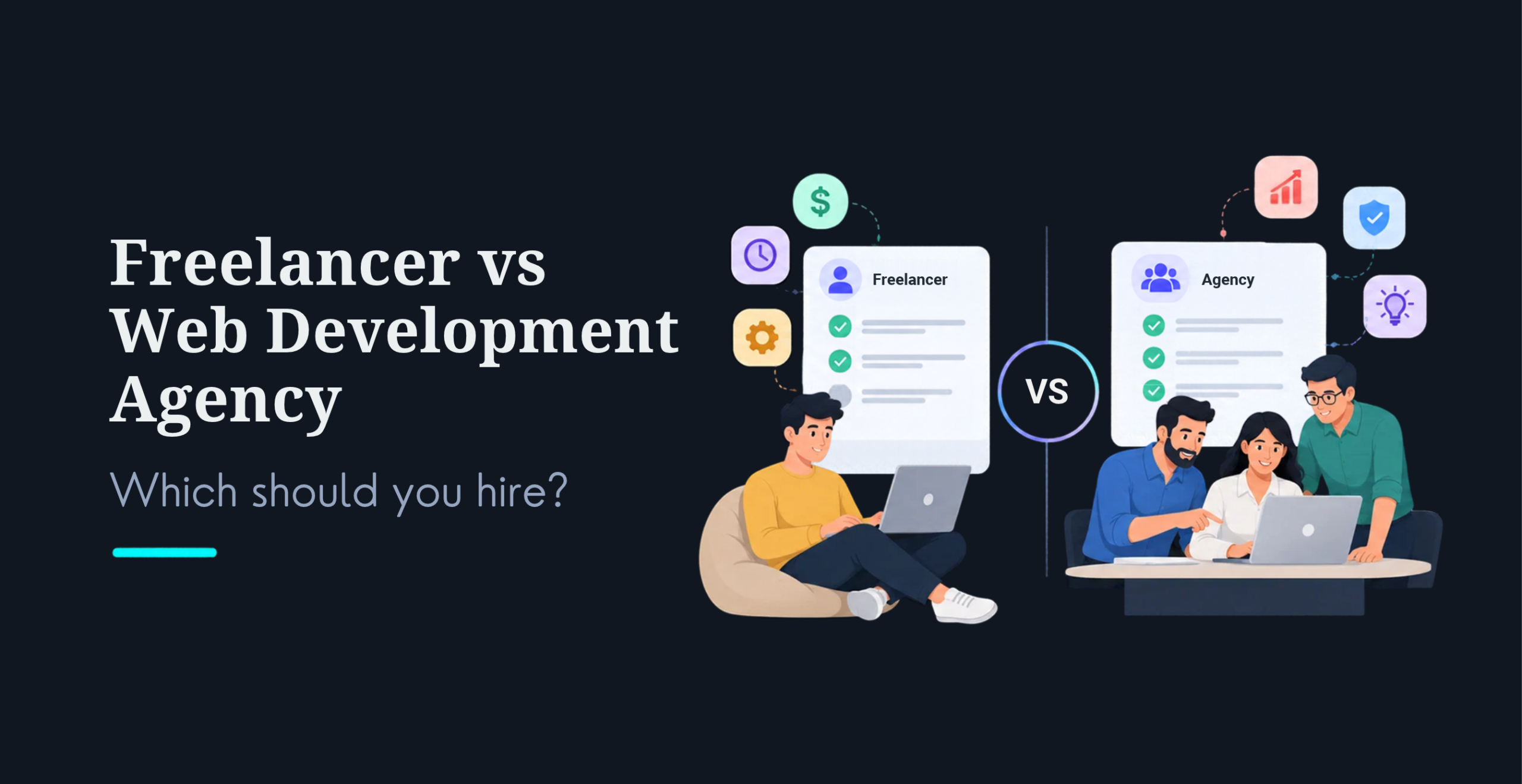
The short version: freelancers are fine for occasional, low-stakes work, in-house makes sense once your pipeline is steady enough to keep a salaried developer fully busy, and white label fits the growing agency that needs reliability and range without committing to headcount before the revenue is there.
How to Choose a White Label Development Partner
Not every development shop that offers white label is built for it. A few things separate the real partners from the ones who will eventually cost you a client.
Start with their orientation. A genuine white label partner earns most of its revenue from agency partnerships, not direct client work, which means their whole operation is set up to stay invisible and to make you look good. Check their technical range against what your clients actually ask for, not a generic list; real, proven work on WordPress, Shopify, Webflow, React, or whatever your book demands.
Pay close attention to how they communicate: response times, whether they flag risks before they become problems, and whether their status updates are clear enough for you to forward straight to a client.
Ask for agency references specifically, not just end-client case studies, because delivering for an agency is a different discipline. Look for a real project management layer, a dedicated PM between you and the developers, rather than raw access to engineers you then have to manage yourself. Confirm that confidentiality is their default, NDA-first, neutral staging, and no branding in deliverables, and get their revision and change-request process in writing so scope does not drift. Finally, check what happens after launch: a warranty period, a bug-fix process, and clear support options.
One piece of advice above all: start with a pilot. One real project, end to end, tells you more about a partner than any sales call or portfolio ever will.
Ready to move from learning to choosing?
Download our free 15-point White Label Partner Scorecard, then book a partnership call.
Common Mistakes Agencies Make and How to Avoid Them
The most expensive mistake is choosing on price alone. The cheapest partner often costs the most once you count the rework, the missed deadlines, and the client who noticed. Pick on reliability and fit, then negotiate.
Skipping the pilot is the next one. Committing to a long-term retainer with a partner you have never actually worked with is a blind bet; run one real project first. Vague briefs cause their own damage; inconsistent output and scope creep both trace back to a brief that left too much unsaid, so invest the time to brief properly. A weak or generic NDA leaves your confidentiality and IP exposed, so use one built for this model, not a template off the internet. Overpromising timelines to your client strains the relationship the moment anything changes, so quote realistically and build in room. And treating your partner as a disposable commodity tends to get you commodity treatment back; the agencies that get prioritized are the ones who treat the relationship as a partnership.
Frequently Asked Questions
What is white label web development?
It is an arrangement where a partner builds websites and web apps that your agency delivers under its own brand. The client only ever sees your agency; the partner stays invisible, and all the work is yours.
Is white label development profitable?
Yes, when it is priced right. Agencies typically target 50% to 70% gross margins by buying delivery at wholesale rates and pricing to the client based on the value delivered, not the partner’s cost.
How long does it take to start with a white label partner?
Usually one to two weeks to onboard and begin a pilot project, compared with the two to four months it takes to hire a developer in-house. That speed is a large part of the appeal.
Can I do white label development for WordPress, Shopify, and custom apps?
Yes. A full-stack partner can cover multiple platforms, so you do not need a separate vendor for each one, which is exactly why agencies use white label to widen the range of work they can accept.
What is the difference between white label and outsourcing?
In white label, the partner stays invisible to the client, and every deliverable carries your brand. Traditional outsourcing is often visible to the client, with the third party acknowledged. The invisibility is what makes white label work for agencies.
Ready to Scale Your Agency Without Scaling Headcount?
The strategic case is simple by now: more projects, a broader set of capabilities, controlled risk, and healthier margins, without betting on a hire before the revenue is there. That is what a good white label arrangement gives a growing agency.
KrishaWeb has been the delivery team behind agencies for years. We work NDA-first, stay invisible by design, and build across WordPress, Shopify, Webflow, and custom stacks, so your agency can say yes to more of what your clients ask for. If that is the kind of partner you are looking for, the next step is a conversation, not a contract.
Book a Confidential White Label Call and Start With a Pilot Project!
Founder & CEO of KrishaWeb, leads an Enterprise Web Agency. With contributions to WordPress and organization of WordCamps, he pioneers innovation and community engagement in the digital realm.




 KrishaLabs
 KrishaStudio
 KrishaStore