A roofing website has one conversion goal that sits above everything else: get the visitor to request a quote or call. The customer journey is short (storm damage, a leak, an overdue replacement), and the decision to contact a roofer is often made within the first session on your website. If the site does not generate that contact quickly, the visitor moves on to the next result in the search page.
At KrishaWeb, we have built websites for trade businesses, home service companies, and construction contractors across multiple markets. The roofing websites that generate the most inquiries share three characteristics: fast load times, prominent contact CTAs on every page, and social proof specific enough to cover the customer’s specific location and job type.
KrishaWeb has designed and built roofing website designs since 2008. The pattern that holds across every high-performing example: design decisions made in service of the visitor’s actual goal, not the agency’s portfolio.
Table Of Contents
Table Of Contents
12 Best Roofing Website Design Inspirations for 2026
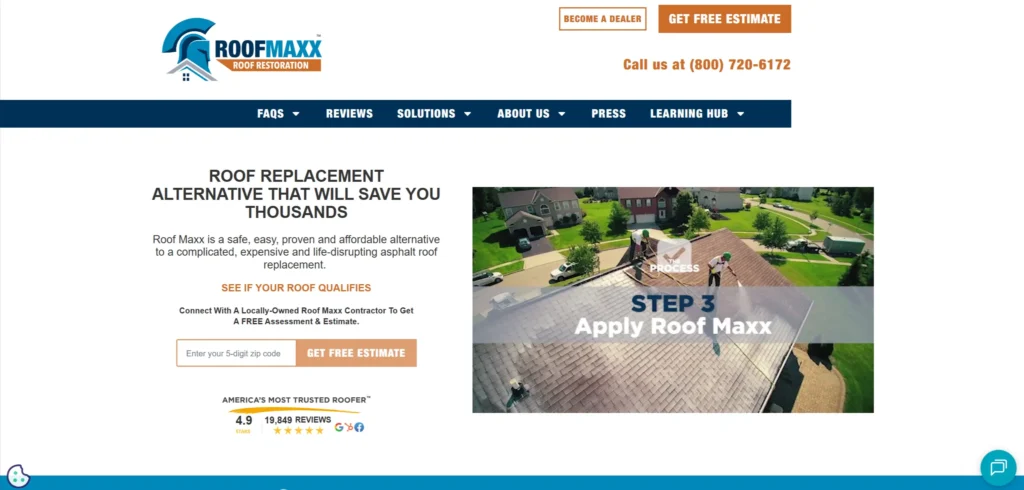
1. Roof Maxx
Roof Maxx has built a clear value proposition around roof rejuvenation rather than replacement, and the website communicates this differentiation immediately in the hero. The service explanation is simple and visual: a before-and-after comparison that communicates the outcome without requiring the visitor to read a technical explanation. The dealer locator is prominent, which matters for a franchise model where the conversion goal is connecting the visitor to a local operator.
Design lesson: A clear service differentiation stated in the hero (not buried in an About section) is the single most effective change most roofing websites could make to their homepage.
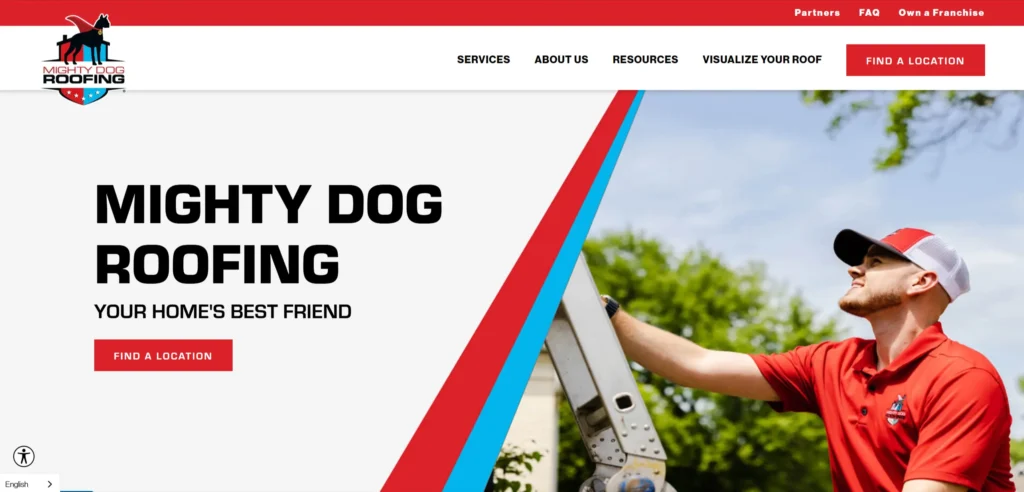
2. Mighty Dog Roofing
Mighty Dog operates as a franchise, and the website balances national brand consistency with local credibility through service area pages that carry location-specific content, reviews, and contact information. The design is clean and professional without feeling corporate. The quote request form is accessible from every page via a sticky header CTA. Photography shows real roofing work on real properties.
Design lesson: Service area pages with genuine localized content (not boilerplate with a city name swapped in) generate more organic local search traffic than a single national services page.
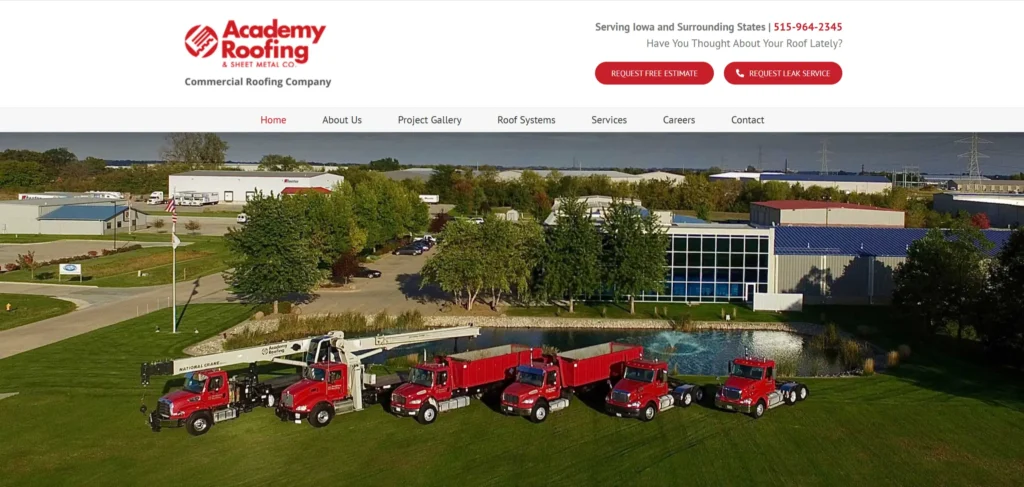
3. Academy Roofing
Academy Roofing uses a clean, professional design that communicates reliability. The homepage includes emergency roofing services prominently, which captures the high-intent visitors who are searching for a weather event. Certifications and manufacturer partnerships are displayed visibly, which serves as a quality signal for homeowners who are evaluating competing bids. The review section pulls from Google and displays recent reviews with dates.
Design lesson: Emergency service capability should be prominent on a roofing website. It captures the highest-intent visitors (those searching for storm damage) who represent the fastest path to a booked job.
4. Schick Roofing
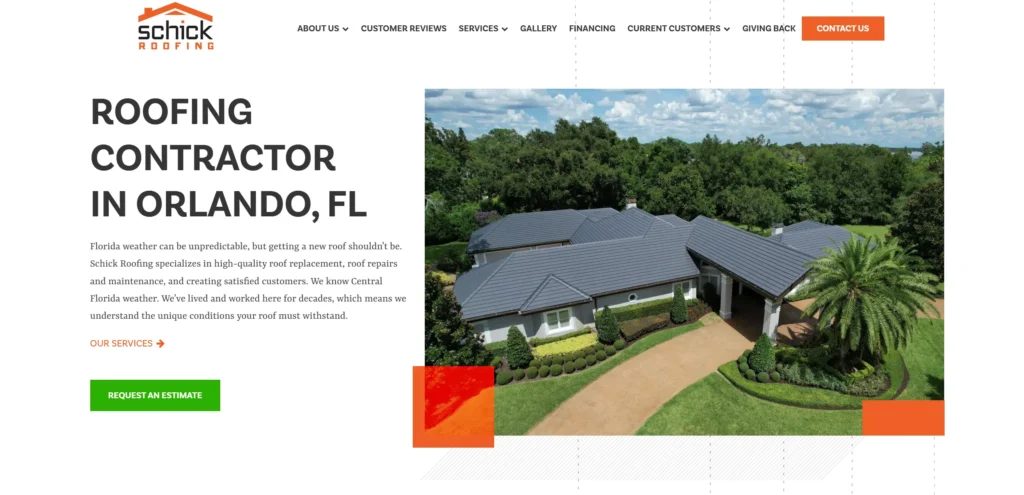
Schick Roofing’s website uses a clean, residential-focused design with photography that shows completed work on houses similar to those in their service area. The before-and-after gallery is one of the strongest conversion tools on the site — it shows the quality of the finished result in a format that is more persuasive than any written description. The financing options are displayed clearly, which removes a common hesitation for large-ticket jobs.
Design lesson: Financing information displayed prominently on a roofing website removes a major hesitation point for customers facing an unexpectedly large expense. Not mentioning it forces visitors to ask the question before they call.
5. Rescue Roofers
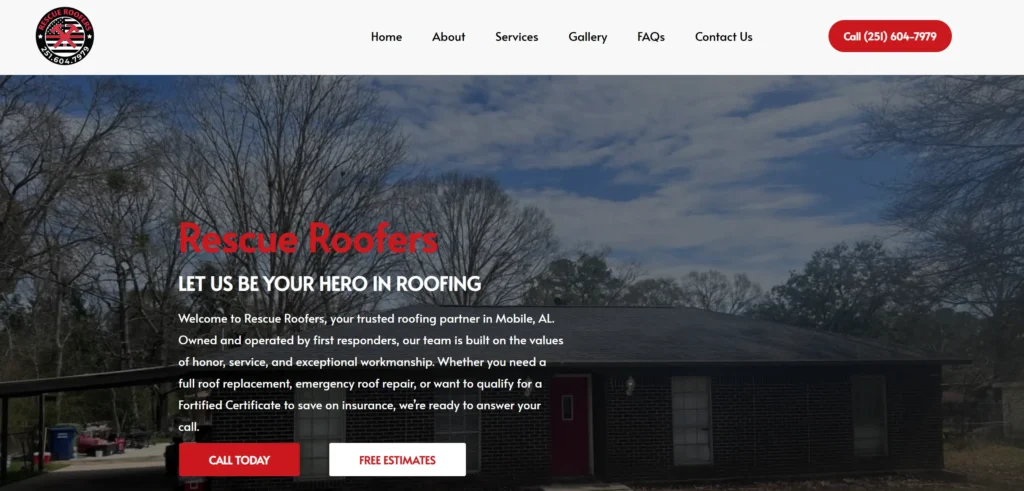
Rescue Roofers uses the brand name and visual identity to communicate emergency responsiveness. The red and dark color scheme communicates urgency. The phone number appears in every viewport. The hero section leads with response time claims. This design approach is optimized for the post-storm or emergency-leak customer who needs a roofer today, not in two weeks.
Design lesson: Color and brand identity choices signal the type of customer your roofing business is targeting. An emergency-focused roofer should use visual cues that communicate urgency. A premium replacement specialist should use cues that communicate quality.
6. Findlay Roofing
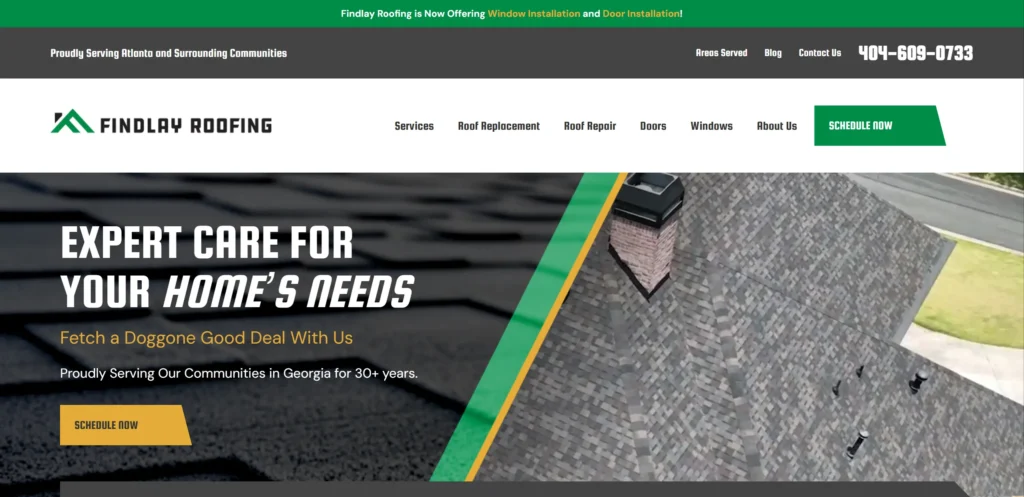
Findlay Roofing’s website communicates stability and longevity through design. Photography of completed projects, named employee teams, and community involvement content all reinforce the sense of a business that has been doing this for a long time and will be here afterwards. The multi-service structure (roofing, gutters, siding) is organized clearly without one service cannibalizing the others.
Design lesson: For roofing businesses offering multiple exterior services, the navigation architecture needs to separate services clearly. A visitor looking for gutter work who has to read through roofing content before finding what they want will often leave rather than search the site.
7. Roof Squad
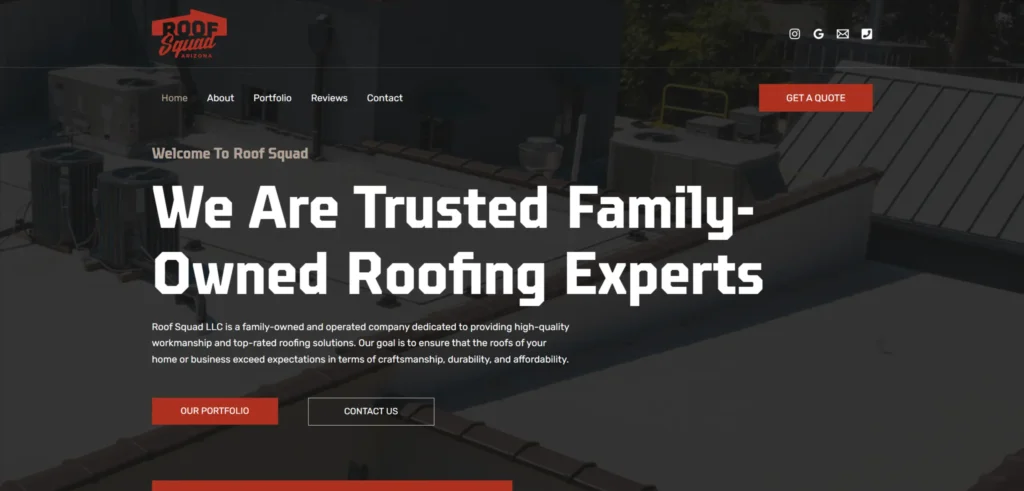
Roof Squad operates in the Canadian market, and the website is notable for its clear pricing transparency, which is unusual in the roofing category. Displaying starting prices for common roofing jobs removes the consultation step for homeowners who want to understand approximate costs before committing to a quote visit. The result is that qualified leads call in with appropriate budget expectations.
Design lesson: Pricing transparency in the roofing category is a competitive differentiator. Most competitors avoid it. The roofing companies that show starting prices or price ranges attract more qualified enquiries and spend less time quoting jobs that go nowhere.
8. Premier Roofing
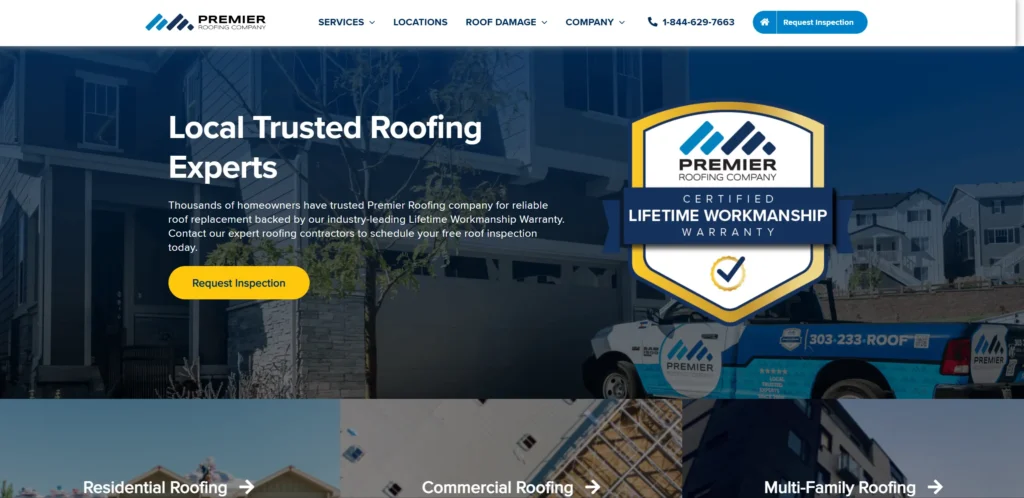
Premier Roofing’s website uses high-quality photography of completed work as its primary conversion tool. Each project photo shows the type of property, the roofing material used, and the quality of the finish. This is more persuasive than a written description of quality because it shows the outcome rather than claiming it. The Google review count and rating appear in the hero section.
Design lesson: Displaying the total Google review count and average rating in the hero section is one of the fastest social proof implementations a roofing website can make. It creates instant credibility before the visitor reads anything else.
9. Storm Guard
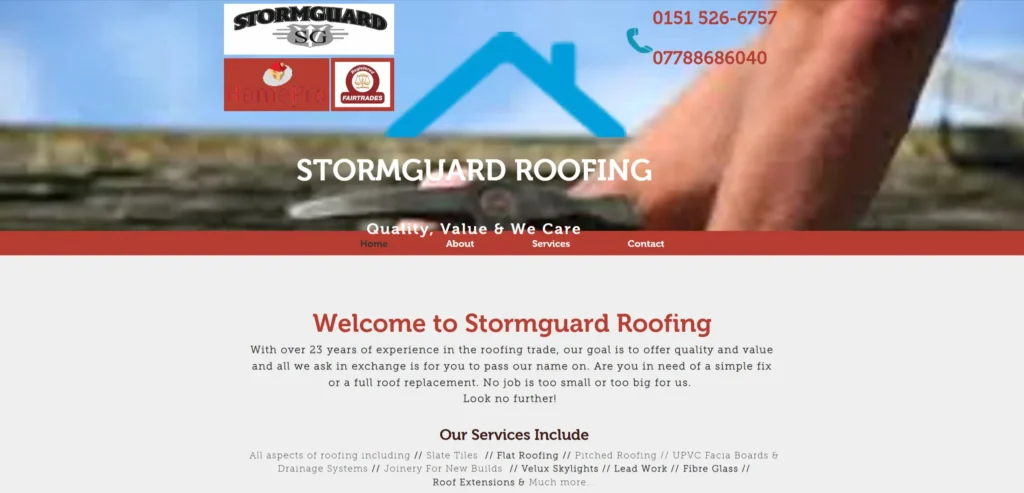
Storm Guard focuses on storm damage insurance claims, and the website communicates this specialism clearly. The process for filing an insurance claim is explained step by step, which removes the confusion that prevents many storm-affected homeowners from pursuing the work. The FAQ section addresses insurance-specific questions that competitors’ sites typically do not cover.
Design lesson: Addressing the insurance claim process on a roofing website that serves storm damage customers removes a major barrier. Many homeowners do not pursue rightful claims because the process seems complicated. Explaining it simply generates more jobs.
10. Bone Dry Roofing
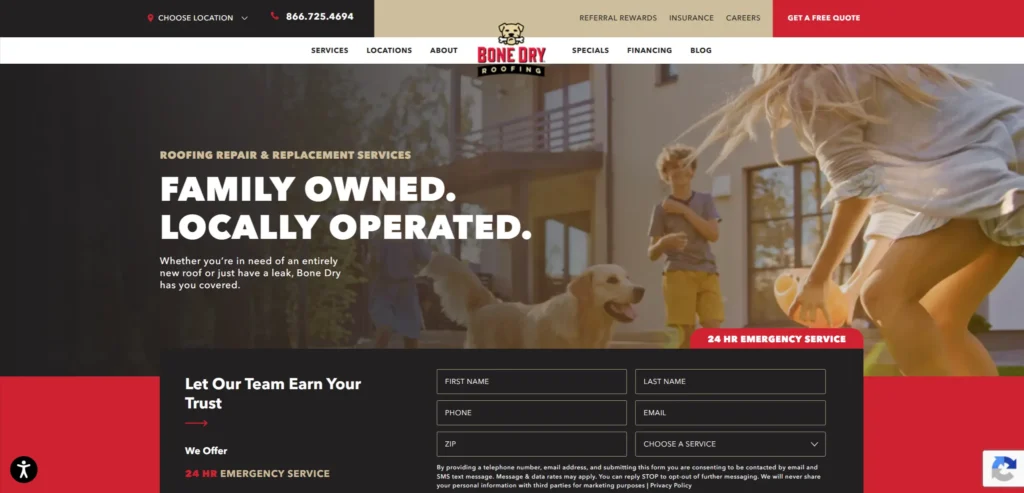
Bone Dry Roofing has a clean, regionally trustworthy design that communicates family business values and local credibility. The warranty information is prominent and specific, not a vague quality promise but named warranty terms. The scheduling process is simple and visible. The multiple geographic service areas are each represented with local content.
Design lesson: Named, specific warranty terms on a roofing website are more persuasive than vague quality promises. Visitors comparing multiple roofers respond to specific warranty periods and coverage terms.
11. Denver Roofers
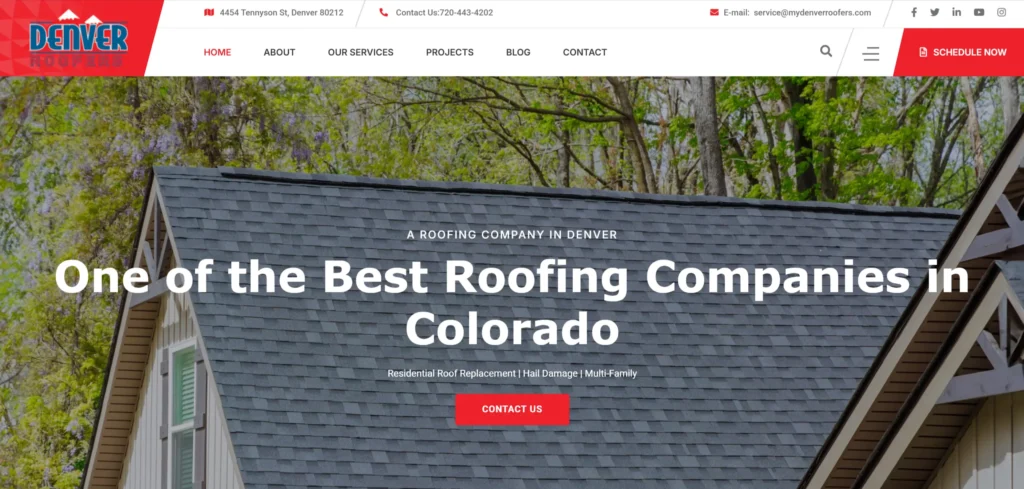
Denver Roofers is a strong example of local SEO done well in combination with good conversion design. The business name, service area, and primary service are all in the domain and page titles. The homepage is optimized for local search terms while still converting visitors clearly. Review integration from Google and the BBB appears prominently. The quote form is simple and loads quickly on mobile.
Design lesson: For single-market roofing businesses, the combination of location-specific domain, local keyword optimization, and fast-loading mobile quote form drives more organic lead volume than a more visually elaborate website that loads slowly on 4G.
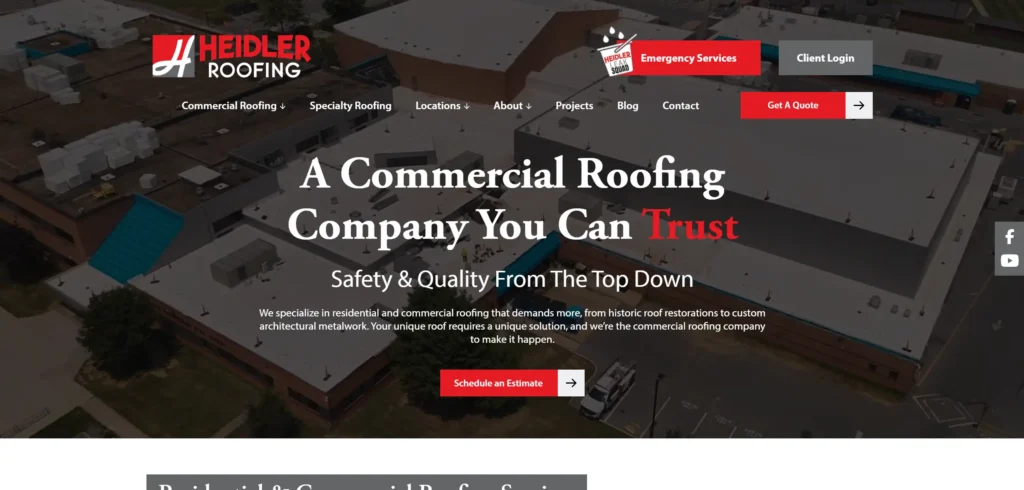
12. Heidler Roofing
Heidler Roofing is a long-established regional business, and the website communicates this heritage without looking dated. The company history section is brief but specific. The team photography is real and not stock. Certifications from GAF and Owens Corning appear prominently. The service pages are organized for both residential and commercial clients, with different messaging for each.
Design lesson: Commercial roofing clients need different reassurance than residential homeowners. If your roofing business serves both markets, the website needs separate landing pages that address the specific concerns of each, rather than combined service pages that speak to neither clearly.
What These Roofing Website Design Have in Common
Looking across all 12 examples, these patterns appear consistently in the ones that work best commercially, not just aesthetically.
Phone number and quote CTA visible in every viewport
Before-and-after photography or completed project gallery
Localized social proof (reviews from customers in the service area
Emergency service capability stated prominently
Manufacturer certifications and warranty terms displayed visibly
5 Design Elements Every Roofing Website Design Inspirations Needs
Whether you are building from scratch or redesigning an existing site, these five elements consistently separate high-performing examples from functional but forgettable ones.
1. Phone number visible in every viewport
Phone number visible in every viewport, not just in the header on desktop
2. Before-and-after project gallery accessible within two clicks of the homepage
Before-and-after project gallery accessible within two clicks of the homepage
3. Service area pages with location-specific content rather than a single national services page
Service area pages with location-specific content rather than a single national services page
4. Emergency service capability stated in the hero section or navigation
Emergency service capability stated in the hero section or navigation
5. Manufacturer certifications and specific warranty terms displayed on service pages
Manufacturer certifications and specific warranty terms displayed on service pages
AI Implementation for Roofing Websites in 2026
Most roofing website design articles cover design examples. Almost none address AI implementation, which is where the commercial gap is opening in 2026. The roofing website design that implements these features in the next 12 months will have a measurable advantage over those that do not.
1. AI-Powered Instant Quote Estimator
The most common reason roofing visitors do not convert is the gap between ‘I want to know approximately what this costs’ and ‘I am ready to schedule a full quote visit.’ An AI-powered quote estimator that takes roof size, material type, and location as inputs and returns a price range closes this gap. It does not replace the professional quote but it qualifies the visitor and removes the hesitation created by total pricing opacity. Tools like RoofSnap integrate with most roofing business websites and provide this functionality.
2. AI Chat for Emergency and After-Hours Enquiries
Storm damage does not happen during business hours. A roofing website that is dark after 5pm loses a significant volume of the highest-intent enquiries in the category. An AI chat assistant that captures the damage description, collects contact information, and triggers an immediate notification to the on-call team converts after-hours storm visits into booked jobs that would otherwise go to competitors with 24-hour response lines.
3. Aerial Roof Measurement Integration
AI-powered aerial measurement tools like EagleView and Hover allow homeowners to initiate a roof measurement from the website using aerial imagery. The roofer receives accurate measurements without a site visit for the initial scoping stage. This is particularly valuable for large residential and commercial roofing companies where the pre-quote measurement visit represents significant resource.
4. Review Generation Automation
Reviews are the primary trust signal in the local roofing market. Most roofing businesses collect far fewer reviews than their completed job volume would support because the review request process is manual and inconsistent. Automated post-job email and SMS sequences that send a review link at the point of maximum customer satisfaction (two to three days after job completion) generate review volume that manual follow-up cannot match.
KrishaWeb builds AI-integrated roofing websites on WordPress and other platforms. If your current site is not using these features, our team can assess what to implement first based on your specific conversion goals.
A roofing website should include a phone number visible on every page, a clear quote or contact form, a project gallery showing completed work, service area information, certifications and warranty details, and social proof from customers in the local area. Emergency roofing capability should be prominent if the business offers it.
Why is local SEO important for roofing websites?
Roofing is a location-dependent service. A homeowner with a damaged roof searches for roofers near them, not national brands. Local SEO (service area pages with genuine local content, Google Business Profile optimization, and locally-sourced reviews ) determines whether your roofing website appears when those searches happen. Most roofing businesses are won and lost in the local search results.
Should a roofing website show prices?
Showing starting prices or price ranges for common roofing jobs is a competitive differentiator in a category where most competitors avoid pricing transparency. It attracts more qualified enquiries and reduces time spent quoting jobs where the customer has unrealistic budget expectations.
How important are reviews on a roofing website?
Reviews are the primary trust signal in the local roofing market. A roofing company with 200 recent, specific reviews converts at a significantly higher rate than one with 20 generic ones. Displaying Google review count and rating in the hero section is one of the fastest single changes most roofing websites can make to improve conversion.
How can AI improve a roofing website?
AI can provide instant quote estimates that remove pricing opacity, capture after-hours enquiries from storm-affected homeowners, integrate aerial measurement tools to reduce pre-quote site visits, and automate review generation to build social proof volume consistently.
Conclusion
The 12 roofing website designs on this list span different scales, budgets, and markets. What they share is not production budget or agency pedigree. It is a commitment to treating the website as a genuine commercial and brand tool rather than a digital brochure.
The design elements that matter most in this category are not complex or expensive to implement. Strong photography, a clear path to the primary conversion action, social proof specific enough to be credible, and mobile performance that matches desktop quality. These are achievable at almost any budget with the right priorities. If your current roofing website is not doing these things, talk to KrishaWeb’s web design team about what a focused redesign would look like for your specific goals using reliable Web design services.
Disclaimer: This article is intended for informational and inspirational purposes only. The website examples featured are owned by their respective organizations. KrishaWeb has no affiliation with any of the websites referenced unless otherwise stated. All observations, statistics, and design notes reflect research current as of April 2026 and may change over time.
Nisarg Pandya
Project Manager
Experienced Project Manager and Scrum Master at KrishaWeb, delivers expertise in Scrum methodologies, Laravel, React.js, UX design, and project management, ensuring efficient project delivery and agile implementation.




 KrishaLabs
 KrishaStudio
 KrishaStore