A hotel website has a commercial goal that is both specific and financially significant: convert the visitor into a direct booking rather than sending them to an OTA, where the hotel pays a 15 to 25% commission on every reservation. The hotel that achieves a 10% shift from OTA to direct booking on 10,000 annual room nights has improved its revenue by an amount that funds a significant portion of its digital marketing program.
At KrishaWeb, we have built hospitality and travel sector websites since 2008. The hotel websites that achieve the highest direct booking rates share one characteristic: they make staying at the hotel feel like the experience the visitor came to find, before they have booked anything.
KrishaWeb has designed and built hotel websites since 2008. The pattern that holds across every high-performing example: design decisions made in service of the visitor’s actual goal, not the agency’s portfolio.
Table Of Contents
Table Of Contents
13 Best Hotel Website Designs You Will Love in 2026
1. The Hoxton
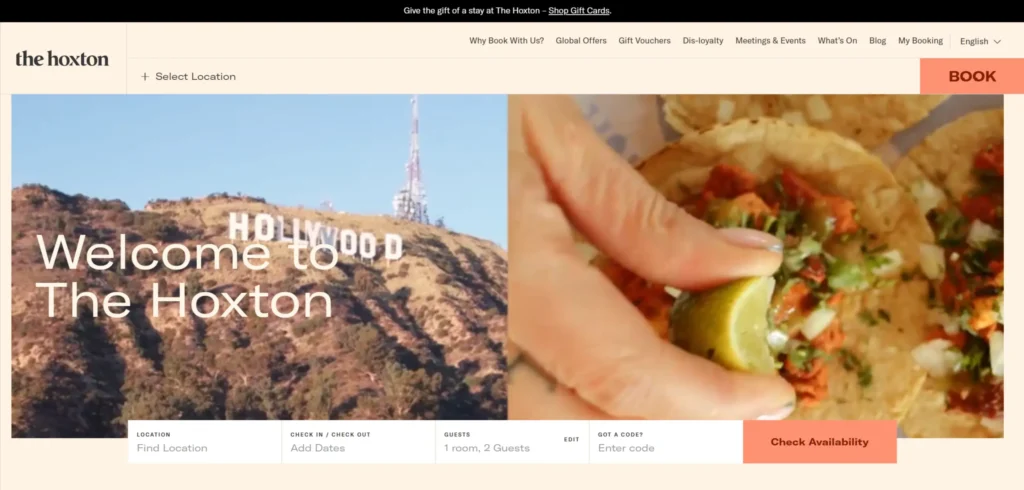
The Hoxton communicates a specific guest personality (curious, sociable, urban) through photography, copy, and design that is consistent across every hotel and every page. The website does not describe the hotel as ‘stylish’ or ‘contemporary’. It shows a world that the target guest wants to be part of. The booking engine is visible and the best rate guarantee is prominent, creating the financial incentive to book direct.
Design lesson: Hotel brand positioning communicated through photography and copy that shows a specific guest personality attracts the right guests and repels the wrong ones. A hotel that tries to appeal to everyone attracts no one in particular.
2. Aman Resorts
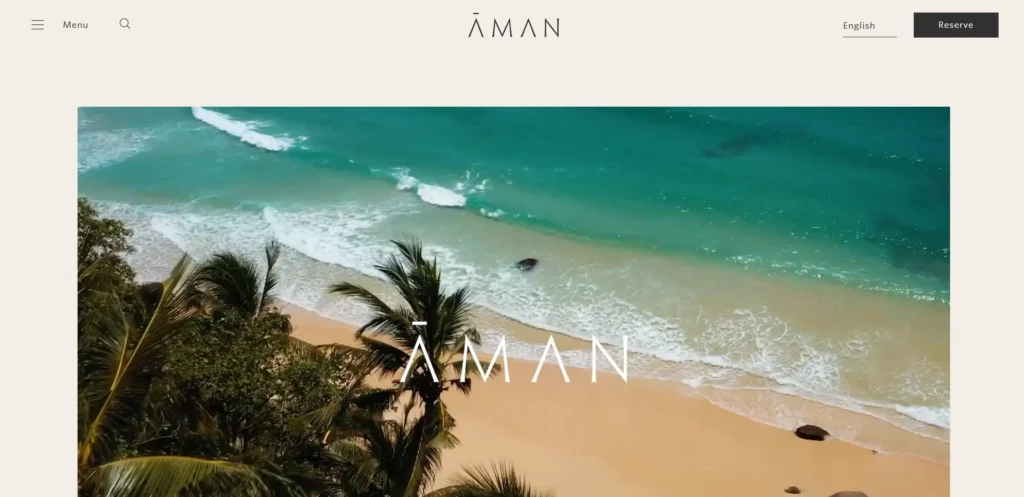
Aman’s website communicates silence, space, and luxury through photography that does not show people. It shows environments. This is a deliberate brand choice: Aman guests come for solitude, not for vibrant lobbies. The unhurried pace of the website (large imagery, sparse copy, slow transitions) mirrors the guest experience they are selling.
Design lesson: Website pace should match the experience being sold. A budget hotel needs fast, efficient information delivery. An ultra-luxury resort that sells solitude should have a website that communicates that through its own unhurried design.
3. Six Senses
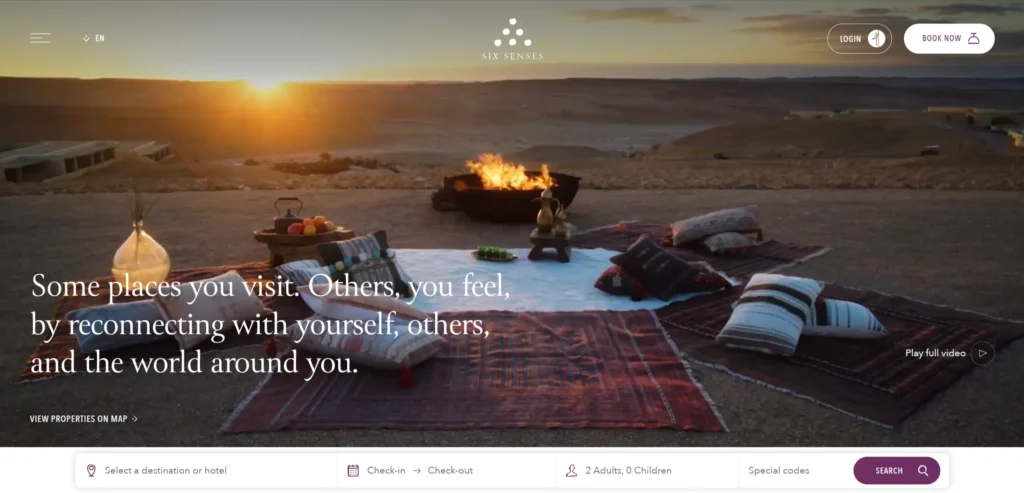
Six Senses communicates wellness, sustainability, and environmental sensitivity as the core brand values and the website design reflects all three. The sustainability content is specific and detailed. The wellness programmes are presented with the depth expected by guests for whom this is the primary purchase motivation. The photography style is organic and natural.
Design lesson: For wellness and eco-resort brands, sustainability content must be specific and detailed rather than aspirational to be credible to guests who take sustainability seriously and evaluate it before booking.
4. Rosewood Hotels
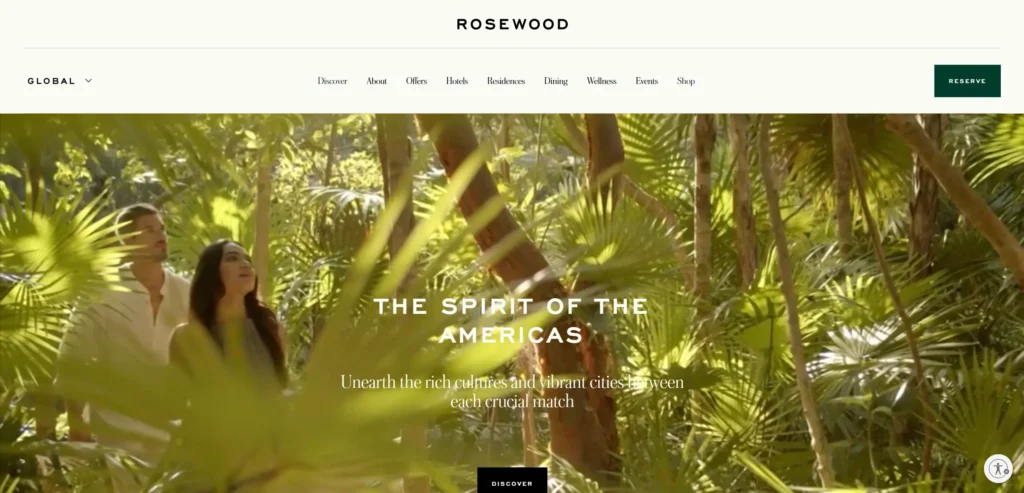
Rosewood communicates ‘a sense of place’ as the brand positioning: each property is designed to reflect its location rather than a global brand template. The website delivers this through property-specific photography and content that feels genuinely tied to each location. The collection-level brand is present without overwhelming the individuality of each property.
Design lesson: Hotel collection websites that give each property genuine visual and editorial individuality, rather than applying a global template uniformly, communicate the ‘sense of place’ that sophisticated travellers use to choose between luxury hotel brands.
5. Marriott
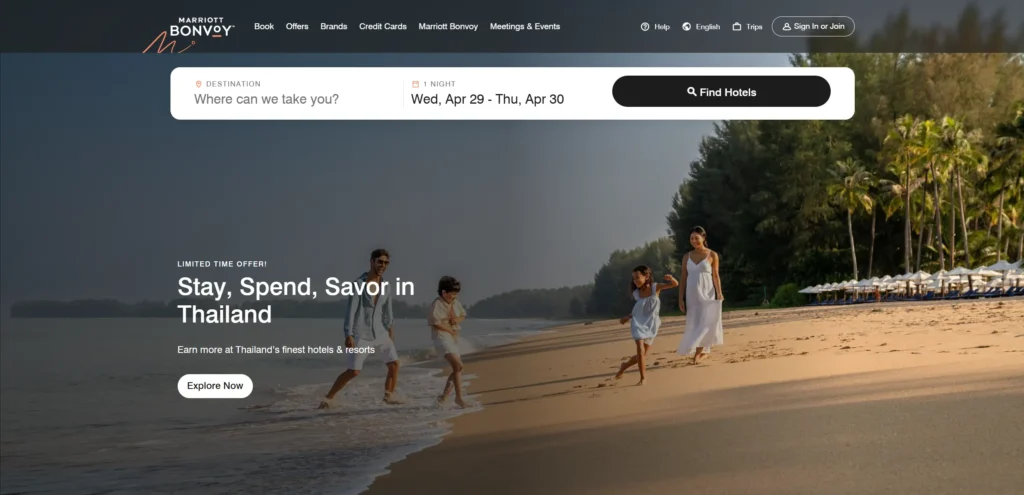
Marriott’s website manages the complexity of a global portfolio of 30+ brands across every tier from budget to ultra-luxury. The loyalty program integration is seamless. The booking engine is fast and comprehensive. The brand-within-brand navigation allows guests to navigate by lifestyle preference rather than needing to know brand names. This is enterprise-scale hotel web design done well.
Design lesson: For large hotel groups, navigation by guest lifestyle and trip type rather than by brand name reduces the cognitive load of navigating a portfolio where brand names are not meaningful to the average traveller.
6. Boutique Hotel Altstadt Vienna
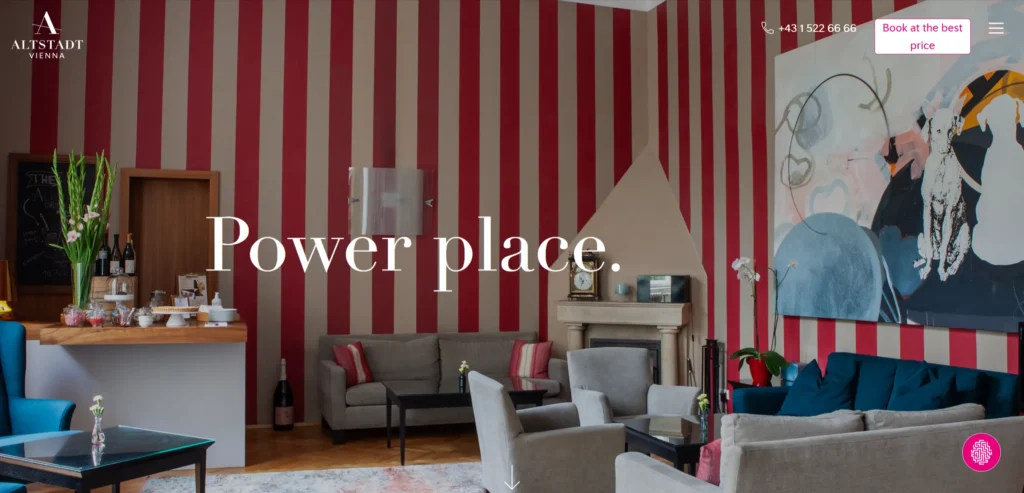
Altstadt Vienna is a boutique hotel in Vienna whose website communicates the personality and character of the property in a way that larger hotel brands cannot match. Each room is individually named and styled, and the website shows each room as a distinct environment. The art collection that the hotel is built around is integrated into the website content in a way that makes the hotel feel genuinely unique.
Design lesson: Independent boutique hotels compete against large hotel brands on character, individuality, and story. The website should lead with what makes the property unlike everywhere else the guest could stay in the same city.
7. Ace Hotel
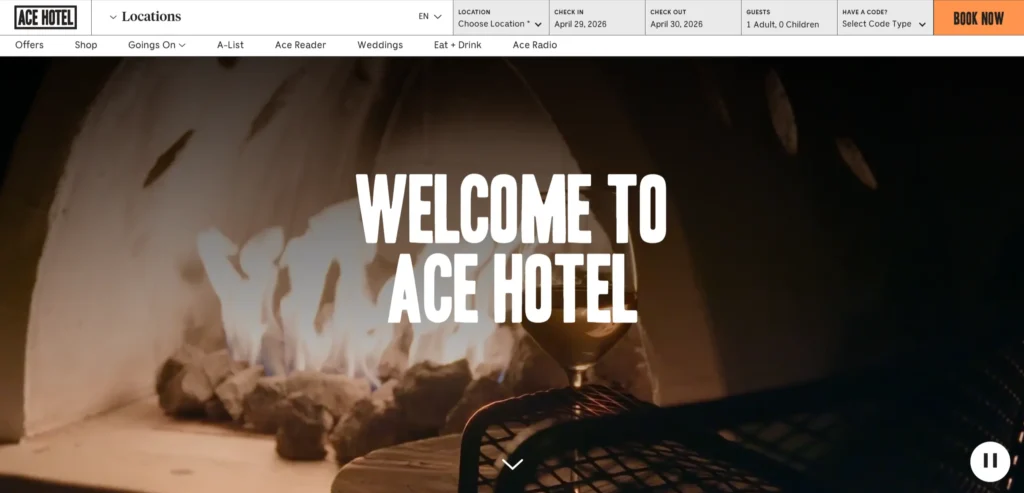
Ace Hotel’s website communicates cultural relevance and creative community as the brand’s primary values. The programming content (events, collaborations, resident artists) is as prominent as the room content. The photography style is documentary rather than promotional. The result is a brand that guests feel loyalty to because of what it stands for, not just where it is located.
Design lesson: Hotels whose brand is built around cultural programming and community should give this content equal prominence to room and rate information. For guests who choose Ace, the community is the product.
8. citizenM
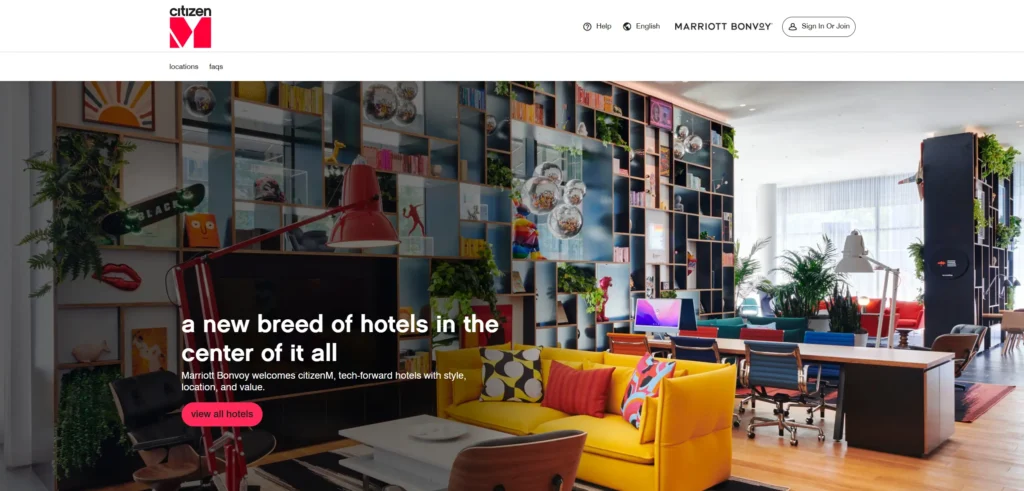
citizenM’s website communicates value, design, and convenience to the business traveller who wants quality without the price of a traditional luxury hotel. The direct booking advantage is communicated clearly, and the loyalty program benefits are visible. The hotel’s positioning as ‘affordable luxury’ is reflected in the design: premium photography and design quality at a visual price point that does not intimidate.
Design lesson: Hotels positioned as affordable alternatives to luxury brands need to communicate premium visual quality in their design while making pricing transparency a feature rather than something to hide. citizenM shows its prices prominently because competitive pricing is the product.
9. The Standard Hotels
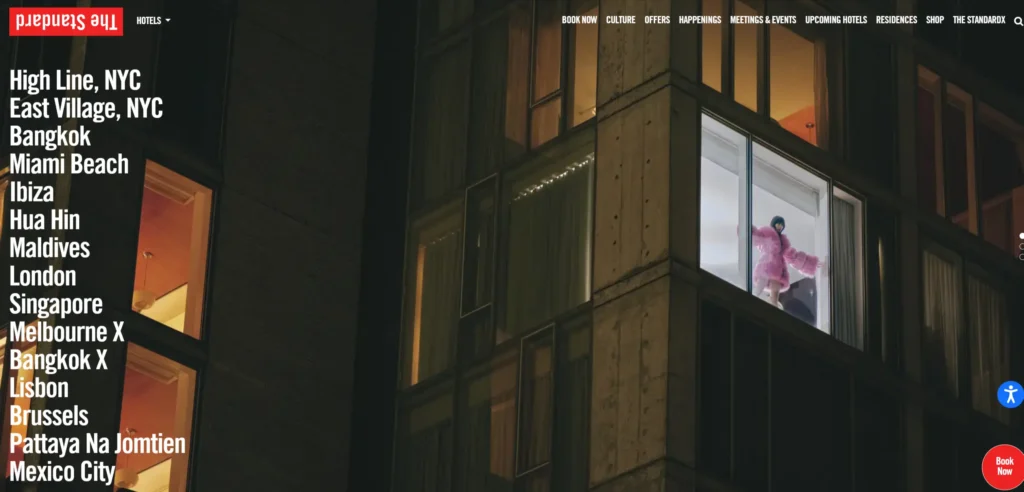
The Standard communicates a distinctive personality that is playful, urban, and self-aware. The copy tone is unlike any other hotel brand in the category. Photography shows the guest experience as social and energetic. The design communicates that this is not a hotel for everyone. It is a hotel for people who appreciate that distinction.
Design lesson: Hotel brands with a strong and distinctive personality should let that personality come through clearly in the copy tone and visual language rather than defaulting to the generic warmth of hospitality brand communication.
10. Nobu Hotels
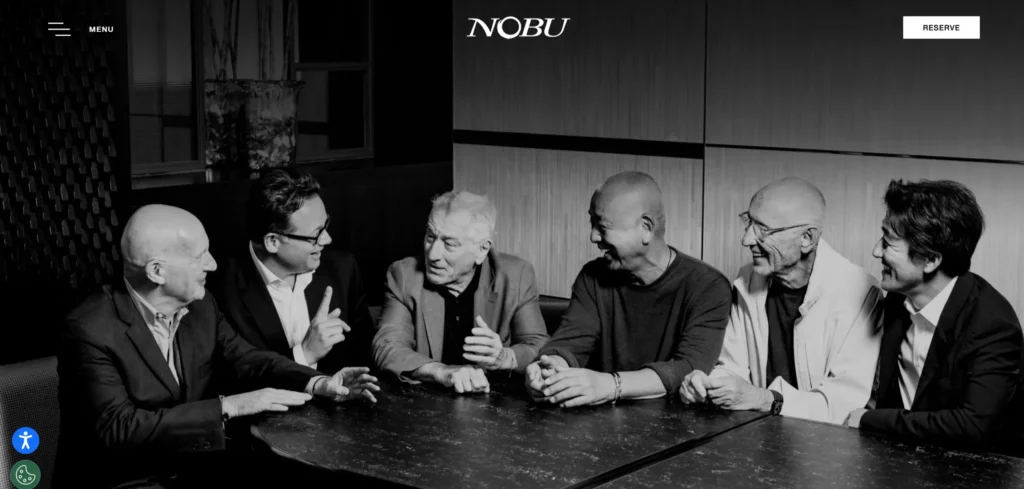
Nobu Hotels’ website extends the restaurant brand’s visual language consistently into the hospitality space. The integration of restaurant and hotel content is cohesive. The photography communicates the sensory richness of the Nobu experience (food, design, location) in a way that makes the property feel like a complete experience rather than accommodation with a restaurant attached.
Design lesson: Hotel brands that extend from restaurant or other lifestyle brands should integrate rather than separate the two identities on the website. The restaurant is part of the reason guests choose the hotel, and treating them as one experience communicates this.
11. 25hours Hotels
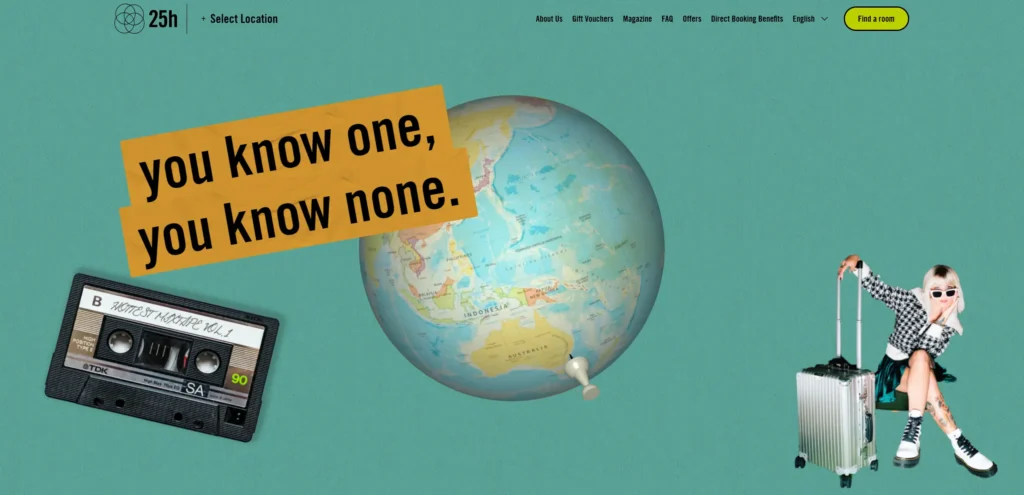
25hours Hotels is a European independent collection whose website communicates creative culture and neighbourhood identity as the brand’s primary values. Each property’s website section has a distinct visual identity while sharing the collection brand’s overall personality. The design rewards slower browsing: content reveals on scroll, and details reward attention.
Design lesson: Hotel collection websites that give each property a distinct visual identity within a shared brand framework communicate the creative individuality that guests are choosing when they select an independent collection over a global chain.
12. Belmond
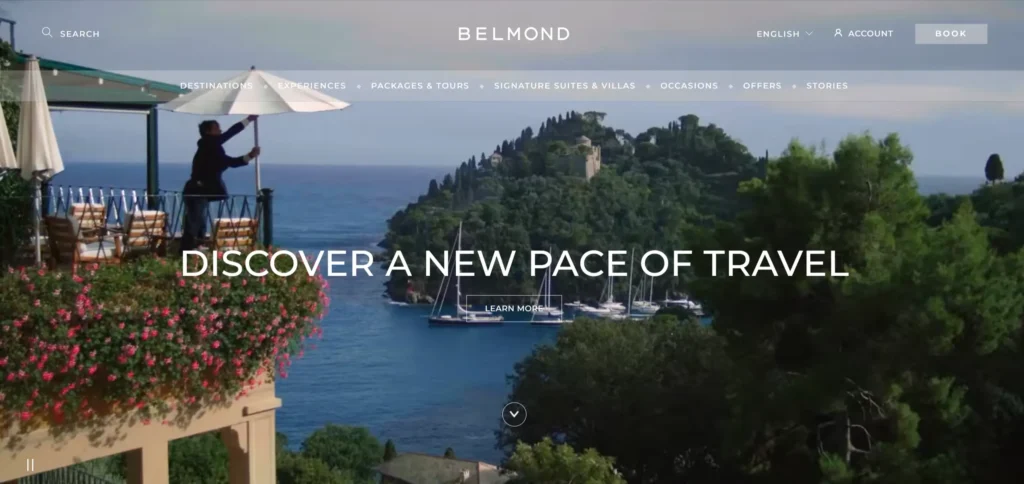
Belmond’s website communicates the romance and heritage of exceptional historic properties (Orient Express, Copacabana Palace, Villa San Michele. The photography is cinematic, and the copy is literary. The booking engine is sophisticated enough to handle the complexity of properties ranging from trains to riverboats to historic palaces. The brand story of the collection is as compelling as any individual property.
Design lesson: For collections of truly exceptional properties, the brand story (how these properties came to be collected and what connects them across geography and property type) is as important to communicating the brand as the individual property content.
13. Graduate Hotels
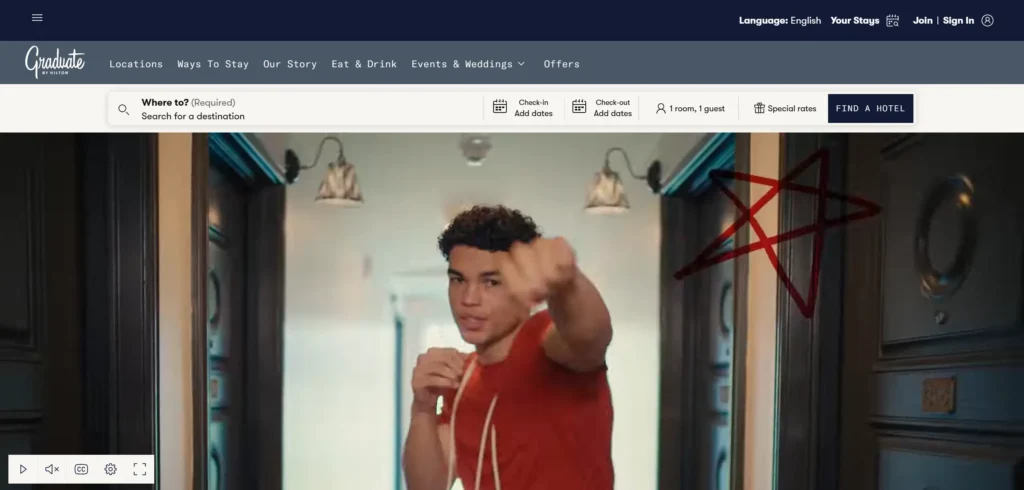
Graduate Hotels is built around the identity of the university towns in which they operate, and the website communicates this place-based positioning at both the collection level and the individual property level. The alumni connection is explicit. The visual identity draws from university life aesthetics. The result is a hotel brand with a genuinely specific and unusual positioning that generates strong loyalty.
Design lesson: Place-based hotel brands that build their identity around the specific cultural life of their locations have a differentiation that is permanently defensible. No global chain can replicate what it means to stay at the hotel built for the university town’s community.
What These Hotel Website Designs Have in Common
Looking across all 13 examples, these patterns appear consistently in the ones that work best commercially, not just aesthetically.
Best rate guarantee and direct booking financial incentive prominently featured
Photography that communicates the specific guest personality the hotel attracts
Property or room-level individuality communicated rather than uniform brand template
Loyalty program benefits prominently featured for returning guests
Booking engine fast, visible, and accessible from every page without navigation
5 Design Elements Every Hotel Website Needs
Whether you are building from scratch or redesigning an existing site, these five elements consistently separate high-performing examples from functional but forgettable ones.
1. Best rate guarantee and direct booking benefit communicated within the first viewport. Visitors comparing against OTAs need to see the financial case for booking direct before they scroll.
Best rate guarantee and direct booking benefit communicated within the first viewport
2. Booking engine accessible from every page without requiring navigation
Booking engine accessible from every page without requiring navigation — ideally a persistent header element
3. Photography that shows the specific guest experience the hotel delivers, not generic luxury imagery
Photography that shows the specific guest experience the hotel delivers, not generic luxury imagery
4. Room or property individuality
Room or property individuality: what makes this room or this property different from the category. This is the core purchase reason for every independent hotel.
5. Loyalty program benefits are visible and specific for logged-in members
Loyalty program benefits are visible and specific for logged-in members
Most hotel website articles cover design examples. Almost none address AI implementation, which is where the commercial gap is opening in 2026. The hotel websites that implement these features in the next 12 months will have a measurable advantage over those that do not.
1. AI-Powered Room and Package Recommendation
A guest who answers three questions about their trip purpose, group size, and preferences should receive a personalized room type and package recommendation rather than a full room category listing. AI recommendation at the early stage of the booking journey increases average booking value and reduces the decision paralysis that causes some visitors to leave without booking. Several hotel booking engines including Sojern and Revinate now include this capability.
2. AI Chat for Pre-Stay Concierge
The period between booking and arrival is when guests make decisions about dining, activities, and upgrades that directly affect hotel revenue and guest satisfaction. An AI pre-stay chat assistant that provides personalized recommendations for dining, local experiences, and spa or activity bookings based on the guest’s profile and trip purpose generates ancillary revenue and improves the arrival experience. Hotels that implement this report 15 to 25% increases in pre-arrival ancillary revenue.
3. AI-Powered Dynamic Pricing Communication
Hotel room prices fluctuate based on demand, seasonality, and events. An AI-powered website component that communicates the best available rate in real time, compares it to OTA pricing, and surfaces limited availability signals when relevant creates urgency and reinforces the direct booking value proposition. Integrated with the booking engine, this is among the highest-ROI AI features for hotel websites.
4. Personalized Loyalty Recognition and Communication
Returning loyalty program members should have a recognizably different experience on the hotel website from anonymous visitors. AI personalization that surfaces member benefits, recognizes previous stays, and presents offers relevant to the member’s history creates the feeling of being known that drives the loyalty program retention that is the most valuable commercial relationship a hotel has.
KrishaWeb builds AI-integrated hotel websites on WordPress and other platforms. If your current site is not using these features, our team can assess what to implement first based on your specific conversion goals.
Frequently Asked Questions
What makes a good hotel website design?
A good hotel website makes staying there feel like the experience the visitor came to find, before they have booked anything. The photography, copy, and design should communicate the specific guest experience with enough clarity and emotional appeal that the visitor chooses this hotel over the alternatives. The booking engine should be fast, prominent, and require fewer steps than the OTA alternative.
How can hotel websites increase direct bookings?
Direct booking rate is improved by making the financial benefit of booking direct immediately visible, making the booking engine faster and more prominent than any OTA comparison, providing a best rate guarantee that removes the price comparison motivation for using an OTA, and creating a loyalty program whose benefits are communicated clearly and prominently on the website.
How important is photography for hotel websites?
Photography is the primary conversion tool on a hotel website. Guests are buying an experience they cannot sample before purchase, and the photography is their evidence for what that experience will be. Professional photography that shows the actual environment (rooms, food, amenity spaces, and location) in conditions that accurately represent the guest experience converts at higher rates than aspirational photography that sets expectations the property cannot meet.
Should hotel websites show room pricing?
Yes. Transparent room pricing with clear comparison to OTA pricing reinforces the direct booking argument. Hotel websites that require visitors to begin the booking process to see room pricing lose visitors who are in the early comparison stage and will not come back. Starting rates shown on room category pages at a minimum improve conversion from visitors who are comparing multiple hotels.
How can AI improve a hotel website?
AI room and package recommendations personalized to trip purpose, pre-stay AI concierge for ancillary revenue generation, dynamic pricing communication that creates urgency, and loyalty personalization for returning members are the AI implementations that deliver the most measurable commercial impact for hotel websites in 2026.
Conclusion
The 13 hotel website designs on this list span different scales, budgets, and markets. What they share is not production budget or agency pedigree. It is a commitment to treating the website as a genuine commercial and brand tool rather than a digital brochure.
The design elements that matter most in this category are not complex or expensive to implement. Strong photography, a clear path to the primary conversion action, social proof specific enough to be credible, and mobile performance that matches desktop quality. These are achievable at almost any budget with the right priorities.
If your current hotel website is not doing these things, talk to KrishaWeb’s web design team about what a focused redesign would look like for your specific goals. Ready to improve your website? KrishaWeb has been providing conversion-focused Web design Services since 2008. Tell us your goals and we will tell you the right approach.
Disclaimer: This article is intended for informational and inspirational purposes only. The website examples featured are owned by their respective organizations. KrishaWeb has no affiliation with any of the websites referenced unless otherwise stated. All observations, statistics, and design notes reflect research current as of April 2026 and may change over time.
Nisarg Pandya
Project Manager
Experienced Project Manager and Scrum Master at KrishaWeb, delivers expertise in Scrum methodologies, Laravel, React.js, UX design, and project management, ensuring efficient project delivery and agile implementation.




 KrishaLabs
 KrishaStudio
 KrishaStore