PWA results stopped being theoretical a while ago. Lancôme rebuilt their mobile Lighthouse score from 23 to 94 after moving to a PWA and saw a 17% conversion increase as a direct result. Not from a redesign. Not from new content. From a faster, more reliable mobile experience. Flipkart’s PWA drove a 70% increase in conversions and tripled time spent on site. Trivago’s PWA generated a 97% increase in clickouts to hotel offers. The pattern across industries is consistent: faster loads, better mobile engagement, and a development cost 40 to 60% lower than building and maintaining separate native iOS and Android codebases.
For a CTO or product manager evaluating whether to invest in a PWA, a native app rebuild, or a different mobile strategy altogether, the decision in 2026 is more complex than it was three years ago. AI capabilities are now a genuine differentiator in the PWA stack. Service worker architectures enable AI-powered offline experiences that were not practical at scale before 2024. The PWA versus native app decision is no longer just about cost and reach. It is about which approach gives your mobile product the best AI capabilities at the best total cost of ownership.
This guide covers the measurable business benefits of PWAs, the AI capabilities that are specific to progressive web app architecture, the honest comparison with native apps, including the cases where native wins, and the decision framework for choosing between them.
Table Of Contents
Table Of Contents
The Performance and Business Data That Matter
Most PWA benefit articles cite the same set of 2018 and 2019 Google case studies. The data is real but old. Here is what the more recent deployments show, alongside the business context that makes each metric useful.
Company
Industry
Key Metric
Outcome
Lancôme
Luxury eCommerce
Lighthouse score: 23 to 94 after PWA migration
17% conversion increase, 53% more mobile sessions on iOS
Flipkart
eCommerce
PWA replacing native app for web channel
70% increase in conversions, 3x time spent on site
Trivago
Travel
PWA with push notifications across 55 countries
97% increase in clickouts to hotel offers, engagement up 150%
Starbucks
Food and Beverage
PWA with offline menu and order caching
2x daily active users, 40% increase in time on platform
Pinterest
Social / Content
PWA replacing mobile web experience
44% increase in user-generated ad revenue, 60% more engagement
Twitter Lite
Social / SaaS
PWA replacing low-end device experience
65% increase in pages per session, 75% increase in tweets sent
The Lancôme outcome is the one most relevant for eCommerce teams considering a PWA rebuild. A Lighthouse score of 23 means a site that loads slowly, shifts layout during loading, and fails Core Web Vitals on mobile. A score of 94 means fast, stable, and responsive. The 17% conversion increase came directly from that performance improvement, not from a redesign or a content change. The store was the same. The experience was faster.
The Twitter Lite outcome is the one most relevant for SaaS product managers. A 65% increase in pages per session and a 75% increase in tweets sent on a product people use daily show that PWA performance improvements translate into behavioral changes in core product metrics, not just session length.
The Six Progressive Web App Benefits That Move Business Metrics
The benefits worth understanding are the ones that connect to specific business outcomes. Here they are in order of the ROI they tend to produce.
1. Mobile Conversion Rates That Compete With Native Apps
The gap between mobile web conversion and native app conversion has historically been a primary argument for building a native app. PWAs close that gap. The mechanism is speed: PWAs load in under 1 second on repeat visits through service worker caching, compared to 3 to 6 seconds for a non-PWA mobile website on a 4G connection. Every 100ms improvement in load time correlates with measurable conversion improvement.
Travel and eCommerce conversion data: Clutch’s research puts the average conversion improvement in travel at 3x after PWA adoption. eCommerce case studies show a range of 20 to 70%, depending on how poor the starting mobile experience was. The worse the original site performed on mobile, the bigger the jump tends to be. (Source: clutch.co)
2. Lower Development Cost Than Maintaining Two Native Codebases
Building and maintaining separate iOS and Android codebases typically costs 40 to 60% more than a single PWA over three years, according to case study analysis from Adeocode. This is not just the build cost. It is the ongoing sprint velocity difference: two native teams making parallel changes to equivalent features, two app store review cycles per release, two sets of platform-specific bugs, and two dependency management tracks. A PWA update ships instantly to all users without app store approval. A native app update requires submission, review, and relies on users accepting the update before they see the change.
3. Discoverability Through Search That Native Apps Cannot Match
Every screen in a PWA is a URL. Google indexes it. A user who searches for ‘flight booking app’ and finds your PWA landing page can reach your product with one click. A native app is invisible to that search query. This structural discoverability difference is often the most persuasive argument for a PWA over a native app for any product where organic search is a meaningful acquisition channel. SaaS companies with SEO-driven growth models should weight this heavily.
4. Offline Functionality That Keeps Users Engaged
Service workers cache application shells, content, and user data locally. A user who loses their connection mid-session continues using the PWA with locally cached content rather than seeing a browser error page. For SaaS applications where users work in field environments (sales teams, logistics operators, healthcare workers), offline functionality is a feature requirement that previously justified native app investment. Modern service worker architectures deliver it through a PWA without the native app overhead. Starbucks’ PWA, allowing customers to browse and customize orders offline, regardless of connectivity, doubled daily active users because it worked reliably in stores with poor WiFi.
5. Push Notifications Without an App Store Install
Push notifications are one of the few native app capabilities that historically required an install. The Web Push API now delivers push notifications to Android users through a PWA without any app store presence. iOS push notification support through Safari has improved significantly since iOS 16.4, though full parity with Android is still in progress. For re-engagement campaigns, cart abandonment recovery, and time-sensitive SaaS alerts, push notifications through a PWA reach users who would never install a dedicated app. Trivago’s 97% increase in clickouts from push notifications came through a PWA that 500,000 users had added to their home screen, no App Store required.
6. Installation Without App Store Friction
The Add to Home Screen prompt converts 5%-15% of engaged PWA visitors into installed app users without requiring an App Store visit. For products where the App Store is a distribution bottleneck (due to review cycles, App Store fees, or platform policy constraints), this is a meaningful distribution advantage. It also eliminates the 15 to 30% App Store revenue cut on in-app transactions, which is a directly calculable cost saving for SaaS products with mobile subscription tiers.
The AI Angle: What AI-Powered PWAs Can Do That Standard Mobile Websites Cannot
Most PWA articles written before 2025 stop at offline support and installability. That is not the full picture anymore. The combination of mature service worker architecture and browser-side machine learning through WebAssembly and TensorFlow.js means PWAs can now carry AI capabilities that change how the product behaves, not just how fast it loads.
AI-Powered Smart Caching and Predictive Prefetching
Basic service worker caching gives users back what they have already seen. Predictive prefetching is different. The system watches how a specific user moves through your product and starts loading the next screen before they ask for it.
A field sales rep who opens the dashboard every morning and goes straight to the pipeline view finds it already loaded. An online shopper who always browses women’s shoes before checking the sale section gets the sale section loading in the background while they are still browsing shoes. Neither of them waited. Neither of them noticed anything technical had happened. They just got where they were going faster than they expected.
That experience, repeated across every session, is what drives the engagement numbers PWA case studies keep reporting. It is not the technology people notice. It is the feeling that the product knows how they work.
This is not speculative capability. TensorFlow.js runs in the browser. Service workers handle the background fetch. The combination produces page transitions that feel instantaneous to the user because the data arrived before they asked for it. This is the mobile experience difference that makes users describe a PWA as feeling ‘like a native app.
On-Device AI Personalisation Without a Round Trip to the Server
Server-side personalization creates a latency cost. Every personalized recommendation requires a round trip: the user’s context travels to the server, the model runs, and the personalized response returns. On a mobile network with variable latency, this delay is perceptible. On-device AI eliminates the round trip. A recommendation model compressed and deployed to the browser through WebAssembly runs locally. The model has access to the user’s local session data through the PWA’s client storage. It produces personalized recommendations in milliseconds, with no server round-trip and no connectivity dependency.
The practical limit is model size. Complex recommendation models are too large to run efficiently in a browser. The pattern that works is a hybrid: a lightweight on-device model handles immediate session personalization, and a server-side model handles deeper personalization when connectivity allows. The PWA’s offline capability means the on-device model continues producing relevant experiences even when the server-side model is unreachable.
AI Chatbot Integration in Offline-First Architecture
An AI chatbot embedded in a standard website loses all functionality when the user loses connectivity. A chatbot in a well-architected PWA can handle cached common queries locally through pre-computed responses stored in the service worker, then sync with the live LLM when connectivity returns. For SaaS products where support chat is a critical retention feature, this offline-capable chatbot architecture means users get answers to common questions regardless of their connection state.
PWA vs. Native App: The Honest Comparison
PWAs are not the right answer for every mobile product. The comparison is context-dependent, and the cases where native wins are specific and real.
Dimension
PWA
Native App
Development cost (3-year TCO)
40-60% lower than dual native codebase (Adeocode 2026)
Higher. Two codebases (iOS + Android), separate release cycles, separate QA.
Performance on repeat visits
Near-native through service worker caching. Sub-1 second loads on cached content.
Fastest possible for complex UI. Native rendering pipeline.
Offline capability
Strong. Service workers cache content and data. AI-powered smart caching available.
Full. Native apps designed around local data by default.
Push notifications
Android: full parity. iOS: improved since iOS 16.4, not full parity with Android.
Full on both platforms. More reliable delivery on iOS.
App store presence
No (optional via PWABuilder for stores that require it)
Yes. Required for App Store and Google Play distribution.
SEO and discoverability
Full. Every URL is indexed by Google.
None. App store is not a search channel for organic web queries.
Hardware access
Camera, GPS, Bluetooth (browser-dependent). Advanced Sensors Limited.
Full access to all device hardware, including advanced sensors.
Update deployment
Instant. No app store review. Service worker update cycle.
App store review required. Users must accept the update.
AI capabilities
On-device AI via TensorFlow.js. Smart caching. Offline AI chat.
Full on-device ML. CoreML (iOS), TensorFlow Lite (Android).
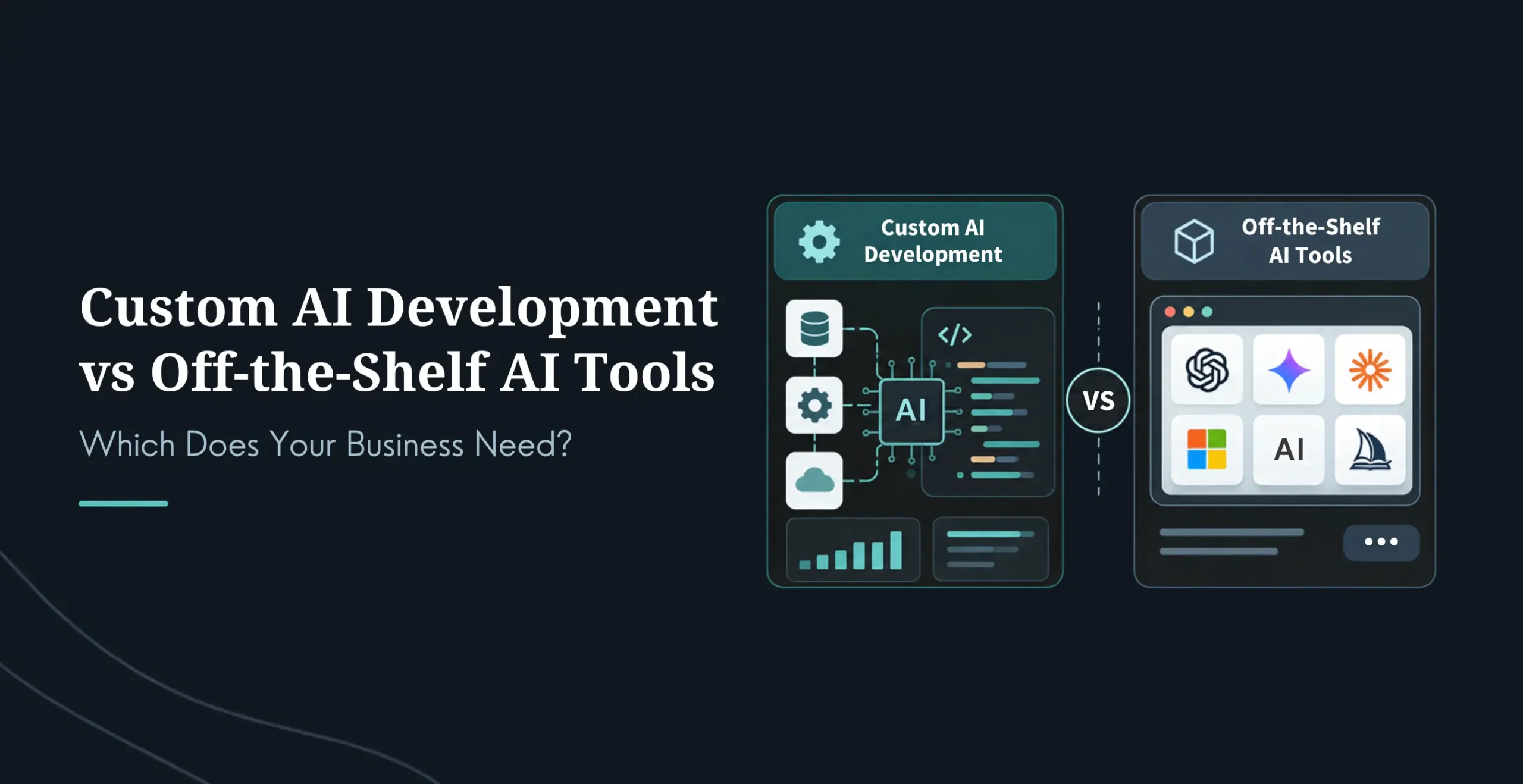
A PWA is the right choice when your users access your product primarily through mobile browsers rather than app store installs; organic search drives meaningful user acquisition; you need to ship updates frequently without App Store review delays; your development team maintains a single web codebase for desktop and mobile; or you are building an MVP where development cost efficiency matters. SaaS products with a web-primary user base are almost always better served by a PWA than a native app. eCommerce stores where mobile conversion improvement is the primary goal consistently see better ROI from a PWA performance rebuild than from a native app investment.
When Native App Is the Right Choice
A native app is the right choice when: your product depends on deep hardware access (real-time AR, advanced sensor data, Bluetooth device communication); you need iOS push notification reliability that current PWA specs cannot guarantee; your business model depends on App Store discovery and in-app purchase infrastructure; or your product requires frame-rate performance that browser rendering cannot achieve (real-time 3D, high-frequency trading interfaces, mobile gaming). The honest summary from the developer community in 2026: use a PWA when reach, cost, SEO, and update speed are priorities. Use native when hardware access, peak performance, or App Store distribution is essential. (Source:Dev.to)
The Decision Framework for CTOs and Product Managers
The binary choice between PWA and native app is the wrong frame for most teams in 2026. The question is which approach fits your product’s actual requirements and your team’s actual constraints.
Start With Your Users’ Access Pattern
How do your users currently access your product on mobile? If your analytics show 80% of mobile sessions come through the browser and 20% through a native app, your PWA has more users than your native app already. If it is reversed, your users have already chosen native, and switching to PWA-only creates friction for your existing audience. Understand the access pattern before deciding which investment to prioritize.
Map Your Feature Requirements Against PWA Capabilities
List the mobile features your product requires. Check each against the current PWA capability matrix. Camera, GPS, local storage, offline sync, push notifications, and Bluetooth are all viable in PWAs with varying degrees of platform consistency. Advanced biometric authentication, real-time AR, and deep hardware sensor access still require native. If your feature list has one native-only requirement, evaluate whether that feature could be architected as a hybrid: PWA for 90% of the experience and a lightweight native wrapper (Capacitor or Cordova) for the specific capability that needs it.
Calculate the Three-Year Cost Comparison
Get a build estimate for both approaches. Then add: App Store fees and revenue cuts (15 to 30% of in-app revenue); ongoing maintenance costs for dual native codebases versus a single PWA codebase; release cycle velocity differences (native apps average 2 to 4 week review cycles; PWAs deploy instantly); and team cost differences (one web development team versus native iOS and Android specialists). For most SaaS and eCommerce products, this calculation favors the PWA significantly over three years.
KrishaWeb’s recommendation: if you are building a new mobile product in 2026 and your feature requirements are compatible with the PWA capability matrix, start with a PWA. Validate user engagement and conversion. Add native wrappers for specific capabilities if you find genuine requirements that the PWA cannot meet. Committing to a full dual native codebase from day one, before validating mobile engagement, is an expensive early bet.
What are the main benefits of a progressive web app?
Progressive web apps deliver six measurable benefits: mobile conversion rates that compete with native apps through service worker caching and sub-1-second load times on repeat visits; development cost 40 to 60% lower than maintaining separate iOS and Android codebases; full discoverability through search engines since every PWA screen is a URL; offline functionality through service worker content caching; push notifications without an app store install (full on Android, improving on iOS); and installation through an Add to Home Screen prompt without App Store review or revenue cut. In 2026, AI-powered smart caching and on-device personalization are additional PWA-specific capabilities that standard mobile websites and native apps handle differently.
Is a PWA better than a native app for SaaS?
For most SaaS products in 2026, a PWA is the more cost-effective starting point. SaaS products typically have web-primary user bases that access the product through browsers. Every PWA screen is indexable, which supports the SEO-driven acquisition models most SaaS companies depend on. Updates deploy instantly without app store review cycles, which matters when you are shipping product changes weekly. The cases where native wins for SaaS: real-time collaboration tools requiring low-latency local rendering, products with deep mobile hardware integration (AR overlays or Bluetooth device communication), or products where App Store discovery is a primary acquisition channel.
How much does it cost to build a PWA?
A standard PWA built on an existing web application typically adds 15 to 30% to the web development cost for service worker implementation, offline caching architecture, Web App Manifest configuration, and push notification setup. A PWA built from scratch for a SaaS product typically runs $25,000 to $80,000, depending on complexity. A PWA for an eCommerce store typically runs $15,000 to $40,000. For comparison, building and maintaining separate iOS and Android native apps over three years typically costs 40 to 60% more than a single PWA covering the same functionality. The break-even calculation almost always favors the PWA when the comparison is over three years rather than a single build cost.
Do PWAs work on iPhones?
Yes, with partial feature support. Service workers, offline caching, Add to Home Screen, and most modern web APIs work on iOS Safari. Push notifications through the Web Push API have been supported since iOS 16.4. The remaining gaps versus Android: some advanced hardware APIs have inconsistent Safari support, push notification delivery is less reliable on iOS than Android in current testing, and background sync behavior is more restricted on iOS due to battery management policies. For most SaaS and eCommerce PWAs, iOS support is fully functional. Products with advanced push notification requirements may need to test delivery rates carefully before committing to PWA-only on iOS.
What AI features can a PWA support?
Three categories are worth understanding. The first is predictive prefetching: TensorFlow.js running inside a service worker builds a picture of what each user tends to navigate to and loads it in the background before they click. No server round trip. No waiting. The second is on-device personalization: compressed models deployed through WebAssembly run directly in the browser using local session data. Recommendations appear without a server call, which means they work even when connectivity is poor. The third is offline-capable chat: the service worker holds pre-computed responses for common queries and serves them without a live connection, syncing with the full LLM when connectivity returns. None of these are drop-in features. They require the right architecture from the start. Adding them to an existing PWA that was not built for them is a rebuild, not a configuration change.
When should a business choose PWA development over a mobile website rebuild?
A PWA is the right investment over a mobile website rebuild when: your current mobile bounce rate is above 50% and load time is the primary driver (service worker caching will address this directly); you want to offer offline functionality to users in variable connectivity environments; you need push notification capability for re-engagement without requiring an app install; or you want to offer an installed app experience without App Store distribution friction. A mobile website rebuild is the right investment when: your bounce rate is driven by content quality or UX rather than load time; your budget is limited and Core Web Vitals improvements on the existing site will close most of the performance gap; or your product does not benefit from offline access or push notifications.
The Case for Building Your Next Mobile Product as a PWA
The performance data from the companies that have made the switch is consistent across industries and over time. PWAs deliver measurable conversion improvements by closing the load time gap between mobile web and native apps. They cost significantly less to build and maintain than dual native codebases. They are fully discoverable by search engines. And in 2026, they support AI capabilities, smart offline caching and on-device personalisation, which give mobile web experiences a level of intelligence that was not practically achievable two years ago.
The decision framework is straightforward. If your feature requirements are compatible with the PWA capability matrix, the cost efficiency, deployment speed, and search discoverability arguments all point to PWA as the right first investment. If you find genuine requirements that need native capabilities, a hybrid approach using Capacitor or Cordova handles the specific native features without requiring a full dual codebase. Businesses leveraging a modern web development service alongside an expert AI consulting service are better positioned to scale these experiences efficiently.
For SaaS product managers and eCommerce CTOs evaluating their mobile strategy in 2026, the question is less often ‘should we build a PWA’ and more often ‘what is holding us back from building a PWA.’ The answer is usually either a specific native feature requirement or an existing native app with significant user adoption that creates switching friction. Both are solvable. Neither requires starting with native. KrishaWeb builds PWAs for SaaS and eCommerce teams with AI-powered caching, offline functionality, and service worker architectures designed for mobile conversion performance. If you are evaluating a PWA investment and want a specific technical assessment of your current mobile product’s conversion gaps, the conversation starts with a free discovery call.
Nirav Panchal
Lead – Custom Development
Lead of the Custom Development team at KrishaWeb, holds AWS certification and excels as a Team Leader. Renowned for his expertise in Laravel and React development. With expertise in cloud solutions, he leads with innovation and technical excellence.




 KrishaLabs
 KrishaStudio
 KrishaStore